Updated
|
How Schools are Cutting More Costs in 2011
Budget cuts continue to cripple school districts across the country, forcing some schools to make major cuts creatively. Learn about the current situation and how some public schools are coping with the budget shortfalls.

It's a hard pill to swallow: budgets tightening for public school districts across the country and school officials dealing with the unpleasant task of painfully determining what stays and what must go. However, many school districts are getting creative with their efforts to make ends meet, and some are finding ways to trim the budget without sacrificing the quality of education to do so. Others are not so lucky, as job eliminations are forcing larger class sizes and fewer extracurricular programs. We'll examine some of the ways public schools are finding ways to make ends meet in the wake of severe budget cuts across the country.

Restructuring Continuing in Detroit

No one understands the impact of budget cuts better than the Detroit Public Schools district, which has been hit hard, as the economy in the area is one of the slowest in the country. The district is currently in the midst of a consolidation and closure plan that is attempting to align open schools and available services with student needs. According to an article at Click on Detroit, the moves are designed to cut operating costs without sacrificing services or facilities for the students that need them most.

Roy S. Roberts, emergency manager for the school district, told Click on Detroit, "There continues to be overcapacity for the number of students that we serve despite the closings that have occurred, and while the moves we are announcing today bring DPS more in line
. . .read more

Closing the Achievement Gap in Public Schools (2026 Update)

Updated
|
Closing the Achievement Gap in Public Schools (2026 Update)
Explore how public schools are closing the achievement gap with 2026 data, funding updates, and proven strategies improving student outcomes.

This article has been updated to reflect 2026 data and recent developments.

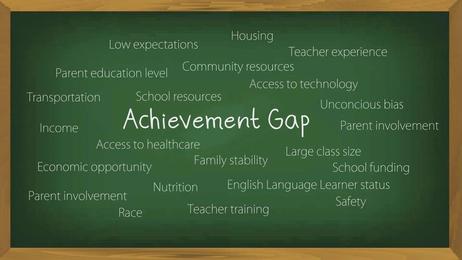
Closing the achievement gap remains one of the most urgent challenges in American public education. The term refers to persistent disparities in academic performance between groups of students, often defined by income level, race, ethnicity, and access to resources. While the gap has not disappeared, recent data and policy changes show measurable progress in several areas.

Public schools across the country are implementing targeted strategies that combine funding reforms, instructional innovation, and student support systems. These efforts, particularly since 2024, reflect a broader shift toward equity-driven education policy and>Understanding the Achievement Gap in 2026

Recent data from the National Center for Education Statistics shows that achievement gaps in math and reading narrowed slightly between 2022 and 2024, particularly in early elementary grades, though disparities persist in middle and high school levels. Pandemic-related learning loss continues to influence outcomes, but recovery efforts are beginning to show results.

Key trends shaping the current landscape include:

  • Increased federal and state investment in high-need districts
  • Expanded access to early childhood education
  • Greater emphasis on data tracking and accountability
  • Growth in targeted intervention programs

According to the NCES, students in high-poverty schools are still significantly less likely to meet proficiency benchmarks, reinforcing the need for sustained intervention.

Key Strategies Public Schools Are Using

1. Expanding Early Childhood Education

One of the most widely supported strategies for closing the achievement gap is investing in early learning. Research consistently shows that students who attend

. . .read more

Marching for Schools: The Save Our Schools March Protests Education Cuts

Updated
|
Marching for Schools: The Save Our Schools March Protests Education Cuts
Parents around the country are partaking in the Save Our Schools March to help maintain funding for our education system. Learn more about this movement and how you can get involved.

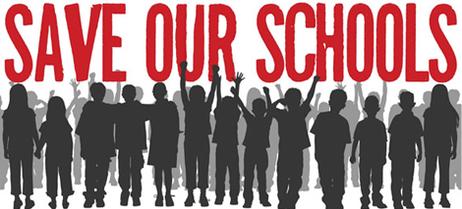
Many educators and parents are fed up with the current state of public education and have decided to take matters into their own hands. To make their voices heard in state legislatures and Washington, they have invited all disgruntled with the school system to meet together this summer in Washington, D.C. The Save Our Schools March has been gaining steam since its inception a year ago, and now many local marches are planned across the country. We'll look at the purpose of the Save Our Schools March and why so many nationwide have become frustrated enough with public education to take a public stand.

What is the Save Our Schools March?

This movement has cumulated into the Save Our Schools March and National Call to Action, which began approximately one year ago. Many parents, students, educators, and community members have become increasingly frustrated with the No Child Left Behind Act, which went into effect ten years ago, and the more recent Race to the Top initiative by the Obama Administration. According to the organization's website, this group has seen the educational system transform into one that is primarily governed by test scores rather than real instruction.

Many in this movement have taken their concerns to state politicians, and some have even gone to Capitol Hill with their issues. However, they do not feel that anyone in a position to make the necessary changes has listened to their pleas. That is when the Save Our Schools March and

. . .read more

Standardized Test Scores Thrown Out in Three D.C. Classrooms

Updated
|
Standardized Test Scores Thrown Out in Three D.C. Classrooms
The controversy about Washington DC test scores under Michelle Rhee gets some resolution, as standardized test scores are invalidated due to questionably high erasures. Learn more about what the official investigation found.

Standardized tests have come under fire once again in Washington D.C., as the results in three schools have now been thrown out due to testing procedure violations and allegations of impropriety. The city has also implemented tighter security guidelines and is monitoring more schools for testing irregularities each year, according to a report at WAMU. The results of this investigation have resulted in specific measures being taken to ensure the integrity of the testing process in the future. However, questions still remain about how Washington D.C. schools ended up in this position in the first place and whether high-stakes testing is to blame for the problems.

This video reports on the C.D. schools' standardized test scandal.

A History of Washington D.C. Test Issues

Michelle Rhee, the former chancellor of Washington D.C. schools, sang the praises of many of the schools that raised their standardized test scores by astronomical numbers under her watch. Rhee used the test results as evidence that her sometimes unpopular methods of education reform were working. One school, in particular, Noyes Education Campus, showed two-year gains that were nearly unheard of in the public education system. However, the school also displayed an unusually high number of erasures on their tests, which raised the eyebrows of some education officials and the media.

USA Today was all over the concerns and looked at other schools within the city to

. . .read more

Under the Radar: Why Some High Schools are Hiring Undercover Police Officers

Updated
|
Under the Radar: Why Some High Schools are Hiring Undercover Police Officers
While security guards may be commonplace at some public high schools, other districts have resorted to undercover cops to keep their kids safe. Learn about why schools are bringing undercover police officers on campus and what it means for your student.

Parents send their children to school every day in hopes that their kids will get a good education in a relatively safe environment. However, drug sales and gang activity often impact a student's ability to learn and feel comfortable in the place they spend the bulk of their time every day. While few argue that drugs and gangs have become a major problem in middle and high schools across the country, not everyone agrees what should be done. Some schools have brought in undercover officers who pose as high school students with the goal of routing out the guilty parties and removing them from the school environment. While the approach has proven successful, questions still remain about whether this is the right way to put a stop to illegal activity in public schools.

Undercover in Florida

In one of the biggest stings ever to hit public high schools, more than 30 people have been arrested in Palm Beach schools for selling drugs in an undercover operation dubbed "Operation D Minus." The students responsible for the drug sales were identified by undercover police officers who posed as students in the schools for the entire school year. These youthful officers were assigned to attend classes, eat lunch in the school cafeteria and even take tests with the other students, in hopes of discovering the root of the drug problem that had grown by monumental proportions among high school students in the area.

According to a report at

. . .read more

Recent Articles

AI Report Cards: Should Schools Evaluate AI Use?
Explore whether schools should assess student AI use, the benefits, risks, and what responsible AI report cards could look like in 2026.
The Parent’s Guide to School Cell Phone Bans in 2026
Learn how school cell phone bans work in 2026, why districts are adopting them, and what parents should expect.
Parental Involvement in Public Schools: 2026 Update
Explore the latest 2026 trends, research, and strategies shaping parental involvement in public schools and student success.

Notice: Javascript file does not exist: /home/devsarath/workspace/psr/public_html/javascript/components/popper.min.js in /home/devsarath/workspace/shared/misc/JSCompiler.inc.php on line 242

Notice: Javascript file does not exist: /home/devsarath/workspace/psr/public_html/javascript/components/tippy.min.js in /home/devsarath/workspace/shared/misc/JSCompiler.inc.php on line 242

Notice: Directory does not exist in /home/devsarath/workspace/shared/misc/JSCompiler.inc.php on line 242

Notice: Unable to save compiled js file in /home/devsarath/workspace/shared/misc/JSCompiler.inc.php on line 242