Warning: mkdir(): Permission denied in /home/devsarath/workspace/psr/public_html/include/srn_lib/psr/misc/QuickPhotos.inc.php on line 24 Warning: mkdir(): Permission denied in /home/devsarath/workspace/psr/public_html/include/srn_lib/psr/misc/QuickPhotos.inc.php on line 24 Warning: mkdir(): Permission denied in /home/devsarath/workspace/psr/public_html/include/srn_lib/psr/misc/QuickPhotos.inc.php on line 24 Warning: mkdir(): Permission denied in /home/devsarath/workspace/psr/public_html/include/srn_lib/psr/misc/QuickPhotos.inc.php on line 24
Updated
|
How “Collaborative Reasoning” Could Be the Next Public School Trend
Collaborative reasoning, which encourages independent critical thinking, is growing in popularity amongst public schools. Learn about collaborative reasoning and how it benefits public school classrooms.

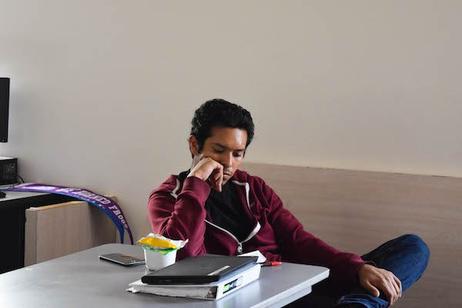
As school leaders experiment with modern educational strategies, one of the most promising programs centers on a concept known as “collaborative reasoning.” Far evolved from the archaic preconceptions of a classroom from the past, collaborative reasoning programs strive to make students active leaders in their learning communities.

Instead of having teachers solely speak and lecture, collaborative reasoning focuses on allowing children to explore using different learning and cognitive development elements. Specifically, as the Educational Psychology Review Journal explores, classrooms centered on collaborative reasoning enable teachers to act as facilitators of small student group discussions and investigations: “Collaborative reasoning discussions are intended to create a forum for children to listen to one another think out loud as they learn to engage in reasoned argumentation.”

Collaborative reasoning is designed to encourage independent critical thinking and question fellow peers and sources. Through this type of proactive learning, experts anticipate that cooperative learning can jumpstart student progress into modernity.

Traditional Learning vs. Collaborative Learning

Hoping to overcome the passive and dull methodologies of inactive classrooms, public schools across the country are embracing efforts to teach students using collaborative reasoning. Examining the need for this reform, Education Week argues, “The least effective mode of teaching and learning is still the most popular at all levels of instruction: teaching by telling, learning by parroting...When you tell it back to me the way I told it to you, I assume you have knowledge.”

Instead of demanding children to listen, memorize, and

. . .read more

The Latest Public School Initiatives Against Gang Activity

Updated
|
The Latest Public School Initiatives Against Gang Activity
Gang activity continues to be prevalent throughout public schools, ranging from urban cities to suburban enclaves. Learn about how public schools are combating gang violence today with comprehensive initiatives.

Although the media may not frequently report sensational stories of public school gang activity, the reality of the statistics is not reassuring. Experts have found that a rising number of schools have been encountering gang-related activity – in areas outside of the stereotypical urban cities. According to the National Center for Education Statistics, during the 2003 – 2004 school year alone, 41% of high schools and 31% of middle schools reported gang activity.

As Phi Delta Kappa, an association of professional educators, explains, “Once the exclusive of poor neighborhoods in our large cities, youth street gangs have lately inspired an almost paralyzing fear in both suburban and rural middle-class communities across the nation.”

To address the growing gang dangers prevalent in school communities, educational leaders have been enforcing new practices to keep campuses and students safer.

Gangs in Public Schools: The Rising Concern

While gangs can realistically arise in any region, many schools throughout the country have reported significantly higher rates of gang activity. For example, as the Seattle Times reveals, one local Washington state high school, Garfield, has been forced to make significant changes in order to combat pressing gang problems in recent semesters. According to reports, “As Seattle struggles with heightened violence attributed to street gangs, the city's schools are increasingly shaping policies to keep the problem from spreading onto campuses.”

Garfield High School has implemented comprehensive changes in an effort to reduce gang activity, including:

  • The school purposefully avoided scheduling any
. . .read more

Public Schools and Guest Speakers: Do Parents Have Any Input?

Warning: mkdir(): Permission denied in /home/devsarath/workspace/psr/public_html/include/srn_lib/psr/misc/QuickPhotos.inc.php on line 24 Warning: mkdir(): Permission denied in /home/devsarath/workspace/psr/public_html/include/srn_lib/psr/misc/QuickPhotos.inc.php on line 24 Warning: mkdir(): Permission denied in /home/devsarath/workspace/psr/public_html/include/srn_lib/psr/misc/QuickPhotos.inc.php on line 24 Warning: mkdir(): Permission denied in /home/devsarath/workspace/psr/public_html/include/srn_lib/psr/misc/QuickPhotos.inc.php on line 24
Updated
|
Public Schools and Guest Speakers: Do Parents Have Any Input?
Amidst the controversy surrounding President Obama's school address, learn about whether or not parents have any rights in choosing who their children's public schools invite as speakers.

When President Obama’s national address to students approached in September, many parents expressed concerns over the potential of politically charged messages. Before his speech notes were revealed, school communities feared that Obama would try to sway students towards his political viewpoints by subtly mentioning key national issues, such as healthcare reform and economic stimulus plans. Although the speech was surrounded in controversy, in post-speech reviews, bipartisan parties generally agreed that President Obama’s lecture was non-biased and inoffensive.

Regardless, the heated debates leading to the president’s speech forced many parents and leaders to pose the question: do parents have the right to deny or allow public speakers at their child’s school?

Public School Speakers: Who Chooses Them?

While public schools across the country frequently invite speakers to their campuses, some parents argue that booking these speakers without parental consent could be harmful for students. For example, many conservatives, as well as individuals who oppose some of President Obama’s key political philosophies, feared that allowing their children to listen to the president’s national address in the public school setting was a violation of their parental and personal rights. Wanting to protect their children from opposing viewpoints, many parents were outraged over Obama’s public school speech, which was aired and widely viewed by public school students during regular school hours.

In examining this controversy, the Associated Press reported that “Districts across the country (were) inundated with phone calls

. . .read more

Public School Budget Cuts Translate into Higher Costs for Families

Updated
|
Public School Budget Cuts Translate into Higher Costs for Families
Public school budget cuts are now impacting parents' pocketbooks. Learn about how public schools are now requiring parents to pay for certain school supplies, ranging from printed worksheets to even textbooks.

Budget cuts have forced public schools to reduce their curriculum offerings, increase class sizes, and cut back on teacher positions. However, to fill the fiscal gap, many schools are taking even more drastic measures to reduce their operating costs.

The costs of new textbooks, classroom materials, and even handouts can result in massive school expenses. Subsequently, many public schools are now requiring students to purchase their own materials and books! As a result, many families may be forced to increase their education spending to meet their child’s classroom needs.

This video offers an overview of public K-12 education in the United States.

Cutting Jobs, Classes...and Textbooks?

When schools are faced with budget costs, most districts begin by eliminating faculty positions; however, reducing the number of teachers and administrators can only go so far on the bottom line. If school leaders reduce their faculty numbers, but still have not met their budgetary restrictions, then leaders are forced to develop new, and often controversial, alternatives.

For example, according to ABC News, schools across the state of California are hoping to reduce their spending by using older textbooks for longer periods of time. While California schools have already eliminated various educational programs, along with teaching and faculty positions, these cuts are simply not enough – and new textbooks are literally getting the ax.

In fact, school leaders report that the state of California will not be

. . .read more

Is Your Public School Understaffed? Why Schools are Instituting Hiring Freezes

Updated
|
Is Your Public School Understaffed?  Why Schools are Instituting Hiring Freezes
Explore the trend of hiring freezes in public schools and their impact on education. Learn why schools are implementing these measures and what it means for students and staff.

Is Your Public School Understaffed? Why Schools Are Instituting Hiring Freezes

Amidst nationwide budget cuts, nearly all public schools have been forced to readjust their operations.

  • Subsequently, many schools have been forced to implement hiring freezes, reducing the number of teachers on each campus.
  • In fact, experts found that 72% of polled public schools anticipate more job cuts.

What does this mean for your child?

  • The hiring freezes translate into a larger number of students per classroom, which means less one-on-one attention for every student.
  • Schools are feeling the ramifications of the economy from the East Coast to the West Coast, and so are students.

This video explains the pros and cons of becoming a teacher.

Thousands of Teaching Positions Left Vacant

According to the New York Times, New York area schools are a prime example of the nationwide budget struggles facing public school leaders.

  • For example, just two weeks before the start of the 2009-2010 school year, approximately 1,800 teaching jobs in various New York City public schools remained vacant.
  • While school leaders desperately wanted to fill the teaching job openings, reduced operating funds left leaders with limited options.
  • In fact, the Education Department enforced a mandatory hiring freeze in the spring of 2009, prohibiting hiring new and/or returning teachers until further notice.

Fewer Funds Equals Fewer Teachers

On the West Coast, North Clackamas

. . .read more

Recent Articles

The ROI of Public High School in 2026: Which Programs Actually Improve College and Career Outcomes?
Which public high school programs deliver real college and career results in 2026? Compare AP, IB, dual enrollment, CTE, and early college outcomes.
Spring Parent-Teacher Conferences: Key Questions
Spring Parent-Teacher Conferences: Questions Every Parent Should Ask to support academic growth, social development, and 2026 classroom goals.
Prepare for Spring Tests Without Anxiety
Learn how to prepare for spring standardized tests without increasing anxiety using proven strategies for families and schools.
Notice: Javascript file does not exist: /home/devsarath/workspace/psr/public_html/javascript/components/popper.min.js in /home/devsarath/workspace/psr/public_html/include/srn_lib/shared/misc/JSCompiler.inc.php on line 241 Notice: Javascript file does not exist: /home/devsarath/workspace/psr/public_html/javascript/components/tippy.min.js in /home/devsarath/workspace/psr/public_html/include/srn_lib/shared/misc/JSCompiler.inc.php on line 241 Notice: Directory does not exist in /home/devsarath/workspace/psr/public_html/include/srn_lib/shared/misc/JSCompiler.inc.php on line 241 Notice: Unable to save compiled js file in /home/devsarath/workspace/psr/public_html/include/srn_lib/shared/misc/JSCompiler.inc.php on line 241