Updated
|
Smaller Class Sizes: Pros and Cons
Do smaller class sizes make a difference? We look at both sides of the issue.

Common sense suggests that public school children will do better in smaller classes than in larger classes. Smaller class sizes provide the opportunity for personal attention and additional instructional help when necessary. Yet, whether smaller class sizes boost academic achievement has been examined in numerous studies with mixed results. This article examines how class size affects academic performance, where smaller class sizes can have the greatest impact, and how some critics question the benefits and cost-effectiveness of class size reduction.

Advantages of Reducing Class Size

Several studies have shown that reducing class size increases overall student achievement, especially for younger, disadvantaged children. The following are some of the benefits of fewer students in a classroom.

  1. Students receive more individualized attention and interact more with the teacher.
  2. Teachers have more flexibility to use different instructional approaches.
  3. Fewer students are less distracting to each other than a large group of children.
  4. Teachers have more time to teach because there are fewer discipline problems.
  5. Students are more likely to participate in class and become more involved.
  6. Teachers have more time to cover additional material and use more supplementary texts and enrichment activities.

As a practical matter, it is not possible for most public schools to hire enough teachers so that all classes in grades kindergarten through 12th grade have no more than, for example, 18 students. Given finite resources to hire new teachers, judgments have to be made about where the additional teachers should be placed.

This TEDxTalk presents a student's perspective on small class sizes.

. . .read more

Class Size: Federal Funding of Class Size Reduction

Updated
|
Class Size: Federal Funding of Class Size Reduction
Learn about how class size reduction is funded on the federal level.

Studies show that students, especially younger minority and disadvantaged children, perform better when they are in classes with 19 or fewer students. Class size reduction is often embraced by elected officials because it is a popular subject with teachers and parents. There are also studies demonstrating that class size reduction is either not beneficial or not cost-effective compared to other school reforms. This article discusses the education policy of the federal government concerning class size reduction.

Before NCLB

In 1999, a Class Size Reduction (CSR) program was added to the Elementary and Secondary Education Act of 1965 (ESEA). The goal of the CSR program was to improve educational achievement by reducing class size with fully qualified teachers. Special attention was focused on class size reduction in the early elementary grades to 18 or fewer students. To accomplish the class size reduction goal, the program sought to fund the hiring of 100,000 fully qualified teachers for grades kindergarten through third grade within seven years. The appropriations were $1.2 billion in 1999, $1.3 billion in 2000, and $1.623 billion in 2001. The CSR program was only in effect from 1999 to 2001. In its first two years, 37,000 teachers were hired.

This video offers a teacher's point of view on class size.

The use of funds under the CSR program was restricted to activities that would lead directly to hiring and training qualified teachers. Local school

. . .read more

Uniforms: The Pros and Cons

Updated
|
Uniforms:  The Pros and Cons
This comprehensive article explores the pros and cons of school uniforms in public schools. It discusses their impact on safety, learning environment, self-expression, and cost-effectiveness. The piece presents statistics, expert opinions, and arguments from both proponents and opponents, helping parents make informed decisions about uniform policies.

Uniforms: The Pros and Cons

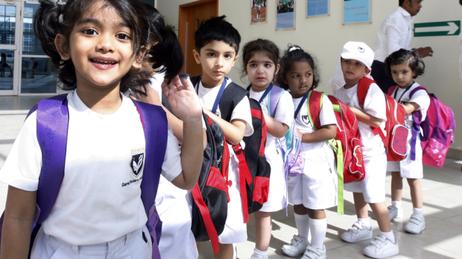
The prevalence of uniforms in public schools continues to rise in the United States as parents and school administrators exert efforts to create safe environments in our schools.

  • According to the National Center for Education Statistics, nearly 20% of all public schools have adopted uniform mandates.
  • Approximately 22% of elementary schools, 19% of all middle schools, and 10% of high schools currently require uniforms, and this trend continues to accelerate.

Although uniforms have been a mainstay of private schools, public schools didn’t jump on the bandwagon until 1994, when the Long Beach California School District integrated school uniforms to address safety issues challenging the district.

  • According to the school district data, within one year after the implementation of uniforms, the fights and muggings at school decreased by 50%, while sexual offenses were reduced by 74%.
  • Across the country, similar statistics abound; for example, at Ruffner Middle School in Norfolk, VA, the number of discipline referrals decreased by 42% once uniforms were enforced.

Fueled by these statistics, more schools nationwide require uniforms in their public schools, naming school safety as their primary motivation.

  • Even with these compelling statistics, other statistics argue that uniforms are not as beneficial as school administrators and parents are encouraged to believe.
  • Opponents cite research that shows a lack of individualism and comfort among students, working to decrease student learning and success.
  • Thus, the question remains: are public school uniforms good for your child?
. . .read more

What Parents Should Know About Graduation Rates

Updated
|
What Parents Should Know About Graduation Rates
Learn about graduation rates in the U.S., and tips for keeping your child in school.

The high school graduation rate is a "barometer of the health of American society and the skill level of its future workforce," according to Heckman and LaFontaine, the authors of a 2007 study. From a different perspective, graduation from high school can mean the difference between an individual student's future success and a future marred by unemployment, poverty, and even crime. Whether the viewpoint is broad or narrow, the significance of a high school diploma is evident. This article discusses government efforts to improve graduation rates, examines a recent study that attempts to gauge the magnitude of the dropout problem, and suggests steps that parents can take to encourage their children stay in school.

Introduction

In an age of information technology and a global economy, high school graduation is a minimum requirement for higher education and gainful employment. It is surprising, therefore, that there is no national average graduation rate on which all experts can agree. That is because there are numerous methods for calculating graduation rates. Estimates have ranged from 66 to 88 percent as a national average graduation rate, with 70 percent accepted by many authorities as the best estimate. Moreover, an average graduation rate does not tell the whole story. Black and Hispanic students drop out at higher rates than Non-Hispanic white students and Asian/Pacific Islander students. Students in urban environments are much less likely to finish high school than students in suburban areas. In some years, boys drop out at a higher rate than

. . .read more

Bullying, Name Calling, and Put Downs - Tips for Parents

Updated
|
Bullying, Name Calling, and Put Downs - Tips for Parents
Learn tips for helping your child deal with bullying, name calling and put-downs.

"Sticks and Stones may break my bones, but words will never hurt me…" - English Proverb. Once echoing throughout the halls of the nation’s schools, this simple phrase reminded children that the taunts that had been considered a rite of passage in childhood would one day end.

Fast forward several decades and “sticks and stones” becomes increasingly rare as schoolyard bullying is recognized as a serious problem. School administrators and teachers now know that, not only do words hurt, they often escalate into a physical conflict that envelops the bully and his victim as well as those around them, including adults and other children who may get caught in the crossfire.

All too often, what begins as minor name-calling or teasing, ends up with those involved coming to blows at the victim attempts to defend himself. This type of escalation is what experts insist creates even more violence. Violence does not begin with a physical attack, but rather a psychological one. What begins as words, perhaps a taunt or name-calling, escalates into pushing and shoving, which then may lead to a bloody nose, a black eye, or even a broken bone.

This television news video reports on death from bullying.

Experts insist that today’s lifestyles put so much pressure on children that they often bring that added stress into the classroom making what would normally be a minor incident just the straw that breaks

. . .read more

Recent Articles

The ROI of Public High School in 2026: Which Programs Actually Improve College and Career Outcomes?
Which public high school programs deliver real college and career results in 2026? Compare AP, IB, dual enrollment, CTE, and early college outcomes.
Spring Parent-Teacher Conferences: Key Questions
Spring Parent-Teacher Conferences: Questions Every Parent Should Ask to support academic growth, social development, and 2026 classroom goals.
Prepare for Spring Tests Without Anxiety
Learn how to prepare for spring standardized tests without increasing anxiety using proven strategies for families and schools.
Notice: Javascript file does not exist: /home/devsarath/workspace/psr/public_html/javascript/components/popper.min.js in /home/devsarath/workspace/psr/public_html/include/srn_lib/shared/misc/JSCompiler.inc.php on line 241 Notice: Javascript file does not exist: /home/devsarath/workspace/psr/public_html/javascript/components/tippy.min.js in /home/devsarath/workspace/psr/public_html/include/srn_lib/shared/misc/JSCompiler.inc.php on line 241 Notice: Directory does not exist in /home/devsarath/workspace/psr/public_html/include/srn_lib/shared/misc/JSCompiler.inc.php on line 241 Notice: Unable to save compiled js file in /home/devsarath/workspace/psr/public_html/include/srn_lib/shared/misc/JSCompiler.inc.php on line 241