Updated
|
Bullying, Name Calling, and Put Downs - Tips for Parents
Learn tips for helping your child deal with bullying, name calling and put-downs. This article has been updated to reflect 2026 data and recent developments.

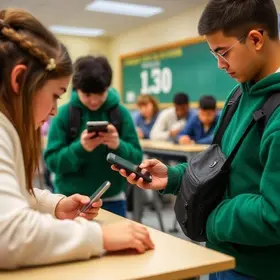
"Sticks and Stones may break my bones, but words will never hurt me…" - English Proverb. Once echoing throughout the halls of the nation’s schools, this simple phrase reminded children that the taunts that had been considered a rite of passage in childhood would one day end. Today, research confirms that verbal bullying can have lasting psychological effects and is often the starting point of more serious conflict.

Fast forward several decades, and “sticks and stones” becomes increasingly rare as schoolyard bullying is recognized as a serious problem. School administrators and teachers now know that, not only do words hurt, they often escalate into a physical conflict that envelops the bully and his victim as well as those around them, including adults and other children who may get caught in the crossfire.

All too often, what begins as minor name-calling or teasing ends up with those involved coming to blows when the victim attempts to defend himself. This type of escalation is what experts insist creates even more violence. Violence does not begin with a physical attack, but rather a psychological one. What begins as words, perhaps a taunt or name-calling, escalates into pushing and shoving, which then may lead to a bloody nose, a black eye, or even a broken bone.

Experts note that modern pressures, including social media, academic expectations, and mental health challenges, can increase the likelihood that conflicts escalate. The reality is that the intimidation, the anxiety, and the raw anger that

. . .read more

Should Sixth Grade Be in Elementary School or Middle School?

Updated
|
Should Sixth Grade Be in Elementary School or Middle School?
Should sixth graders be placed in elementary or middle school? We explore the pros and cons of the issue.

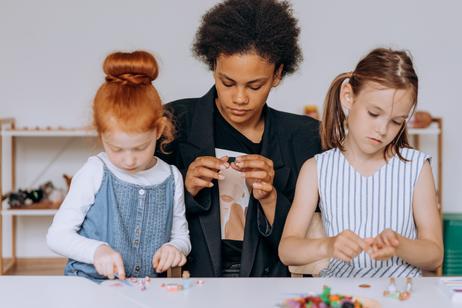
Sixth grade has been described as a major crossroads of a child's development. Thus, it would seem important to place sixth graders in the proper environment during this critical period. Curiously, a decades-long debate continues regarding whether sixth graders are better off in elementary school or middle school. After looking at common characteristics of sixth graders, this article examines the pros and cons of each approach. Although a 2007 study concluded that sixth graders in elementary school behave and test better than sixth-graders in middle school, 75 percent of school districts in the U.S. place sixth graders in middle school. Moreover, school district decisions to place sixth grade in elementary or middle school are sometimes based on purely financial considerations. The article concludes with some tips for parents who are concerned about sending their sixth-graders to middle school.

What Are Sixth Graders Like?

Educators agree that sixth graders are an unusually diverse group to which few generalizations apply. They are all moving from childhood to adolescence, but each one seems to move at a different pace. Here are some milestones that parents can expect as their children approach and enter sixth grade:

  • Children mature physically around the time of sixth grade. Girls become concerned about their physical appearance as their bodies begin to change. Boys may gain a lot of height and may start to shave. These physical changes often occur before children develop the emotional maturity to deal with them.
  • Girls mature physically sooner than boys.
  • Children begin to
. . .read more

Parental Involvement is Key to Student Success

Updated
|
Parental Involvement is Key to Student Success
This comprehensive guide explores the critical role of parental involvement in a child's education, discussing its impact on academic achievement, behavior, and overall success. It covers research findings, NCLB requirements, and practical tips for parents to become more involved in their children's schooling.

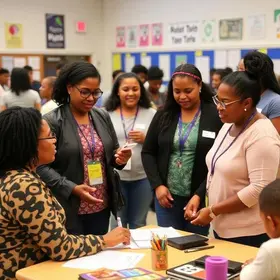
Extensive research has shown that students achieve more in school when their parents are involved in their education. This article discusses the critical role moms and dads can play in a child's education. It also examines what the No Child Left Behind Act (NCLB) says about parental involvement and offers practical tips that parents can use to become involved.

Role of Parental Involvement in Education

The critical role of parental involvement in a child's education has been examined in countless studies and reports. The research overwhelmingly supports the following conclusions.

1. Academic achievement increases when parents are involved in their children's education.

The more intensively involved the parents are, the greater the positive impact on academic achievement.

2. Parental involvement leads to better classroom behavior.

Parental involvement not only enhances academic performance but it also has a positive influence on student attitude and behavior. A parent's interest and encouragement in a child's education can affect the child's attitude toward school, classroom conduct, self-esteem, absenteeism, and motivation.

3. Parents should stay involved in their children's education from preschool through high school.

Parental involvement can make a positive difference at all age levels. Parental involvement tends to be the greatest with young children and tends to taper off as children get older. Studies have shown, however, that the involvement of parents of middle and high school students is equally important. In high school, for example, a parent's encouragement can influence whether a child stays in school or drops

. . .read more

Single-Sex Public Schools

Updated
|
Single-Sex Public Schools
Learn about single-sex education in public schools.

The No Child Left Behind Act of 2001 stated that single-sex education could be provided by recipients of federal education funds, but the lawmakers left the details to be worked out in regulations. Regulations issued in 2006 clarified the conditions for providing single-sex classrooms and extracurricular activities and expanded the former rules on single-sex schools.

Traditionally, public schools, unlike private schools, did not offer single-sex education. Today, at least 366 public schools throughout the nation are either entirely single-sex or have single-sex classrooms. More and more school districts are evaluating the pros and cons of single-sex education. While most public schools will remain coeducational, there may be a good reason to make single-sex schools and classrooms available to some public school students, particularly in schools with underprivileged students and in schools showing repeated poor performance.

It Could Happen Anywhere

Parents, teachers, and students in the school district of Greene County, Georgia, were surprised to hear that their schools were embracing single-sex education in a big way. The school board unanimously decided that beginning in the fall of 2008, all classes in all county schools will be single-sex classes. The move was designed to combat the significant problems of this rural school district, such as poor test scores, increasing dropout rates, and teen pregnancies. Under the plan, elementary school girls and boys will attend separate classrooms and those in grades 7 through 12 will attend separate schools. Greene County is the first entire school system in the U.S. to

. . .read more

Public School Jobs

Updated
|
Public School Jobs
Explore the various career opportunities available in public schools, from teaching and administration to support staff and counseling roles. Learn about the requirements, benefits, and rewards of working in a public school setting.

Public School Jobs

Are you passionate about shaping young minds and making a difference in your community?

  • A career in public schools might be the perfect fit for you.
  • With a wide range of job opportunities available, from teaching and administration to support staff and counseling roles, public schools offer a diverse array of options for individuals looking to start or transition into a fulfilling career.
  • As a cornerstone of American education, public schools play a vital role in fostering the next generation of leaders, thinkers, and citizens.
  • Whether you're a recent graduate, a career changer, or a seasoned educator, public schools offer a chance to inspire, educate, and empower students of all ages and backgrounds.

Let's explore the many public school jobs that can help you make a lasting impact.

Advantages to Working in Public Schools

Better Salary

You’ll probably receive more pay working for the public school system as opposed to working for a private school.

The median salary for high school teachers in the United States varies significantly between public and private schools. According to the Bureau of Labor Statistics, as of May 2024, the median annual salary for high school teachers in public schools (local elementary and secondary schools) is $66,930, while in private elementary and secondary schools, it's $60,130.

These figures indicate that public school teachers tend to earn more than their private school counterparts, but the difference may

. . .read more

Recent Articles

Preventing Suicide in Schools: 2026 Guide for Educators
Learn updated 2026 strategies for preventing suicide in schools, including warning signs, intervention plans, and school-wide mental health support.
The Impact of Social Media on Students (2026 Update)
Explore the impact of social media on students in 2026, including academic, mental health, and safety insights for parents and educators.
Notice: Javascript file does not exist: /home/devsarath/workspace/psr/public_html/javascript/components/popper.min.js in /home/devsarath/workspace/shared/misc/JSCompiler.inc.php on line 242 Notice: Javascript file does not exist: /home/devsarath/workspace/psr/public_html/javascript/components/tippy.min.js in /home/devsarath/workspace/shared/misc/JSCompiler.inc.php on line 242 Notice: Directory does not exist in /home/devsarath/workspace/shared/misc/JSCompiler.inc.php on line 242 Notice: Unable to save compiled js file in /home/devsarath/workspace/shared/misc/JSCompiler.inc.php on line 242