Updated
|
The Benefit of Foreign Language Programs
It’s clear there is currently a gap in language education. As of 2008, only 18.5% of K-12 students were enrolled in a foreign language class. Ask the experts and they all agree— schools with robust foreign language programs can bring students to the next level.

Ask the experts and they all agree— schools with robust foreign language programs can bring students to the next level.

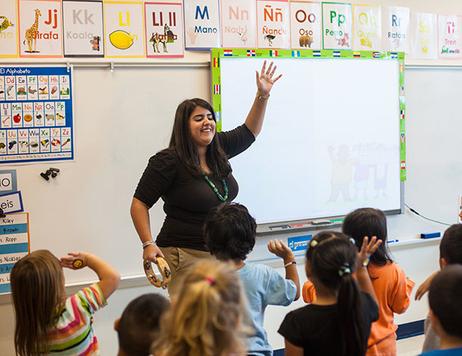
Public schools that invest in teaching foreign languages, whether through a full-fledged program or just a few classes, are certain to see the benefit in their student body, extracurriculars, and overall reputation. Full language programs start at an early age, immersing children in language classes every year from K-12, with extracurricular clubs, field trips, and learning experiences to enhance their language education.

It’s clear there is currently a gap in language education. As of 2008, only 18.5% of K-12 students were enrolled in a foreign language class. From 1997 to 2008, public and private elementary schools offering foreign language instruction decreased from 31% to 25%. These numbers are simply not acceptable.

This video outlines the benefits of learning a foreign language.

There are many reasons why schools, even those at the most elementary levels, should institute a foreign language program into their core curriculum. Dr. Jennifer Austin, an associate language professor at Rutgers University, is an adamant believer in the benefits of language studies. “Researchers have found that there are lifelong cognitive and academic benefits to becoming bilingual.”

Robert Riger, Vice President and Director of Pimsleur Language Programs, believes foreign language is the gateway to the rest of the world. “At an age where students begin to form individual preferences, dreams, and set priorities,


. . .read more

How To Guide: Parent-Teacher Conferences

Updated
|
How To Guide: Parent-Teacher Conferences
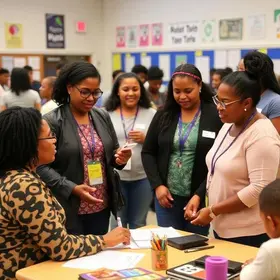
Communicating early and often with your child’s teacher is an important aspect of ensuring your child has the best possible education. Yet, sometimes parent-teacher conferences can be stressful for a variety of factors. In this article we provide a how-to guide for making the most out of your parent-teacher conference experience.

Parent-teacher conferences can be a bit unnerving for parents regardless of how many times they’ve attended. It can be difficult to cover all the questions you have in a short period of time, and you may even leave the conference feeling like you weren’t able to accomplish much. However, there are practical steps you can take before, during, and after parent-teacher conferences to ensure you have all the information you need to support your child’s learning.

Before the Conference

Parent-teacher conferences are often set up such that parents have precious little time with each teacher, in many cases 10-15 minutes at the absolute most. Come to the conference prepared to get the most out of your appointment. Begin by reviewing your child’s grades beforehand, including their report card, any progress reports, work your child has brought home, and any comments your child’s teacher has made on his or her homework. Gathering as much information as you can ahead of time allows you to formulate questions to ask your child’s teacher and be ready to dive into the discussion once your appointment time arrives. Some possible questions to ask include:

  • Is my child performing at grade level?
  • What are my child’s strengths? Weaknesses?
  • What can my child do to improve academically?
  • What can I do to help my child improve academically?

It’s important to be prepared whether your child is doing well or poorly. On the one hand, if your child is struggling, you’ll need to be familiar with why this is

. . .read more

The Parents’ Guide to Common Core

Updated
|
The Parents’ Guide to Common Core
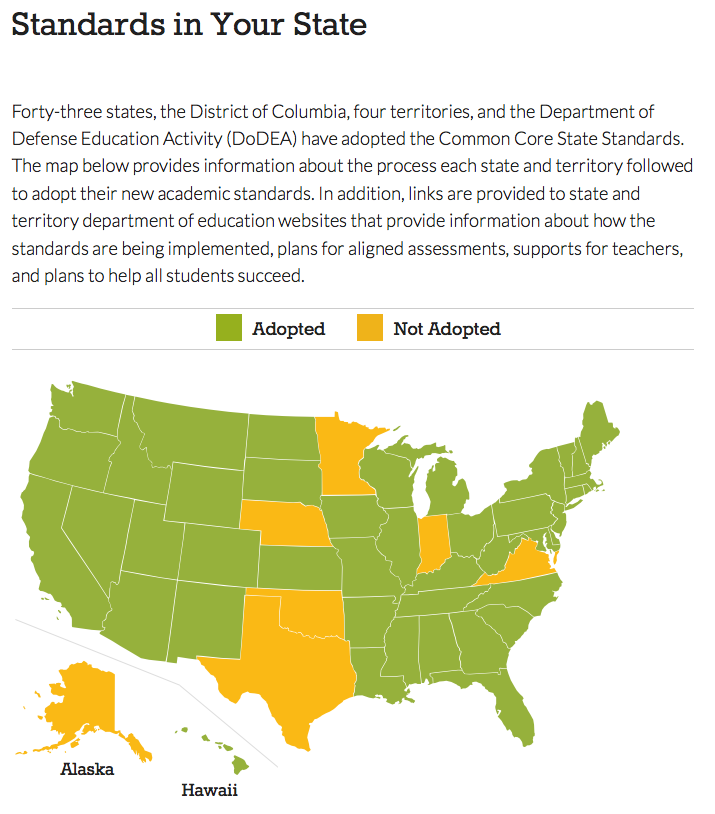
The Common Core State Standards were developed as a means to prepare K-12 students for success in college or the workforce upon graduation from high school. Since their inception, they have been adopted by 43 states. While much support has been given for the standards, many criticisms have emerged as well.

The Common Core State Standards were developed after education officials became concerned over the lack of progress American students were making in the areas of math and language arts. After years of being outperformed by children in other countries, various stakeholders came together to devise a new set of standards that would raise the bar for student learning. The result was the Common Core, which took shape over the course of 2009 and was implemented in 2010. In the years since, 43 states, Washington, D.C., the education wing of the Department of Defense, and several U.S. territories have adopted the standards.

Developed by Experts

The Common Core standards represent a cooperative effort between dozens of officials including governors, teachers, curriculum design experts, and researchers. However, two agencies, the National Governors Association for Best Practices (NGA) and the Council of Chief State School Officers (CCSSO) led the charge for the creation of the standards and continue to lead the ongoing efforts to implement the standards nationwide.

Throughout the design process, the NGA and CCSSO relied on input from content-area experts, teachers, and even parents to devise standards that are both rigorous and relevant to a modern-day education. The authors of the standards also worked with higher education officials, workforce trainers, and employers to ensure the standards facilitated the development of knowledge and skills required for success in college, at the workplace, and in life.

Purpose of

. . .read more

White Students are Now the Minority in U.S. Public Schools

Updated
|
White Students are Now the Minority in U.S. Public Schools
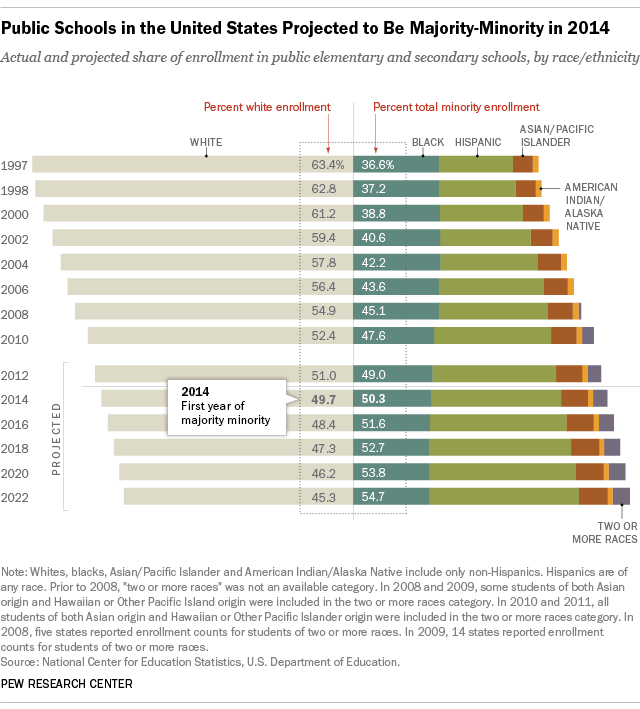
Increasing birth rates among immigrant families from Asia and Central and South America, combined with lower birth rates among white families, means that for the first time in history, public school students in the United States are majority-minority. This shift in demographics poses difficulties for schools as they work to accommodate children of varying language abilities and socio-economic backgrounds.

It has been an ongoing trend for nearly two decades – while the total number of students in American public schools has risen, the percentage of those students who are white has steadily fallen. According to the Pew Research Center, in 1997, over 63 percent of the 46.1 million U.S. public school students were white. Today, white students comprise just 49.7 percent of the 50 million students enrolled.

These changes in the racial makeup of the nation’s public schools reflect where the overall population is headed. According to recent estimates by the U.S. Census Bureau, by 2060, the white population in this country is projected to fall by more than 20 million people, while the Hispanic population is set to double. Black and Asian populations are expected to increase as well, although at rates far slower than Hispanics. By 2043, the nation as a whole is projected to become majority-minority.

Public School Diversity

While the white student population has declined by 15 percent since 1997, according to Pew, both Hispanic and Asian populations have rapidly increased. In that same time frame, Hispanic students have grown by 50 percent to 12.9 million. The number of Asian students has also seen significant growth, jumping 46 percent to 2.9 million students. The African-American student population, which will number 7.7 million this fall, has remained relatively steady over the last twenty years.

Much has been made recently of the number

. . .read more

The Right Kind of Universal Pre-K

Updated
|
The Right Kind of Universal Pre-K
For years there has been a push to universalize preschool in this country in order to provide all children with the leg up they will need in order to compete in a globalized economy. While approximately three-fourths of four year olds in America are involved in some kind of educational program, the United States still ranks only 25th out of the 34 most wealthy and upcoming nations in the world in terms of early childhood education, lagging behind the likes of Portugal and Mexico.

Despite the nation’s dismal ranking for early childhood education, there are signs that it is increasing in importance for American families. Just a decade ago, only 65 percent of four-year-olds were enrolled in preschool; today, that number is 78 percent. It is a subject that has also become politicized, with President Obama championing the cause several times during his presidency, most notably in his 2013 State of the Union Address. After that speech, the White House offered details of the president’s plan to greatly expand the availability and quality of pre-k programs, which include:

  • Expanding Early Head Start, which provides educational and health services to low-income and vulnerable children birth to three years of age;
  • Developing a cooperative effort between state and federal agencies to guarantee pre-k enrollment for children at or below 200 percent of the poverty line;
  • Build a corps of pre-k teachers that have the same level of credentials as those that teach K-12 students;
  • Extending the Nurse-Family Partnership Program provides home visits from nurses to low-income families. Nurses help promote health and positive parenting strategies from the child’s birth through their second birthday.

Many state legislatures have successfully enacted sweeping pre-k programs – Georgia and Oklahoma among them. However, the oddity of many state-based pre-K programs is that their success is far higher in states with poorer-performing public schools. Additionally, support for pre-k education seems much more robust in Republican-leaning states, especially those in the Deep South, like Texas,

. . .read more

Recent Articles

AI Report Cards: Should Schools Evaluate AI Use?
Explore whether schools should assess student AI use, the benefits, risks, and what responsible AI report cards could look like in 2026.
The Parent’s Guide to School Cell Phone Bans in 2026
Learn how school cell phone bans work in 2026, why districts are adopting them, and what parents should expect.
Parental Involvement in Public Schools: 2026 Update
Explore the latest 2026 trends, research, and strategies shaping parental involvement in public schools and student success.

Notice: Javascript file does not exist: /home/devsarath/workspace/psr/public_html/javascript/components/popper.min.js in /home/devsarath/workspace/shared/misc/JSCompiler.inc.php on line 242

Notice: Javascript file does not exist: /home/devsarath/workspace/psr/public_html/javascript/components/tippy.min.js in /home/devsarath/workspace/shared/misc/JSCompiler.inc.php on line 242

Notice: Directory does not exist in /home/devsarath/workspace/shared/misc/JSCompiler.inc.php on line 242

Notice: Unable to save compiled js file in /home/devsarath/workspace/shared/misc/JSCompiler.inc.php on line 242