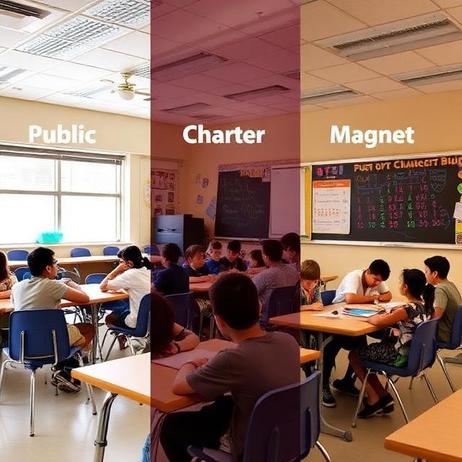
Choosing the right school is one of the most important decisions families make. When comparing public vs charter vs magnet school options, parents often find that each model offers distinct advantages, trade-offs, and learning environments.
In 2026, the landscape of public education continues to evolve, with expanded school choice, specialized programs, and increased accountability. Understanding how these three school types differ can help families make a confident, informed decision.
Understanding the Basics
Before diving into comparisons, it is helpful to define each type of school.
Traditional Public Schools
Traditional public schools are funded and operated by local school districts. They serve students based on geographic boundaries and must follow state curriculum standards.
Charter Schools
Charter schools are publicly funded but independently operated. They are granted more flexibility in curriculum, staffing, and teaching methods in exchange for meeting performance goals.
Magnet Schools
Magnet schools are public schools with specialized themes or curricula, such as STEM, performing arts, or international studies. They often attract students from across district lines.
Key Differences at a Glance
| Feature | Public Schools | Charter Schools | Magnet Schools |
|---|---|---|---|
| Funding | Public | Public | Public |
| Governance | District-run | Independent | District-run |
| Admission | Zoning-based | Lottery (if oversubscribed) | Application or lottery |
| Curriculum | Standardized | Flexible | Specialized focus |
| Transportation | Usually provided | Varies | Sometimes limited |
Academic Approach and Curriculum
Public Schools: Standardized and Broad
Public schools follow state-approved curricula designed to serve a wide range of learners. This consistency ensures alignment with statewide standards and assessments.
According to the National Center for Education Statistics, over 85% of U.S. students attend traditional public schools, reflecting their central role in education
nces.ed.gov
Charter Schools: Flexible and Innovative
Charter schools often emphasize:
- Project-based learning
- STEM or college-prep focus
- Extended school days or years
Because of their autonomy, some charter schools outperform district averages, while others struggle. Oversight varies by state, making research essential.
The U.S. Department of Education outlines charter school accountability here: www.ed.gov
Magnet Schools: Specialized Excellence
Magnet schools are designed to promote academic excellence in specific disciplines. Common themes include:
- Science and engineering
- Fine arts
- International baccalaureate programs
Admissions and Accessibility
One of the most significant differences in the public vs charter vs magnet school debate is how students are admitted.
- Public schools: Enrollment is typically guaranteed based on residence
- Charter schools: Open enrollment, often with lotteries when demand exceeds capacity
- Magnet schools: Competitive admissions, lotteries, or academic criteria
In 2026, increased demand for both charter and magnet schools means families should apply early and consider multiple options.
Pros and Cons
Public Schools
Pros:
- Guaranteed access
- Wide extracurricular offerings
- Strong community ties
Cons:
- Less flexibility in curriculum
- Quality varies by district
Charter Schools
Pros:
- Innovative teaching methods
- Smaller class sizes in some schools
- Greater parental choice
Cons:
- Inconsistent quality
- Limited transportation options
Magnet Schools
Pros:
- Specialized academic focus
- Diverse student populations
- Strong college preparation in certain fields
Cons:
- Competitive admissions
- May require commuting
2026 Trends Shaping School Choice
Several recent developments are influencing how families compare public vs charter vs magnet school options:
- Expansion of school choice policies in many states
- Increased focus on STEM and career pathways
- Growth of hybrid and tech-integrated learning models
- Greater emphasis on equity and access, especially in magnet programs
Parents are also using performance dashboards, school reviews, and community feedback more than ever to guide decisions.
How to Choose the Best Option
The best school depends on your child’s needs, interests, and learning style. Consider these questions:
- Does your child thrive in structured or flexible environments?
- Are specialized programs important?
- How far are you willing to travel?
- What is the school’s academic track record?
Frequently Asked Questions
Are charter schools better than public schools?
Not necessarily. Some charter schools outperform traditional public schools, while others do not. Quality varies widely.
Are magnet schools free?
Yes. Magnet schools are publicly funded and free to attend, though some may have additional requirements.
Can you switch between these school types?
Yes, but admission processes differ. Charter and magnet schools may require applications or lotteries.
Conclusion
When evaluating public vs charter vs magnet school options, there is no one-size-fits-all answer. Each model offers unique benefits, from the accessibility of traditional public schools to the innovation of charter schools and the specialization of magnet programs.
In 2026, families have more educational choices than ever. The key is to align those options with your child’s academic goals, interests, and long-term success.