Parenting and Learning Issues

Each child learns differently. Here we offer resources on learning styles and the classroom models that support them, expert advice on how to improve learning, and tips on parental involvement.

View the most popular articles in Parenting and Learning Issues:

Third Grade Reading Correlates with High School Graduation Rates

Updated
|
Third Grade Reading Correlates with High School Graduation Rates
How well your child reads in third grade could determine his or her success in high school. Learn about the reading study and how you can help your child excel in third grade, high school, and beyond. This article has been updated to reflect 2026 data and recent developments.

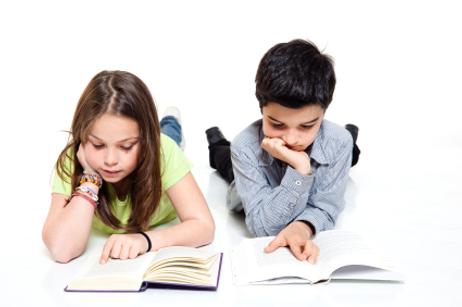
It may seem that your child has barely graduated from cut-and-paste projects in school before reading and math facts take center stage in their education. Suddenly, you find yourself opening books every night, listening to your child sound out words, and helping them understand the stories they are studying. Does your effort really matter in the overall academic success of your child?

It turns out that the time you spend reading with your kids continues to have a significant impact on their life success, as schools continue addressing post-pandemic learning loss and widening literacy gaps highlighted in the 2024 NAEP assessments. According to the Annie E. Casey Foundation and reinforced by recent National Assessment of Educational Progress (NAEP) data through 2024, your child's reading proficiency by third grade has a direct correlation to his success in high school and beyond. Multiple longitudinal studies continue to show that students reading below proficiency by third grade are significantly less likely to graduate from high school on time.

This webinar discusses the critical importance of developing students into proficient readers during the early years of childhood education.

Low Income = Low Proficiency

One of the most startling aspects of the study is the low proficiency rates among low-income students. Many of the children who are not able to read well by third grade end up dropping out of high school, thus directly

. . .read more

Should Public Schools Regulate Cyberbullying?

Updated
|
Should Public Schools Regulate Cyberbullying?
In response to recent cyberbullying tragedies, public schools now face the dilemma of how to protect their students from modern bullying.

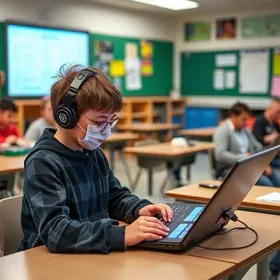
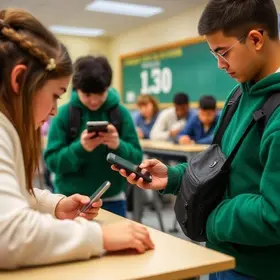
Tragic bullying cases like Phoebe Prince’s story have prompted public schools to review their responsibility in preventing bullying, both on and off-campus. With the rise of social networking, cyberbullying has become a real threat, and schools are scrambling to manage the ramifications of 2.0 bullying.

According to the Cyberbullying Research Center, cyberbullying can be defined as, "willful and repeated harm inflicted through the use of computers, cell phones, and other electronic devices." The First Amendment Center cites statistics that show one-third of teens on the Internet have experienced harassment online. The Centers for Disease Control and Prevention dub electronic aggression as an "emerging adolescent health issue."

This video from the PACER Center offers resources for students and teachers.

Clearly, there is no doubt that cyberbullying has become a major problem in recent years, but the question then becomes: what should public schools do about it? It does not appear to be a question with an easy answer if one considers the differing responses to the problem by public schools and the government.

On one hand, when cyberbullying affects a child's educational experience, the schools have a responsibility to put a stop to the behavior. On the other hand, much of the cyberbullying that occurs takes place outside of school, leaving schools helpless in monitoring such activity. Then, there is the first amendment guarantee of free speech. Where do we draw

. . .read more

Taxes, Investments and Loans: Learning Financial Literacy in High School

Updated
|
Taxes, Investments and Loans: Learning Financial Literacy in High School
While reading, writing, and arithmetic are the foundation of a child's education, financial literacy is growing in importance as well. Learn about public schools that are teaching financial literacy to their students.

We worry that our children cannot keep up globally in important subjects like math and science, but what about money management? While financial training has not traditionally been a part of the "3 R's" of education, in a world of tough economic times, it has become an essential component of a sound education.

Subsequently, some public schools are implementing financial subjects as a part of their core curriculum, while non-profit organizations are working hard to provide resources to schools to help them in their efforts. Financial literacy is slowly but surely becoming an academic catchphrase for the 21st century.

Why is financial literacy important?

Opp Loans answers that question as follows: "Financial literacy is important because it equips us with the knowledge and skills we need to manage money effectively. Without it, our financial decisions and the actions we take—or don’t take—lack a solid foundation for success. And this can have dire consequences:

  • Nearly half of Americans don’t expect to have enough money to retire comfortably.
  • Credit card debt has reached its highest point ever.
  • Forty percent of Americans can’t afford a $400 emergency expense.
  • Given the above statistics, it might not be surprising that nearly two-thirds of Americans can’t pass a basic test of financial literacy.

To explore the importance of financial literacy, we turned to personal finance experts working in colleges, high schools, and credit unions. Together, the populations they serve span a broad range of ages, incomes, and backgrounds. These educators witness first-hand the

. . .read more

4 Ways Parents Can Turn a Campus into a Top Public School

Updated
|
4 Ways Parents Can Turn a Campus into a Top Public School
Every campus has the potential to become a top public school. Learn about what you can do as a parent to improve your child's public school.

Parents want to ensure their children obtain the best education possible, but few know how significantly their input can turn a campus into a top public school. There are numerous ways parents can get involved to raise the bar for the neighborhood school system. Consider these four ideas to help your schools achieve the quality you want for your children.

Parental Involvement in the Classroom

When parents enter the classroom, they obtain a better perspective of the teacher and students' challenges. Parental involvement encourages better communication between the teacher and parent and between the parent and child. According to a study by Henderson and Berla, the benefits of parental involvement to students include:

Benefits are not restricted to students, however. The school also benefits from parental involvement in the following ways:

  • More support for teachers from families
  • Improved teacher morale
  • Higher student achievement
  • Better reputation in the community

Parents also benefit from getting more involved in school business. By becoming involved, parents develop more confidence in the school and teachers. Moms and dads also become more confident in their parenting abilities and their children's potential for success.

In this TEDX Talk, Megan Olivia Hall discusses building robust relationships with teachers and parents.

Better Nutrition and Fitness

Obesity is becoming a national epidemic in the United States, and it is no longer just

. . .read more

Immigrant Students and Public Schools: A Fluent Fit

Updated
|
Immigrant Students and Public Schools: A Fluent Fit
English language learners are scoring better on reading exams thanks to public schools who are working to improve their ELL curriculum. Learn about the improving language skills amongst ELL learners, as well as public high schools that specifically cater to immigrant students.

In a country as diverse as the United States, where nearly 18% of the population’s native language is not English, public schools have embraced the linguistic challenge presented by immigrant students. A rising number of public schools are gaining recognition for their outstanding efforts in working with immigrant students and non-English speaking learners. In fact, according to The Statesman, ELL students across the nation have made significant gains on standardized tests over the past three years.

The ELL Concern

The English Language Learner (ELL) population in the United States has grown significantly in the last several decades. While only 9 percent of students in 1979 reportedly spoke a non-English language at home, as of 2007, 20 percent of students claimed to speak a non-English language at home.

By law, public schools are mandated to provide the appropriate language and academic support for English Language Learners (ELLs), but some school districts have failed dismally in judging test scores.

Subsequently, the U.S. Education Department Office for Civil Rights began investigating school districts accused of not meeting the rights of their immigrant students. Specifically, the Education Department is looking into California’s Los Angeles Unified School District, as only 3 percent of its ELLs have achieved a “proficient” score on their high school math and English tests. Due to this low success rate, leaders seek to “determine whether those students are being denied a fair education.”

This video looks at the marginalized nature of the ELL

. . .read more

Recent Articles

Parenting and Learning Issues

IMPROVING LEARNING
A comprehensive look at the latest trends, expert advice and recent studies into improving student learning. Explore the latest studies into links between student performance, sleep and music. See why schools are opting for later start times and year round schedules.
PARENTAL INVOLVEMENT FROM K-12
Learn how direct involvement in your child’s education can impact school performance. Get expert advice on how to get involved, learn why and when you need to talk to a teacher and ways to make changes on campus.
BULLYING
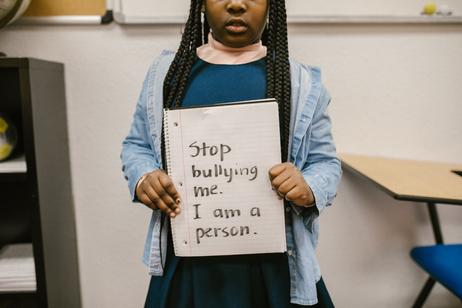
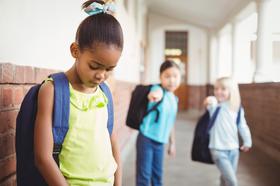
An overview of bullying in schools, laws to protect students, and the impact on education. This section provides great tips on protecting your child from being bullied or becoming a bully. Learn about the latest anti-bullying laws and see how cyber-bullying effects your child’s school performance.
TYPES OF LEARNING
What type of learner is your child? Be in the know about different types of learning and which classrooms are best suited for each type. What is project-based learning? Cooperative Learning? Would your child benefit from a blended learning experience? Explore these teaching techniques and learn how they could improve your child’s performance.
KINDERGARTEN AND ELEMENTARY ISSUES
Weigh the pros and cons of preschool, full day kindergarten and other issues affecting our youngest learners. Learn what can be done to help your child prepare to enter school, boost confidence, and encourage reading at the grade school level.
HIGH SCHOOL ISSUES
Learn more about issues specific to high school students. Get an overview of high school graduation rates, college readiness, career choice and social issues impacting teenagers in public schools.
Notice: Javascript file does not exist: /home/devsarath/workspace/psr/public_html/javascript/components/popper.min.js in /home/devsarath/workspace/shared/misc/JSCompiler.inc.php on line 242 Notice: Javascript file does not exist: /home/devsarath/workspace/psr/public_html/javascript/components/tippy.min.js in /home/devsarath/workspace/shared/misc/JSCompiler.inc.php on line 242 Notice: Directory does not exist in /home/devsarath/workspace/shared/misc/JSCompiler.inc.php on line 242 Notice: Unable to save compiled js file in /home/devsarath/workspace/shared/misc/JSCompiler.inc.php on line 242