Most educators and parents would agree that school needs to be a safe place if children are to successfully learn. However, what that safe place looks like has become a topic of controversy for one Michigan school district. On the one hand, a teacher is being applauded for standing up for homosexual students. On the other hand, that same teacher is being accused of bullying students who voiced their own views on anti-homosexuality based on their religion. Which stand is correct? The verdict is still out.
In 2026, debates surrounding student speech, religious expression, LGBTQ+ protections, and school safety policies continue to play out in school districts across the country. Public schools are still navigating how to balance student rights in public school with anti-bullying policies and inclusive learning environments.
The Howell Controversy
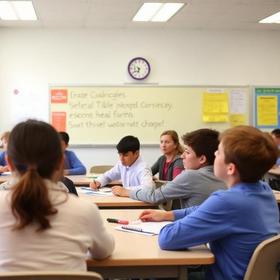
In a high school about 45 miles northwest of Detroit, a school teacher asked one of his economics students to remove a belt buckle that featured the Confederate flag. The teacher, Jay McDowell, explained that the symbol could be offensive to some of the students in the class. The student readily complied with the request, but the exchange sparked a discussion among other students and the teacher that resulted in two students being asked to leave the classroom.
The first student, 16-year-old Daniel Glowacki, asked McDowell to explain the difference between the Confederate flag and the rainbow flag that serves as a symbol of pride for the gay community. At the time, McDowell was wearing a T-shirt with an anti-gay bullying message.
When McDowell explained the difference, Glowacki responded with, "I don't accept gays." Glowacki went on to explain that homosexuality goes against his Catholic religion. When McDowell told Glowacki he could leave the classroom, another student raised his hand and asked to leave for the same reason.
Violation of First Amendment Rights?
Shortly after the incident, McDowell received a reprimand from the district, saying that his actions violated the student's First Amendment right to free speech. McDowell was given a one-day suspension without pay. The teacher's union for the district, of which McDowell was the president, filed a grievance against the school district regarding the disciplinary action.
At a public forum on bullying held by Howell Public Schools, McDowell told the crowd of parents, teachers, and students, "We have to create an environment in these schools that makes it safe for everyone. Kids who sit in fear do not learn." However, some parents felt that McDowell was the one bullying by disciplining kids for simply expressing their views.
Ronald Wilson, Howell Schools superintendent at the time, stated that McDowell "violated board policy" in dismissing a student who "disagreed with him." He added that because McDowell violated the student's right to free speech in the classroom, the district had no plans to reverse his suspension.
The legal balancing act between student speech and school authority remains a major issue today. The U.S. Department of Education issued 2026 guidance on constitutionally protected prayer and religious expression in public elementary and secondary schools.
Support for McDowell
On the other side of the spectrum, many students, parents, and educators came out in support of McDowell. Graeme Taylor, an openly gay teen from Pioneer High School in the Ann Arbor area, publicly shared his experiences with bullying and mental health struggles connected to his sexuality.
Supporters argued that schools have a responsibility to create environments where LGBTQ+ students feel safe from harassment and intimidation. In recent years, many districts have expanded anti-bullying programs and mental health supports for vulnerable student populations.
However, some of the support for McDowell became controversial as well. Reports indicated that threatening emails were sent to school officials after McDowell's suspension. District leaders said they received significant outside attention from people beyond the Howell community.
Matt and Phil Letten, Howell residents who organized a support group for McDowell, demanded that the suspension be rescinded and his pay reinstated. While they did not condone threatening behavior from supporters, they believed the larger issue surrounding bullying and student safety was worth addressing publicly.
"The district is clearly attempting to address bullying going forward; however, we cannot move forward without fully addressing the district's recent mistakes with regard to the discipline of Mr. McDowell," Matt Letten said at the time.
Ongoing Questions About Student Speech
As the debate continued in Howell, questions remained about whether students have a First Amendment right to oppose a certain segment of the population if those views stem from sincerely held religious beliefs. Others argued that focusing too heavily on politically and socially divisive issues distracts from academics and student achievement.
Today, many public school districts continue working to balance public school safety protocols, religious freedom protections, anti-discrimination requirements, and respectful classroom dialogue. Courts have generally upheld that students do retain constitutional speech protections in school settings, although schools may still regulate speech that substantially disrupts learning or targets students through harassment or intimidation.
Conclusion
The Howell controversy continues to illustrate the difficult balance public schools must strike between student free speech rights, religious expression, anti-bullying expectations, and the responsibility to maintain a safe learning environment. In 2026, that balance remains especially important as districts review policies on classroom conduct, harassment prevention, LGBTQ+ student support, and constitutionally protected expression.
Public schools cannot avoid these conversations, but they can handle them with clearer policies, consistent enforcement, and respectful communication. The central challenge remains the same: protecting students’ rights while ensuring that every child can learn in a school environment that is safe, orderly, and focused on education.