Teachers and Unions

A comprehensive look at teachers, tenure, and unions. Learn how unions impact school performance. Explore the impact of education reform on teaching qualification standards, traditional unions and controversial tenure rules.

View the most popular articles in Teachers and Unions:

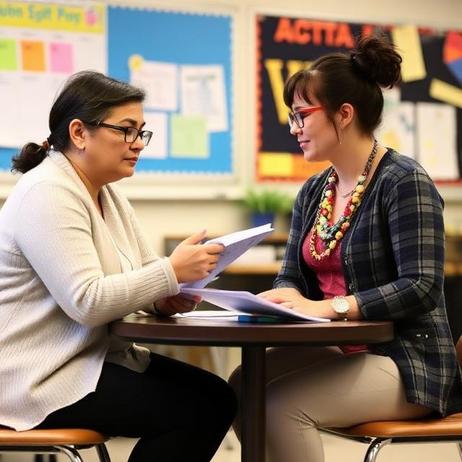
Preparing for Fall Parent-Teacher Conferences

Updated
|
Preparing for Fall Parent-Teacher Conferences
Learn how to prepare for fall parent-teacher conferences with practical tips, key questions, and 2026 communication strategies for families.

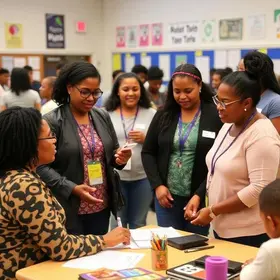
Fall parent-teacher conferences are one of the first major opportunities families and educators have to establish a productive partnership for the school year. Unlike spring meetings, which often focus on year-end performance and placement decisions, fall conferences help identify early academic trends, social adjustment concerns, and communication strategies before small issues become larger problems.

In 2026, parent-teacher conferences continue evolving alongside digital gradebooks, hybrid meeting formats, and increased attention to student wellness and executive functioning skills. Schools now frequently offer both in-person and virtual conference options, giving families more flexibility while also changing how conversations are structured and documented.

For parents, preparing thoughtfully can make these brief meetings significantly more productive. For teachers, organized conferences build trust and improve long-term family engagement. Research consistently shows that students benefit when schools and families communicate regularly and collaboratively.

According to the National Education Association, strong parent-teacher partnerships contribute to better attendance, stronger academic performance, and improved student behavior.

This guide explains how families can prepare for fall parent-teacher conferences, what questions to ask, and how to turn conference feedback into meaningful support throughout the school year.

Why Fall Parent-Teacher Conferences Matter

The first months of school provide important insight into how students are adjusting academically, socially, and emotionally. Teachers are beginning to identify:

  • Learning strengths and challenges
  • Classroom participation patterns
  • Organization and study habits
  • Peer relationships
  • Behavioral trends
  • Attendance concerns

Because the school year is still relatively new, fall conferences offer time to intervene early if support is needed.

. . .read more

How Public Schools Handle Substitute Teacher Shortages

Updated
|
How Public Schools Handle Substitute Teacher Shortages
Learn how public schools manage substitute teacher shortages, how staffing gaps affect students, and what districts are doing in 2026 to respond.

Substitute teacher shortages have become one of the most persistent operational challenges facing public schools in 2026. While teacher absences have always been part of school management, districts across the country are now struggling to find enough qualified substitutes to cover classrooms consistently.

The issue affects far more than scheduling logistics. Substitute shortages can disrupt instruction, increase teacher burnout, strain school budgets, and reduce learning continuity for students. For parents, the problem may raise concerns about classroom stability and educational quality.

As families evaluate school systems through resources like Public School Rankings and Compare Public Schools, understanding how schools handle substitute teacher shortages provides important insight into district leadership, staffing practices, and school resilience.

Why Substitute Teacher Shortages Are Increasing

Several factors have contributed to the ongoing substitute teacher shortage nationwide.

Teacher Burnout and Staffing Pressures

Schools continue to experience staffing strain following years of pandemic-related disruptions, increased behavioral challenges, and rising workload demands. Full-time teacher absences remain elevated in many districts, increasing demand for substitutes.

According to the National Center for Education Statistics, many public schools continue reporting staffing difficulties in both instructional and support positions.

Lower Pay Compared to Other Jobs

Substitute teaching often offers inconsistent work schedules and relatively low daily pay compared with jobs in other industries requiring similar education levels.

In some areas, substitute teachers can earn more predictable wages through retail, hospitality, or remote customer service positions.

Certification Requirements

Some states require substitute teachers to

. . .read more

The Future of Teacher Tenure in 2026

Updated
|
The Future of Teacher Tenure in 2026
Explore 2026 trends in teacher tenure, policy shifts, costs, salaries, and what parents should know for school planning and quality classroom instruction.

The Future of Teacher Tenure

Teacher tenure remains a central and evolving issue in U.S. public education, with major implications for school quality, staffing stability, and parent planning as families evaluate schools on behalf of their children.

What Teacher Tenure Means Today
Teacher tenure generally refers to employment protections granted to public school teachers after a probationary period, intended to ensure due process before dismissal. While tenure historically offered stability for educators, enabling them to advocate for students without fear of arbitrary termination, the policy is increasingly reexamined as districts and states respond to teacher shortages, accountability pressures, and performance concerns.

Current Landscape: Numbers, Salaries, and Teaching Workforce Trends
Understanding the modern workforce helps parents grasp how tenure fits into broader staffing dynamics:

  • The United States employs more than 3.2 million public school teachers in K-12 settings, with student-to-teacher ratios averaging around 15:1, reflecting national efforts to balance class sizes and instructional costs.

  • Teacher turnover remains high, with about 44 percent of teachers leaving the profession within their first five years and roughly 8 percent exiting annually overall. Average tenure in a school is about 3.3 years, indicating that many educators do not remain long enough to obtain traditional protections.

  • National average teacher pay is approximately $65,000, though salaries vary widely by state and urban versus rural district. Despite increases over the past decade, inflation-adjusted pay trails comparable professional wages, contributing

. . .read more

Public School Safety Protocols in 2025

Updated
|
Public School Safety Protocols in 2025
A detailed look at 2025 public school safety protocols, including new standards, technology, and staff training for safer campuses.

Public School Safety Protocols: What’s New in 2025?

Public School Safety Protocols have evolved rapidly in recent years, driven by community expectations, federal guidance, and the lessons learned from real incidents. In 2025, public districts nationwide are adopting more>This article outlines the most significant updates in 2025, examines how schools are implementing these Public School Safety Protocols, and offers guidance for families seeking to evaluate a district’s commitment to safety.

The 2025 Landscape: Why Public School Safety Protocols Are Changing

School administrators have emphasized that Public School Safety Protocols must support prevention, rapid communication, and post-incident recovery. Several developments have shaped this year’s changes.

Key drivers of 2025 Public School Safety Protocols include:

  • Rising expectations for parent communication

  • Increased federal and state funding for campus security systems

  • Greater use of behavioral-health-driven prevention

  • Stronger state-level auditing of Public School Safety Protocols

  • Expanded staff training mandates

  • New partnerships with local emergency agencies

Parents exploring district data often turn to resources such as Public School Revie to understand how Public School Safety Protocols vary across campuses.

Major Updates to Public School Safety Protocols in 2025 1. Technology Integration and Real-Time Monitoring

Districts are expanding technology deployments to create more responsive Public School Safety Protocols. In 2025, several tools are becoming standard rather than optional.

Widespread adoption includes:

  • AI-assisted camera networks that detect unusual behavior and alert safety teams

  • Digital visitor management systems at every public school entrance

  • Two-way classroom communication systems enabling teachers to report emergencies instantly

  • Anonymous reporting apps for bullying, threats, and self-harm concerns

. . .read more

Why Are Things Becoming More Difficult For Public School Teachers?

Updated
|
Why Are Things Becoming More Difficult For Public School Teachers?
Explore the biggest challenges facing public school teachers in 2026, from staffing shortages and funding concerns to technology demands and student support needs.

Public school teachers have a wonderful opportunity to shape the minds of the next generation. There is a great deal of satisfaction that comes from making an impact on a child’s life, but being a teacher isn’t always easy, especially in public school.

Teachers have always faced challenges, but in recent years the profession has become increasingly complex. Staffing shortages, student mental health concerns, school funding pressures, technology demands, and changing accountability systems have all added new layers of responsibility.

Keep reading to learn about some of the current challenges facing public school teachers and what they could mean for the future.

What Are the Biggest Challenges Teachers Face?

With changes in public policy, legislation, technology, and student needs, the U.S. education system is constantly changing. Before discussing some of the newer challenges facing public school teachers, it is important to recognize the issues that have existed for decades.

Some of the biggest challenges include:

  • Poorly behaved students
  • Limited resources and finances
  • Difficult parents
  • Federal requirements and standardized tests
  • Time constraints
  • Teacher shortages

Managing a classroom full of students is difficult under the best circumstances. Behavioral challenges can consume valuable instructional time and often require teachers to divide their attention between individual students and the rest of the class.

Limited resources remain another major concern. Many teachers continue to purchase classroom supplies with their own money, particularly in underfunded districts. Parents interested in learning more about how school budgets impact classrooms can explore Overview of the Funding of Public Schools (2026

. . .read more

Recent Articles

AI Report Cards: Should Schools Evaluate AI Use?
Explore whether schools should assess student AI use, the benefits, risks, and what responsible AI report cards could look like in 2026.
The Parent’s Guide to School Cell Phone Bans in 2026
Learn how school cell phone bans work in 2026, why districts are adopting them, and what parents should expect.
Parental Involvement in Public Schools: 2026 Update
Explore the latest 2026 trends, research, and strategies shaping parental involvement in public schools and student success.

Notice: Javascript file does not exist: /home/devsarath/workspace/psr/public_html/javascript/components/popper.min.js in /home/devsarath/workspace/shared/misc/JSCompiler.inc.php on line 242

Notice: Javascript file does not exist: /home/devsarath/workspace/psr/public_html/javascript/components/tippy.min.js in /home/devsarath/workspace/shared/misc/JSCompiler.inc.php on line 242

Notice: Directory does not exist in /home/devsarath/workspace/shared/misc/JSCompiler.inc.php on line 242

Notice: Unable to save compiled js file in /home/devsarath/workspace/shared/misc/JSCompiler.inc.php on line 242