Updated
|
10 Reasons Why High School Sports Benefit Students
Discover the 10 compelling reasons why high school sports are beneficial for students. This comprehensive article explores how athletics enhance academic performance, foster personal growth, and develop crucial life skills. From improved fitness and time management to leadership development and community representation, learn why participating in high school sports can be a game-changer for students' overall success and well-being.

10 Reasons Why High School Sports Benefit Students

Athletics have been a mainstay of the high school scene for decades.

  • Today, the field has merely expanded, encompassing an even greater variety of competitive options for male and female students alike.
  • While many students get involved in high school athletics for sheer love of the game, there are significant benefits from these extracurricular activities as well.

Here are 10 ways high school sports benefit students, some of which students and parents may not even realize.

Community Representation

While club sports have become a popular pastime for both students and college recruiters, there is still a lot to be said about playing for your high school team.

  • According to Unigo, students who participate in high school sports learn the benefit of representing their community on the field or court.
  • These athletes learn the fun of team rivalries and revel in the praise of a job well done for their school.
  • This feeling of community and the honor of representing the home team may run over into college athletics if the student advances in his sport as well.

Fitness

The fitness level of athletes in high school sports programs cannot be underestimated.

. . .read more

Montessori Education: Does it Work in Public Schools?

Updated
|
Montessori Education: Does it Work in Public Schools?
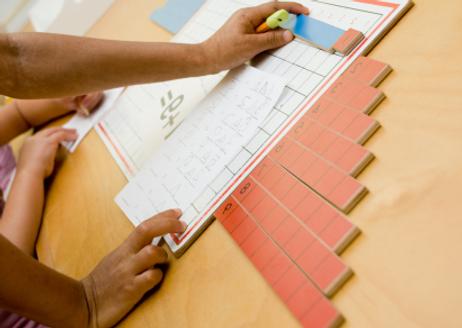
In light of an upcoming study on Montessori education in South Carolina, as well as the growing popularity of the Montessori Method in public charter schools, we’ll take a look at the principles behind Montessori education and whether it is an effective method for preparing some students for the professional world or higher education.

This article has been updated to reflect 2026 data and recent developments.

Montessori education has existed for more than a century, yet it continues to generate renewed interest as public schools search for innovative ways to improve student outcomes. Once limited largely to private institutions, Montessori programs are now increasingly found in public school systems, particularly through magnet and charter models.

This expansion comes at a time when educators are seeking alternatives to traditional instruction, especially approaches that support individualized learning, student engagement, and long-term academic growth.

As Montessori education gains traction in public settings, an important question remains: Does it deliver measurable benefits for students in today’s educational landscape?

What Is Montessori Education?

Montessori education was founded by Dr. Maria Montessori in 1907. Her approach was based on the idea that children learn best through self-directed activity in a carefully prepared environment.

In a Montessori classroom, students are encouraged to:

  • Choose their own learning activities
  • Work at their own pace
  • Engage in hands-on, experiential learning
  • Develop independence and responsibility

Rather than relying heavily on lectures or standardized instruction, Montessori classrooms emphasize exploration, collaboration, and real-world application.

According to the American Montessori Society, this method supports both academic development and social-emotional growth.

Key Features of Montessori Classrooms

Montessori classrooms differ significantly from traditional public school environments. While implementation can vary by district, several core elements remain consistent.

Multi-Age Grouping

Students are typically grouped in multi-year age bands such as:

  • Ages 3–6
  • Ages 6–9
  • Ages 9–12

This structure allows younger students to

. . .read more

10 Tips for Choosing the Best School for Your Child

Updated
|
10 Tips for Choosing the Best School for Your Child
Make sure you consider these 10 factors when choosing the school best poised to provide the most effective education for a child’s specific needs.

The right school for your child can make all the difference in his or her successful academic career. The good news is that there are many options in education beyond the public school down the street today. The bad news is that the abundance of options often leaves parents in a quandary over how to choose the best environment for their children. It is important to know what to look for in a school to ensure your child receives the best possible education for his specific needs. In some cases, that might indeed be the public school down the street, while other children may need a different environment to facilitate their learning process most effectively.

What are the Choices?

Many parents are unaware of the different choices they have in educating their children today. According to Education.com, some of the options available in K-12 education include:

Neighborhood Public Schools

It is important to learn about the various types of schools available nearby, so you can make an informed choice for your children.

Factors to Consider when Selecting a School

Once you know which options are available to you, it is time to determine the best environment for your child, based on the 10 steps we have outlined here:

Finding a Good Fit

To find the best learning environment, a parent needs to set the following four criteria outlined at GreatSchools.org:

  • What you
. . .read more

Detroit Public Schools Lay Off Thousands of Teachers

Updated
|
Detroit Public Schools Lay Off Thousands of Teachers
Recent news out of Detroit finds that thousands of teachers and school staff have been notified they will have to reapply for their jobs for the next school year. What does this mean for students and the district?

Recent news out of Detroit finds that thousands of teachers and school staff have been notified they will have to reapply for their jobs for the next school year. What does this mean for students and the district?

In response to numerous changes made to the Detroit Public School system at the time, thousands of teachers in the district received “pink slips” telling them they could reapply for their jobs over the summer. With more than 4,000 teachers affected ahead of the upcoming school year, many predicted that chaos would reign when students returned to classrooms in the fall.

At the same time, district officials attempted to reassure students and parents that the decision to lay off teachers was the best way to ensure they had sufficient teachers, and the right teachers, heading up classrooms at the beginning of the school year.

Changes to the District Prompt Layoffs

One reason for the mass layoff was the many changes the Detroit school system faced during that period. A new system, the Educational Achievement Authority, was put in place to deal with schools that were consistently unable to perform at state standards. Under this system, 15 Detroit schools were slated to switch districts for the following school year, removing those schools from the Detroit Public School system. All of those schools were classified as low-performing, according to state standards.

This change involved approximately 12,000 students leaving DPS for the Educational Achievement Authority system. According to eSchool News,

. . .read more

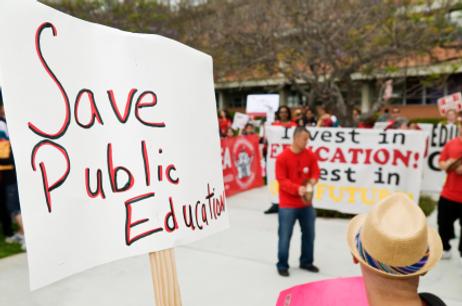
Are Teacher Unions a Help or Hindrance to Public Education?

Updated
|
Are Teacher Unions a Help or Hindrance to Public Education?
In light of all the finger-pointing occurring in the education reform movement, we’ll look at the good and bad of teachers unions – and whether these organizations really work in favor of students and/or teachers.

Teacher unions have been a part of American education for well over a century, beginning with grassroots efforts to support teachers through improved salaries, benefits, and working conditions. The two national organizations, the American Federation of Teachers (AFT) and the National Education Association (NEA), have paved the way for dozens of state and local teacher associations, often referred to as Independent Education Associations (IEAs). In light of education reform gaining speed nationwide, these teacher unions have recently been put in the spotlight – either as the major hurdle standing in the way of true reform, or a potentially valuable tool in bringing about the sort of change needed in education today.

This video offers an overview of the National Education Association.

History of the Teacher Union

According to the PBS website, the early beginnings of the teacher union can be traced all the way back to the early years of the 20th century, when city boards of education began the first efforts at education reform. While this early focus was positive in some respects - including raising the standards of teaching, ensuring student achievement, and rooting out corruption - teachers at the time did not feel like a significant part of the reform process. Teachers rebelled against the changes implemented by business leaders and education bureaucrats, and they began forming local associations that eventually grew into the

. . .read more

Recent Articles

AI Report Cards: Should Schools Evaluate AI Use?
Explore whether schools should assess student AI use, the benefits, risks, and what responsible AI report cards could look like in 2026.
The Parent’s Guide to School Cell Phone Bans in 2026
Learn how school cell phone bans work in 2026, why districts are adopting them, and what parents should expect.
Parental Involvement in Public Schools: 2026 Update
Explore the latest 2026 trends, research, and strategies shaping parental involvement in public schools and student success.

Notice: Javascript file does not exist: /home/devsarath/workspace/psr/public_html/javascript/components/popper.min.js in /home/devsarath/workspace/shared/misc/JSCompiler.inc.php on line 242

Notice: Javascript file does not exist: /home/devsarath/workspace/psr/public_html/javascript/components/tippy.min.js in /home/devsarath/workspace/shared/misc/JSCompiler.inc.php on line 242

Notice: Directory does not exist in /home/devsarath/workspace/shared/misc/JSCompiler.inc.php on line 242

Notice: Unable to save compiled js file in /home/devsarath/workspace/shared/misc/JSCompiler.inc.php on line 242