This article has been updated to reflect 2026 data and recent developments.
Montessori education has existed for more than a century, yet it continues to generate renewed interest as public schools search for innovative ways to improve student outcomes. Once limited largely to private institutions, Montessori programs are now increasingly found in public school systems, particularly through magnet and charter models.
This expansion comes at a time when educators are seeking alternatives to traditional instruction, especially approaches that support individualized learning, student engagement, and long-term academic growth.
As Montessori education gains traction in public settings, an important question remains: Does it deliver measurable benefits for students in today’s educational landscape?
What Is Montessori Education?
Montessori education was founded by Dr. Maria Montessori in 1907. Her approach was based on the idea that children learn best through self-directed activity in a carefully prepared environment.
In a Montessori classroom, students are encouraged to:
- Choose their own learning activities
- Work at their own pace
- Engage in hands-on, experiential learning
- Develop independence and responsibility
Rather than relying heavily on lectures or standardized instruction, Montessori classrooms emphasize exploration, collaboration, and real-world application.
According to the American Montessori Society, this method supports both academic development and social-emotional growth.
Key Features of Montessori Classrooms
Montessori classrooms differ significantly from traditional public school environments. While implementation can vary by district, several core elements remain consistent.
Multi-Age Grouping
Students are typically grouped in multi-year age bands such as:
- Ages 3–6
- Ages 6–9
- Ages 9–12
This structure allows younger students to learn from older peers, while older students reinforce their knowledge through mentorship.
Extended Work Periods
Students often participate in uninterrupted work cycles lasting two to three hours. During this time, they move freely between activities, focusing on subjects that align with their individual learning plans.
Hands-On Learning Materials
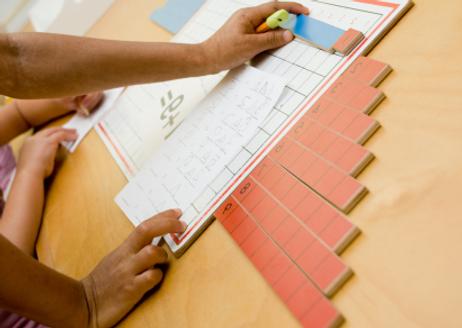
Montessori classrooms use specialized materials designed to teach concepts through tactile experience. These materials are self-correcting, allowing students to identify and fix mistakes independently.
Teacher as Guide
Rather than serving as the central source of instruction, teachers act as facilitators. They observe student progress, introduce new concepts when appropriate, and provide individualized support.
For families comparing classroom structures, this contrasts sharply with more traditional models outlined in What are the Benefits of Public School Over Homeschooling?
The Growth of Montessori in Public Schools
Montessori education began appearing in public schools in the United States in the 1970s. Since then, growth has accelerated, particularly over the past decade.
As of 2025, there are hundreds of public Montessori programs across the country, many located in urban districts seeking to expand school choice and improve outcomes.
These programs are often implemented through:
- Magnet schools
- Charter schools
- District-run specialty programs
Public Montessori schools aim to make this educational approach accessible to a broader range of students, including those from diverse socioeconomic backgrounds.
To explore how public school options are evolving, visit School Choice in 2026: What Public School Families Need to Know
How Well Does Montessori Work?
Research into Montessori education has expanded significantly in recent years. While earlier studies were limited in scope, newer research offers a more comprehensive look at outcomes.
A 2023 longitudinal study published by the National Center for Education Statistics highlights that students in well-implemented Montessori programs often demonstrate:
- Stronger executive functioning skills
- Higher levels of engagement
- Comparable or improved academic performance in math and reading
Additionally, research from the Learning Policy Institute suggests that student-centered learning models, including Montessori, can improve long-term retention and critical thinking skills.
However, results vary depending on program quality, teacher training, and fidelity to the Montessori model.
Benefits of Montessori in Public Education
Advocates of Montessori education point to several advantages, particularly in public school settings.
Individualized Learning
Students progress at their own pace, which can benefit both advanced learners and those who need additional support.
Social and Emotional Development
The emphasis on independence and collaboration helps students build confidence, responsibility, and interpersonal skills.
Engagement and Motivation
Hands-on learning and choice-based activities often lead to higher levels of student engagement compared to traditional classrooms.
Equity and Access
Public Montessori programs expand access to an approach that was once primarily available to private school students.
These benefits align with broader efforts to close achievement gaps, a topic explored further in Closing the Achievement Gap in Public Schools (2026 Update)
Challenges and Criticisms
Despite its advantages, Montessori education is not without challenges.
Implementation Variability
Not all programs fully adhere to Montessori principles. Inconsistent implementation can affect outcomes and lead to mixed results.
Teacher Training Requirements
Montessori educators require specialized training, which can be costly and time-intensive for districts.
Assessment Differences
The lack of traditional grading systems can make it difficult to align with state testing requirements and accountability measures.
Scalability
Expanding Montessori programs across large public school systems presents logistical and financial challenges.
These factors highlight the importance of careful planning and sustained investment when adopting alternative education models.
Montessori and Student Outcomes: What Recent Studies Show
Recent research has provided more clarity on how Montessori students perform over time.
A 2024 study from the University of Virginia found that students in public Montessori programs showed:
- Higher levels of creativity and problem-solving
- Stronger collaboration skills
- Comparable standardized test scores to peers in traditional settings
Another ongoing multi-year study continues to examine the long-term impact of Montessori education on:
- Academic achievement
- Discipline rates
- Graduation outcomes
These studies reflect a growing body of evidence supporting the effectiveness of Montessori when implemented with fidelity.
Montessori vs. Traditional Public School Models
The differences between Montessori and traditional education models can be summarized as follows:
| Feature | Montessori Model | Traditional Model |
|---|---|---|
| Learning Pace | Student-driven | Teacher-directed |
| Classroom Structure | Multi-age groups | Single grade levels |
| Instruction Style | Hands-on, experiential | Lecture-based |
| Assessment | Observational, portfolio-based | Tests and grades |
| Teacher Role | Guide/facilitator | Primary instructor |
Understanding these differences can help families determine which model best suits their child’s learning style.
The Future of Montessori in Public Schools
Montessori education is likely to continue expanding in public school systems, particularly as districts seek innovative solutions to persistent challenges.
Key trends shaping its future include:
- Increased demand for personalized learning
- Greater emphasis on social-emotional development
- Continued growth of school choice initiatives
- More rigorous research on program effectiveness
In addition, advances in educational technology may complement Montessori principles by providing new tools for individualized learning.
Conclusion: Is Montessori the Future of Public Education?
Montessori education is no longer a niche option. Its presence in public schools reflects a broader shift toward student-centered learning and flexible instructional models.
While it may not replace traditional education entirely, Montessori offers a compelling alternative, particularly for families seeking a more individualized and holistic approach.
As research continues to evolve, the success of Montessori in public schools will depend on thoughtful implementation, strong teacher training, and sustained support from districts and communities.
For parents exploring different public school models, understanding how Montessori compares to traditional approaches is an important step in making informed educational choices.