Updated
|
What You Need to Know about Emergency Response Procedures in Public Schools
Learn about how public schools are protecting students against emergencies, and what parents need to know about keeping their children safe in public schools.

In the wake of nearly 10 years of increased school violence, all public schools are legally required to possess specific lockdown and emergency response procedures. Specifically, middle schools and high schools, which experience greater safety breaches due to their age groups, should frequently practice their emergency response protocols to ensure that all students and staff are ready to respond in the rare case of a serious emergency or threat. An awareness of the public school’s emergency protocols can help protect all community members—especially the students.

This video outlines how to set up a protocol for handling a crisis situation.

Types of Emergency Response

Public schools have different “threat levels” that result in specific emergency responses. For example, Montgomery Public Schools in Rockville, Maryland employ two specific threat level procedures. The first type of threat is labeled as “code blue.” A “code blue” threat signifies that there is an emergency or serious crisis near the school. In the case of a “code blue,” all Montgomery administrators announce appropriate information to the whole school, resulting in immediate teacher response.

Teachers in a “code blue” situation are to ensure that no students in the building are unsupervised. Classroom instruction continues, however, students are not permitted to leave the building unsupervised. While a “code blue” can potentially turn into a serious situation, this type of threat is generally not a

. . .read more

5 Ways to Boost Your Elementary Child’s Confidence and Esteem

Updated
|
5 Ways to Boost Your Elementary Child’s Confidence and Esteem
Learn about how you can encourage your child’s self-esteem and confidence during the formative elementary school years.

The elementary school years play a formative role in shaping a child’s self-esteem and confidence. Children with high self-esteem typically tackle new challenges more effectively, achieve more success in school, and generally exhibit fewer personal and behavioral issues.

On the contrary, children with low self-esteem tend to experience higher levels of anxiety and frustration. Additionally, low self-esteem can cause children to become passive and withdrawn from school and friends. As self-esteem plays a critical role in a child’s overall personality development, attitude, and persona, parents can utilize five specific strategies to boost their child’s positive feelings and confidence.

Five Strategies for Self Esteem

According to the Nemours Foundation, self-esteem is the term that is used to describe a child’s general feelings of self-worth. Self-esteem is often gauged by how one collectively feels about him or herself, and self-esteem also influences our personal beliefs about our abilities, desires, and interests.

The Nemours Foundation further articulates that parents play a large role in their child’s development of esteem: “As kids try, fail, try again, fail again, and then finally succeed, they develop ideas about their own capabilities. At the same time, they're creating a self-concept based on interactions with other people.” Experts assert that parents should implement specific strategies to encourage the positive development of their child’s esteem and confidence.

1. Use Positive Encouragement

One of the best ways to boost self-esteem in

. . .read more

Teachers’ Secrets to Helping Your Teen Get Organized in School

Updated
|
Teachers’ Secrets to Helping Your Teen Get Organized in School
Learn about strategies and tips you can incorporate to help your teenager be organized and excel in public high school.

New struggles and challenges must be confronted at each grade level during a child’s academic development. Specifically, in the public high school years, many teens struggle to stay organized, facing difficulty managing their assignments and agendas. The high school years open students to far more freedoms, social opportunities, new technologies, and countless distractions. Subsequently, many teens cannot seem to figure out how to manage all of their obligations.

Being organized is an essential skill that will help your teen as he or she grows into an adult. Research shows that organized students develop habits that will help them perform better in school and in the long term in their professional and adult life. Thankfully, there are several ways parents can continue to guide their teenage children toward greater organization and self-management.

Secrets to Teenage Organization

One of the main reasons many parents struggle to guide their teenage children towards organization is the common teenage desire for freedom from their parents. As teens encounter more privileges and responsibilities, they want to break free from the parental nest.

During this period of unrest and self-discovery, teens quickly feel overwhelmed and disorganized. As teens desire more freedom and self-control, parents are often pushed away as they try to intervene. Despite this power struggle, parents can still offer guidance and support.

Set the Boundaries

First and foremost, if your teen is among the many who desire to assert their independence, you must first set and explain clear boundaries and expectations.

. . .read more

The Truth about the Power of Standardized Test Scores

Updated
|
The Truth about the Power of Standardized Test Scores
Learn about the true importance of standardized test scores in today’s competitive college admissions process.

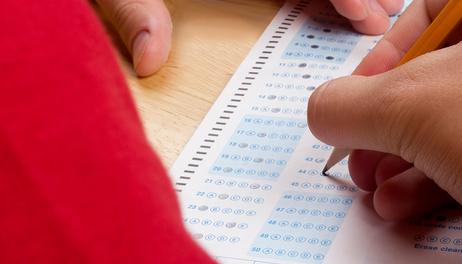
After hours of cramming, attending test prep courses, and enduring long hours of practice exams, students wonder how much-standardized test scores matter.

Some experts argue that standardized test scores are not an accurate measure of a student’s intelligence, while others assert that these scores help gauge a student’s abilities more accurately. With this raging debate, recent studies reveal the true influence of standardized test scores on a high school student’s college application and acceptance.

Why Take Standardized Tests?

With a rising number of students applying to community colleges and universities, most schools now require all applicants to complete standardized tests. The most popular standardized tests include the SAT or the ACT assessments. In fact, according to Scholastic, American students today are among the most tested students in the world! Studies show that students combined in the United States take nearly 100 million tests yearly.

With the excessive testing forced upon American children and teens, many wonder: What’s the point? As Scholastic further explains, these tests have an array of reasons and purposes. Specifically, standardized tests are “Viewed as a measure of teacher and school competence and, in some cases, can affect a child's future placement in a school.”

Some tests are designed to ensure that all students meet average progress rates. In contrast, other tests aim to assess each student’s unique abilities as they continue to apply for higher education institutions. These

. . .read more

5 Top Secrets to Getting on a Teacher’s “Good Side”

Updated
|
5 Top Secrets to Getting on a Teacher’s “Good Side”
Learn how you and your child can get on a teacher’s “good side” with these five strategies.

While every teacher naturally wants to help students learn and excel, there are inevitably some “favorites” in the classroom. However, based on expert information and educators themselves, parents can be involved and take simple steps to help get on the teacher’s “good side.”

Meet the Teacher

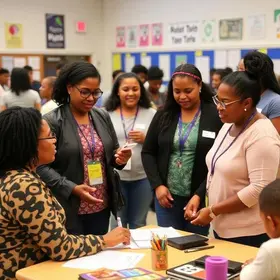
Most schools host “open-house” or “meet the teacher” events at the beginning of any school year or new semester. If your child’s school provides the community with this opportunity, try your best to attend! The open-house invitations allow parents and teachers to interact face-to-face.

This parent-teacher meeting can ameliorate various miscommunication issues down the line. For example, if your child comes home complaining of a teacher’s unfairness or assignment, you can use your own knowledge of the teacher (based on your meeting) to assess if your child’s perceptions are accurate. Upon meeting parents at open-house events, many teachers can clearly outline their classroom procedures, grading policies, and so forth. By becoming aware of these guidelines and the teacher’s personality, you can more clearly assess any future issues that your child may encounter in the teacher’s class.

Establish Communication

If you can meet the teacher at an open-house event, then you’re off to the right start! However, if you cannot attend a meet-the-teacher event, try offering your introduction through another alternative method. For example, email the teacher, introducing yourself in a friendly fashion. Offer your home number or

. . .read more

Recent Articles

AI Report Cards: Should Schools Evaluate AI Use?
Explore whether schools should assess student AI use, the benefits, risks, and what responsible AI report cards could look like in 2026.
The Parent’s Guide to School Cell Phone Bans in 2026
Learn how school cell phone bans work in 2026, why districts are adopting them, and what parents should expect.
Parental Involvement in Public Schools: 2026 Update
Explore the latest 2026 trends, research, and strategies shaping parental involvement in public schools and student success.

Notice: Javascript file does not exist: /home/devsarath/workspace/psr/public_html/javascript/components/popper.min.js in /home/devsarath/workspace/shared/misc/JSCompiler.inc.php on line 242

Notice: Javascript file does not exist: /home/devsarath/workspace/psr/public_html/javascript/components/tippy.min.js in /home/devsarath/workspace/shared/misc/JSCompiler.inc.php on line 242

Notice: Directory does not exist in /home/devsarath/workspace/shared/misc/JSCompiler.inc.php on line 242

Notice: Unable to save compiled js file in /home/devsarath/workspace/shared/misc/JSCompiler.inc.php on line 242