Updated
|
New York City Schools: Programs to Feed Low-Income Kids
We take a closer look at the nutrition center in the country’s largest school district and what it does to ensure low-income kids get the nutrition they need throughout the year.

Serving more than one million students each year, the New York City Department of Education is the largest school district in the country. This district faces serious challenges when it comes to ensuring all students in the city get at least one or two hot meals every day, regardless of their income level. With a wide variety of services provided by the School Food division of the New York City Department of Education, students throughout the city get the nutrition they need all through the school year and beyond.

About NYC School Food Services

According to the NYC School Food website, this department serves around 850,000 meals to more than 1.1 million students in New York City every day. The department offers a free breakfast program to all students in the city, based on the philosophy that students that start their day with a nutritious meal perform better academically. The department also serves lunch and 1,700 schools across the city, including free lunches for many students that qualify.

According to the Human Resources Administration of the New York City government, qualification for free or reduced-price lunch is based on family income level. A family of five qualifies for the free lunch program if their monthly income is $2,927 or below. That same family of five can also qualify for a reduced-price lunch, where the student only has to pay 25 cents per meal, if their monthly income is $4,165 or

. . .read more

5 Goals of the Los Angeles Unified School District

Updated
|
5 Goals of the Los Angeles Unified School District
We review the five goals of the Los Angeles Unified School District and their strategies for meeting those goals.

The Los Angeles Unified School District, one of the largest public school districts in the United States, has very specific goals for its students. Those goals are outlined at the district website, as well as the strategies the district plans to use for achieving those goals. The goals all point towards preparing students for career or college readiness once they graduate from Los Angeles high schools. However, the strategies begin implementation long before students ever set foot in a high school in the county.

Goal 1: Prepare Students for Career and College by Transforming the Teaching and Learning Process

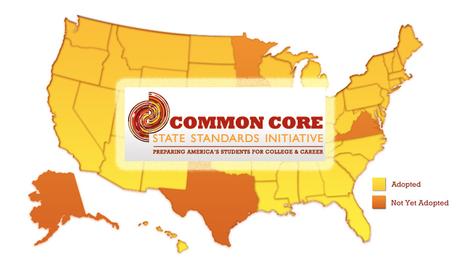
At the foundation of this goal is the implementation of Common Core Standards. According to the website, Common Core Standards provide a consistent expectation for all students and faculty within the Los Angeles Unified School District. These standards encompass English Language Arts and mathematics. English Language Development standards are also in place for the district to ensure English learners are able to master the core requirements for English Language Arts.

Common Core Standards were chosen by the Los Angeles Unified School District for a number of reasons, including:

  • These standards provide for career and college readiness after high school
  • Common Core Standards include rigorous content and develop high-order skills
  • The standards are consistent, understandable, and measurable
  • Common Core Standards are evidence-based
  • These standards are used by other countries, so students in L.A. remain competitive on a global level
  • Common Core Standards build on the strengths of
. . .read more

Philadelphia Schools: Renaissance Schools Initiative Plans Expansion

Updated
|
Philadelphia Schools: Renaissance Schools Initiative Plans Expansion
We report on the latest plans by Philadelphia Public Schools to convert more public schools to charter schools.

The Renaissance School Initiative is continuing its efforts to transform some of the lowest-performing schools in Philadelphia by giving them over to charter organizations. This year, six more struggling schools are slated for charter school takeovers and the district is currently evaluating the applicants for the job. While this new process has been hailed by some as an effective way to raise the quality of education in one of the largest school districts in the country, others worry that there is simply not enough evidence to support the idea of allowing more public schools to be absorbed by charters this year.

About the Renaissance School Initiative

The Renaissance School Initiative was established by the School District of Philadelphia on January 27, 2010, according to the district’s website. The goal of the initiative is to bring dramatic student improvement through the transformation of some of the city’s lowest-performing schools. To accomplish this goal, the district solicits help from individuals and organizations with a positive track record of turning around struggling schools in Philadelphia. Schools are given over to public charters, so the necessary changes can take place internally to bring about the much-needed changes to student achievement.

The district has cited three important components required to meet their goals for all Philadelphia schools, which include:

  • Identifying the lowest-performing schools that will require a transformative change to improve
  • Identifying the entities (individuals or organizations) that are best equipped to make those transformations
  • Empowering the local school community to become an
. . .read more

All The Options In Public Schooling In The 21st-Century

Updated
|
All The Options In Public Schooling In The 21st-Century
Considering what type of public school is best for your child? We list all the various types of public schools available today, from the neighborhood school to charters and magnet schools.

Public education in the United States has evolved into a complex maze of options designed to address a wide range of student needs and learning styles. However, the many choices can also make it challenging for parents to weed through and understand the various options available to them and their children. To help break it down, check out this list of some of the more common options in public schooling today.

Neighborhood Schools

The traditional community school continues to be the most common type of institution of public education today. Public schools in a district are typically zones, so those living in the community know which school they are assigned. Neighborhood schools allow students the opportunity to make friends with classmates right in their area. In some districts, parents can enroll their children in a school outside their immediate neighborhood if the chosen school is closer to the parent’s workplace or if the parent wants his child to attend a different school.

Charter Schools

Charter schools began to appear in the 1990s, and their presence has consistently grown in all but ten states nationwide. Education Bug lists the states without current charter laws as Alabama, Kentucky, Maine, South Dakota, Washington, Vermont, West Virginia, Nebraska, Montana, and North Dakota. Charter schools are public schools, but parents choose to send their children to a charter school rather than attend based on district zoning.

Like other schools, charters receive money from taxes and raise private funding. Charter

. . .read more

Which States Have the Best Public Schools?

Updated
|
Which States Have the Best Public Schools?
We report on the annual survey by Education Week that lists the status of public education in all 50 states.

The numbers are in that indicate how well the education system in the United States is serving its students. Education Week has released its 17th annual ratings for the quality of education in each of the 50 states, awarding letter grades to schools similar to those found on student report cards. Unfortunately, the report card indicated there is still plenty of work to do for most states across the country, with an average national grade of a C+ overall. However, there were a number of bright spots across the survey as well, particularly in the top rated states where education appears to be thriving in many ways.

“Quality Counts”

The survey, titled, “Quality Counts,” uses six key metrics to grade the quality of education in each of the 50 states and the District of Columbia. The metrics are as follows:

  • K-12 Achievement
  • Assessment and Accountability
  • Transitions and Alignment
  • Standards
  • Students’ Chances for Long-Term Success
  • The Teaching Profession

Within these six metrics are more than 100 indicators that include such factors as graduation rates, education funding and achievement gaps, according to a report on the survey at the Washington Post. Data was collected from sources like the U.S. Department of Education and the Census Bureau to compile these recent rankings.

Interesting Note on Findings

When discussions on education quality arise, many of them tend to center on school funding. The general school of thought is that the more money that is pumped into public schools, the higher the

. . .read more

Recent Articles

The ROI of Public High School in 2026: Which Programs Actually Improve College and Career Outcomes?
Which public high school programs deliver real college and career results in 2026? Compare AP, IB, dual enrollment, CTE, and early college outcomes.
Spring Parent-Teacher Conferences: Key Questions
Spring Parent-Teacher Conferences: Questions Every Parent Should Ask to support academic growth, social development, and 2026 classroom goals.
Prepare for Spring Tests Without Anxiety
Learn how to prepare for spring standardized tests without increasing anxiety using proven strategies for families and schools.
Notice: Javascript file does not exist: /home/devsarath/workspace/psr/public_html/javascript/components/popper.min.js in /home/devsarath/workspace/psr/public_html/include/srn_lib/shared/misc/JSCompiler.inc.php on line 241 Notice: Javascript file does not exist: /home/devsarath/workspace/psr/public_html/javascript/components/tippy.min.js in /home/devsarath/workspace/psr/public_html/include/srn_lib/shared/misc/JSCompiler.inc.php on line 241 Notice: Directory does not exist in /home/devsarath/workspace/psr/public_html/include/srn_lib/shared/misc/JSCompiler.inc.php on line 241 Notice: Unable to save compiled js file in /home/devsarath/workspace/psr/public_html/include/srn_lib/shared/misc/JSCompiler.inc.php on line 241