Updated
|
D.C. Schools: First Standardized Testing on Sex Ed & Health
We look at a controversial new standardized test in D.C. that includes health and sex education subjects – and how the students in the district scored on the first round of exams.

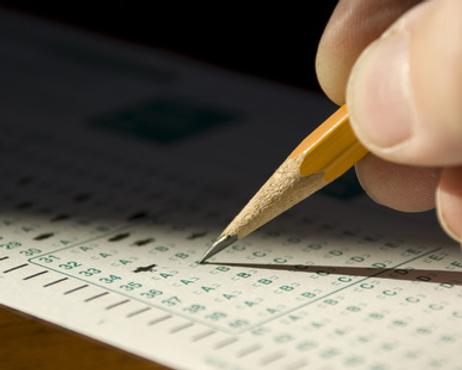
At a time when schools are examining standardized test scores for math, reading, and writing, schools in the District of Columbia are assessing their students’ aptitude in another subject – health. Last year, students in D.C. completed the first-ever standardized test on subjects like health, nutrition, and sex education. While some are touting the decision by D.C. to include this assessment, others are wondering why the focus has shifted to health when math and reading scores are still lagging in this school district.

What Was Tested?

The new standardized test was comprised of 50 questions developed by the Office of the State Superintendent of Education. The test was created in response to a provision in the Healthy Schools Act of 2010, which lawmakers want to use to raise awareness of health-related subjects among D.C. youth. According to DCist, subjects varied somewhat based on the grade level, but included:

  • Health and Wellness
  • Disease Prevention
  • Physical Education
  • Safety Skills
  • Healthy Decision Making
  • Sexuality and Contraception
  • Drugs

Parents were allowed to opt-out of allowing their students to answer the questions on sex, contraception, and drugs if they chose. Around five percent of fifth-graders opted out of sex-related questions, while approximately two percent of eighth-graders and high school students did so. The rest of the questions were administered in a similar fashion to any other standardized examination on reading, mathematics, writing, or science. Questions might include subjects like what physical activities are best for improving heart health or how to put out

. . .read more

Philadelphia Schools: Mass Protest At Proposed School Closures

Updated
|
Philadelphia Schools: Mass Protest At Proposed School Closures
We report on plans by the Philadelphia school district to close more than 30 schools and the heated reactions to the closures by teachers, parents and students

The city of Philadelphia has appeared to have a type of love-hate relationship with education in recent decades. Burdened by financial woes and hounded by parents, educators, and lawmakers who want to see a higher quality education offered to Philadelphia youth, public schools have seen more than their share of ups and downs. However, problems seem to be coming to a head in the City of Brotherly Love, with a proposal to close nearly 40 schools on the negotiating table. While parents and students protest this proposed move, school officials assert that a budget crisis leaves them with little choice but to downsize.

School Closing Decision Raises Controversy

My Fox Philly reports that the School District of Philadelphia has announced plans to close 36 schools throughout the city. According to the district, the closures and subsequent moves will put schools “on the road to a higher-performing school system that improves academic outcomes for all students and is financially sustainable.” The recommendations for school closures took a number of factors into consideration, including the academic performance of all students, reducing excess capacity, and limiting capital expenses to a more practical level. However, some opponents of the proposal have suggested the decision to close so many schools is all about the bottom line for the district.

“In its bottom line-focused rush to close neighborhood schools, the SRC [School Reform Commission] is turning its back on the parents, students, and communities that will be affected by these closures,” Jerry

. . .read more

Teacher in Hot Water after Playing Macklemore’s Pro-Gay Rights Rap Song in Class

Updated
|
Teacher in Hot Water after Playing Macklemore’s Pro-Gay Rights Rap Song in Class
After playing rapper Macklemore's "Same Love" pro-gay rights rap song in class, a Michigan teacher was suspended with no pay. We explore the controversy.

A controversy in a Michigan middle school has been resolved, but questions still remain over why a performing arts teacher was severely disciplined after allowing a student to play a marriage equality song in her classroom. The teacher, Susan Johnson, from Centennial Middle School, allowed the song after checking with the student to be sure it fit within the guidelines of the school district. However, the song offended at least one classmate, whose complaint eventually led to the teacher’s disciplinary action. Was the teacher merely defending a student’s freedom of speech, or was she in violation of district policy? The answer to that question appears to depend on who you ask.

The video offers an overview of freedom of speech in public schools.

“Same Love” Subject of Controversy

According to CBS Detroit, Johnson allowed a student in one of her eighth-grade performing arts classes to play the song “Same Love” by rapper Macklemore during class. Prior to granting permission, Johnson asked the student if the song contained any inappropriate language or references to violence. The student responded that it did not. In fact, “Same Love” is a song about marriage equality, depicting the life of a gay man from beginning to end. Some of the lyrics in the song include:

“Can’t change, even if I tried…”

“No freedom ‘til we’re equal…”

“We become so numb to what we’re saying…”

“If I

. . .read more

School Security in the Aftermath of Sandy Hook: What are Schools Doing to Protect Students?

Updated
|
School Security in the Aftermath of Sandy Hook: What are Schools Doing to Protect Students?
We explore some of the security measures currently in place at schools around the country, and how those measures might change in the aftermath of the horrific Sandy Hook tragedy.

In the wake of the Sandy Hook elementary school tragedy, parents spent the weekend holding their children a little tighter and telling them how much they loved them a little more often. Then Monday morning arrived, and it was time to send those children off to school once again. Only Monday was different – parents didn’t drop their children off with the same carefree spirit they had done just a few short days before. Now, there was fear and anxiety surrounding that seemingly simple, normal event, as parents wondered what their own schools were doing to keep children safer. Some parents purchased bulletproof vests for their children, others equipped little ones with bulletproof jackets. In the wake of Sandy Hook, schools too are working to find ways to improve safety and reassure parents that they can leave their children at school with some peace of mind.

This video describes the events of the Sandy Hook shooting.

Learning from Previous Events

While the Sandy Hook occurrence was one of the worst shootings at a public school to date, other similar tragic events have moved some schools to implement new security procedures already. Kentucky.com reports that in 1997, a 14-year-old student at Heath High School killed three classmates and wounded five others. The students had been gathered for a prayer meeting when the student began firing. One year after the event, the

. . .read more

North Carolina Schools: History and Overview Of Wake County Schools

Updated
|
North Carolina Schools: History and Overview Of Wake County Schools
We review and analyze Wake County public schools, the largest school district in North Carolina and the 16th largest in the country.

The Wake County Public School system is the largest school district in North Carolina and the 16th largest in the U.S. It serves nearly 150,000 students at its 165 schools throughout Wake County. The district has a relatively short but colorful history, formed amid desegregation in the South that changed the face of public education for the entire country.

The History of Wake County Public Schools

Wake County Public Schools is one of the country's more recently formed school districts, dating back to 1976. The district was formed due to a merger between the Wake County school system and Raleigh Public Schools. During that time, North Carolina schools were in flux, thanks to a Supreme Court decision in 1971 involving the desegregation of North Carolina schools. According to the Carolina Journal, in Swann v. the Charlotte-Mecklenburg Board of Education, the Supreme Court determined that Charlotte-Mecklenburg must desegregate its schools through forced bussing.

While schools resisted the idea of forced bussing, it became apparent over the next two decades that desegregation improved academic performance and test scores in the affected schools. However, the program was not sustainable over the long term, and increased diversity in the suburbs of North Carolina deemed the act of forced bussing no longer necessary. During the 1990s, the segregation debate was revisited, and in 1999, a federal court struck down the idea of race-conscious student assignment. School zones were restructured, and parental choice became an option in many districts nationwide.

Despite the changes

. . .read more

Recent Articles

The ROI of Public High School in 2026: Which Programs Actually Improve College and Career Outcomes?
Which public high school programs deliver real college and career results in 2026? Compare AP, IB, dual enrollment, CTE, and early college outcomes.
Spring Parent-Teacher Conferences: Key Questions
Spring Parent-Teacher Conferences: Questions Every Parent Should Ask to support academic growth, social development, and 2026 classroom goals.
Prepare for Spring Tests Without Anxiety
Learn how to prepare for spring standardized tests without increasing anxiety using proven strategies for families and schools.
Notice: Javascript file does not exist: /home/devsarath/workspace/psr/public_html/javascript/components/popper.min.js in /home/devsarath/workspace/psr/public_html/include/srn_lib/shared/misc/JSCompiler.inc.php on line 241 Notice: Javascript file does not exist: /home/devsarath/workspace/psr/public_html/javascript/components/tippy.min.js in /home/devsarath/workspace/psr/public_html/include/srn_lib/shared/misc/JSCompiler.inc.php on line 241 Notice: Directory does not exist in /home/devsarath/workspace/psr/public_html/include/srn_lib/shared/misc/JSCompiler.inc.php on line 241 Notice: Unable to save compiled js file in /home/devsarath/workspace/psr/public_html/include/srn_lib/shared/misc/JSCompiler.inc.php on line 241