Opinion

Hidden Costs of Public Schools: Fees, Supplies & Extras

Updated
|
Hidden Costs of Public Schools: Fees, Supplies & Extras
Explore the hidden costs in public schools—fees, supplies, extracurriculars—and how parents can plan for them in 2025.

Introduction

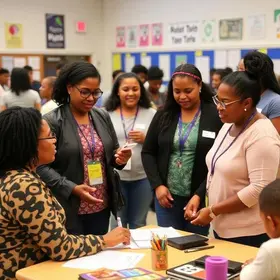
Many parents assume that enrolling a child in a public school means there are no significant costs beyond the minimum. However, the reality is that even in tuition-free public schools, there are substantial hidden costs associated with fees, supplies and extras. As we approach 2025, inflation, technology demands and expanded extracurricular activities are raising the stakes for families. This article outlines the major categories of hidden costs in public schools, provides up-to-date figures and offers strategies for planning and budgeting.

Why “free” public schooling isn’t cost-free

Public schools are publicly funded through property taxes, state funds and federal support, yet many school districts pass on ancillary expenses to families. According to one recent review, families should expect to budget for a range of items beyond attendance alone.
In practice, these “hidden costs” can include technology fees, activity charges, supplies, uniforms, graduation extras and more.
Understanding that the term “tuition-free” does not mean “cost-free” is the first step for parents and students aiming to plan effectively.

Major categories of hidden costs

School supplies and technology

  • Basic items: pencils, notebooks, folders, backpacks.

  • Subject-specific materials: calculators, lab kits, art supplies.

  • Technology: tablets or laptops in one-to-one districts, insurance or usage fees.

  • Price pressures: In 2025, supplies are up ~7.3 % from last year, outpacing overall inflation. For
. . .read more

How Bullying Impacts Student Academic Performance in 2025

Updated
|
How Bullying Impacts Student Academic Performance in 2025
Explore how bullying harms student achievement, attendance, and well-being — and strategies schools use in 2025 to mitigate its effects.

Bullying remains one of the most persistent and damaging threats to student well-being and academic success. While the association between bullying and poor academic outcomes has long been studied, recent research (2023–2025) and policy shifts sharpen our understanding of how and why bullying undermines learning—and what schools can do about it. Below is an updated review of the evidence, implications for stakeholders, and promising practices for mitigation.

Prevalence and Trends (2025 snapshot)

Before examining effects, it helps to contextualize how widespread bullying is today:

  • According to StopBullying.gov, about 19.2 % of students ages 12–18 (grades 6–12) reported being bullied during the 2021–22 school year. StopBullying.gov

  • In 2023, 26.5 % of U.S. teens (ages 13–17) said they had been cyberbullied, up from ~23.2 % in 2021.

  • New data from the International Trends in Mathematics and Science Study (TIMSS) show that among 4th graders who experienced bullying, 35 % scored below minimum proficiency, versus 25 % among non-bullied peers.

  • Moreover, recent surveys suggest an increase in bullying: some sources project a rise from ~25 % in 2023 to 35.5 % in 2025 (though methodological caution applies).

These statistics confirm that bullying—whether in person, relational (e.g. exclusion, rumor spreading), or digital—continues to affect millions of children and adolescents across settings.

Mechanisms: How

. . .read more

Failures of U.S. Public Education in 2025

Updated
|
Failures of U.S. Public Education in 2025
Explore the 15 biggest failures of the American public education system in 2025, with updated data, expert insights, and real-world examples.

The 15 Biggest Failures of the American Public Education System in 2025

Introduction

American public education stands at a crossroads. Once hailed as a global model, the system in 2025 faces profound structural challenges undermining its promise of equity and opportunity. From declining test scores to chronic underfunding, the failures of the American public education system are deeply interconnected.

With sweeping demographic shifts, weakened federal oversight, and a surge in alternative education options, public schools are under unprecedented strain. Below are 15 of the most pressing failures—supported by the latest data, expert analysis, and real-world examples—that every parent, educator, and policymaker should understand.

1. Academic Decline

Student achievement continues to fall. The 2024 NAEP “Nation’s Report Card” reported the lowest 12th-grade reading scores in three decades, with 30% of students lacking basic proficiency. Math results were equally grim—nearly half of seniors struggled with fundamental operations (Reuters).

This failure not only affects college readiness but also weakens U.S. global competitiveness. Families are increasingly turning to private schools, as noted in the Private vs. Public Schools: 2025 Guide.

2. Widening Achievement Gaps

The achievement gap between high- and low-performing students is larger than at any point in 25 years. NAEP data show the gap is widest in eighth-grade science and math. Alarmingly, female students are now underperforming male peers in STEM—a reversal of prior gains (AP News).

This widening gap illustrates how the

. . .read more

NYC Schools Still Most Segregated in 2025

Updated
|
NYC Schools Still Most Segregated in 2025
Despite reforms, New York City schools remain the most segregated in the U.S. in 2025. Here’s what parents and educators need to know.

New York City Schools: Most Segregated in the Nation (2025 Update)

New York City educates more students than any other district in the United States, with over 900,000 children enrolled in public schools. Yet despite its size and diversity, NYC continues to hold a troubling distinction in 2025: it remains the most segregated school system in the nation.

This reality has deep roots in housing, admissions practices, and resource allocation. While policymakers and advocates have pursued reforms, the latest data show that progress has been slow and uneven. For families and educators, understanding how segregation shapes school quality is essential to making informed decisions.

The Numbers: Segregation by the Data

Recent data illustrate how stark the divide remains:

  • In 2025, 70% of NYC public schools are considered “intensely segregated,” with student populations composed almost entirely of one racial or ethnic group. (NYC Comptroller’s Office)

  • At the city’s specialized high schools, the disparities are especially pronounced. This year, only about 3% of offers went to Black students and 7% to Latino students, despite these groups representing nearly 65% of the overall student body. Asian American students received about 54% of offers, while White students accounted for much of the remainder. (Chalkbeat)

  • Enrollment patterns show long-term shifts. Between 2012 and 2022, overall enrollment declined by 12%, but Black student enrollment fell by 32%, a drop that has concentrated poverty and need in some districts.

These figures demonstrate that segregation is not just about who

. . .read more

Year-Round vs Traditional School Calendar: 2025 Insights

Updated
|
Year-Round vs Traditional School Calendar: 2025 Insights
Explore 2025 research, policies, and expert insights on year-round vs traditional school schedules and their impact on learning, families, and costs.

Year-Round Or Traditional Schedule? Updated for 2025

Should schools adopt a year-round calendar or stick with the traditional schedule? It’s a question many parents and educators continue to weigh in 2025. The conversation has gained urgency as schools respond to post-pandemic learning gaps, rising costs, and shifting family expectations.

This article examines the most up-to-date data, explores the benefits and challenges of each model, and offers insights from experts, parents, and schools experimenting with alternative calendars.

What Are We Comparing?

  • Traditional schedule: The model most U.S. schools follow—roughly 180 instructional days over nine months, with a long summer break (10–12 weeks) and shorter breaks during the year.

  • Year-round / balanced calendar: Same number of instructional days, but breaks are spread more evenly. Popular versions include 45-15 (45 days in school, 15 off), 60-20, and 90-30. These calendars often feature intersessions—short periods for targeted tutoring, enrichment, or rest.

Key Data & Trends in 2025

The landscape looks different in 2025 than it did just a decade ago.

  • About 10% of U.S. public schools now use a year-round or modified balanced calendar. (U.S. Department of Education)

  • 49.5 million students are enrolled in public schools (preK–12), with modest declines in elementary grades but stability at the high school level.

  • Private school tuition continues to climb sharply: day schools now average $49,300, while boarding schools average $73,100. (Bloomberg)

  • Nearly 70% of parents surveyed by EdWeek (2024) said they were open to calendar reform if it promised stronger

. . .read more

Recent Articles

AI Report Cards: Should Schools Evaluate AI Use?
Explore whether schools should assess student AI use, the benefits, risks, and what responsible AI report cards could look like in 2026.
The Parent’s Guide to School Cell Phone Bans in 2026
Learn how school cell phone bans work in 2026, why districts are adopting them, and what parents should expect.
Parental Involvement in Public Schools: 2026 Update
Explore the latest 2026 trends, research, and strategies shaping parental involvement in public schools and student success.

Notice: Javascript file does not exist: /home/devsarath/workspace/psr/public_html/javascript/components/popper.min.js in /home/devsarath/workspace/shared/misc/JSCompiler.inc.php on line 242

Notice: Javascript file does not exist: /home/devsarath/workspace/psr/public_html/javascript/components/tippy.min.js in /home/devsarath/workspace/shared/misc/JSCompiler.inc.php on line 242

Notice: Directory does not exist in /home/devsarath/workspace/shared/misc/JSCompiler.inc.php on line 242

Notice: Unable to save compiled js file in /home/devsarath/workspace/shared/misc/JSCompiler.inc.php on line 242