Opinion

COVID-19’s Lasting Impact on U.S. Public Schools (2025)

Updated
|
COVID-19’s Lasting Impact on U.S. Public Schools (2025)
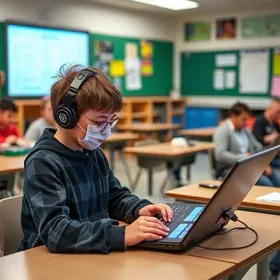
Explore how COVID-19 continues to affect U.S. public schools in 2025: learning losses, enrollment shifts, mental health, and recovery strategies.

The Impact of Coronavirus on Public Schools in 2025

Introduction

The impact of coronavirus on public schools remains deeply felt as we enter 2025. What once was a temporary disruption has evolved into a prolonged recovery landscape—marked by academic setbacks, shifting enrollment patterns, weakened support systems, and growing concerns over student well-being. Below, we explore how the pandemic continues to shape public education today, grounded in the latest data, expert perspectives, and district-level examples.

1. Lingering Academic Recovery

The impact of coronavirus on public schools is most visible in student achievement. While math scores have shown modest recovery, reading scores continue to slide. Experts estimate full recovery in mathematics may take over seven years, with lower-performing and underserved students lagging significantly behind (Brookings).

Furthermore, the 2024 NAEP “Nation’s Report Card” shows U.S. high school seniors posting the lowest reading scores in over 20 years, and algebra-level math proficiency near historic lows (AP News). These findings underscore that the impact of coronavirus on public schools is not behind us—it remains a central challenge.

2. Enrollment Shifts and Structural Decline

Public schools lost more than 1.2 million students between fall 2019 and fall 2023, a 2.5% drop, reflecting both pandemic-related exodus and pre-existing trends. Enrollment declines have been steepest among lower grades—kindergarten down nearly 6%, elementary by 4%, and middle grades by 6%—while high school numbers rose slightly.

Overall national enrollment fell from 50.8 million pre-pandemic to about 49.6 million in

. . .read more

Best School Match 2025: Public vs Charter vs Magnet

Updated
|
Best School Match 2025: Public vs Charter vs Magnet
Compare 2025 public, charter, and magnet school options with updated data, trends, and strategies to find the best fit.

Which School Is Best: Public vs. Charter vs. Magnet — 2025 Update

Introduction

For families, choosing between public, charter, and magnet schools is more complex than ever. In 2025, shifting enrollment patterns, new policy developments, and updated performance data make it essential to understand how these options differ. This guide provides a clear,

1. Current Landscape & Enrollment Trends

As of 2025, the U.S. has about 95,000 traditional public schools, 8,400 charter schools, and just over 2,000 magnet schools, representing roughly 2% of the K–12 landscape ().

Charter schools continue to grow—accounting for about 7% of all public schools. Enrollment is rising particularly in large metro areas. In Houston, for example, more than 60,000 students originally zoned for public schools now attend charters such as KIPP and YES Prep, reflecting strong demand.

Magnet schools, while smaller in number, remain popular for their specialized programs in STEM, fine arts, and international studies.

2. Key Structural Differences

  • Public schools: Tuition-free, governed by districts or states, and required to accept all students within their zones.

  • Charter schools: Publicly funded but independently operated. They must meet accountability goals set in their charter contracts, giving them flexibility in curriculum and teaching methods.

  • Magnet schools: District-operated schools with specialized themes. They are designed to attract diverse enrollment across district boundaries.

Demographically, charter schools often serve higher percentages of minority and low-income students compared to traditional public schools, reflecting their role in expanding access.

3. Student Outcomes

Academic results vary by region, but several recent studies

. . .read more

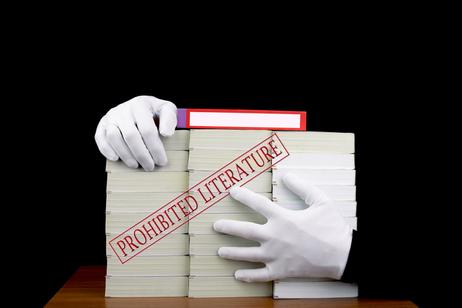
Understanding the Consequences of Banning Books in K-12 Education

Updated
|
Understanding the Consequences of Banning Books in K-12 Education
Explore the historical and contemporary issues surrounding the banning of books in public K-12 schools. Discover how parental guidance can serve as a more effective educational strategy, fostering critical thinking and empathy while respecting the freedom to read.

Our children were born in the early 70s. There was no Internet. In fact, there were no smartphones, computers, or tablets.

  • Instead, our kids had a mother who read to them when they were a few weeks old.
  • She also taught them how to read. We had books everywhere.

As a result, our children became voracious readers. They read fiction and non-fiction.

  • It's no wonder both daughters earned degrees in American Language and Literature.
  • That's why we must take the current controversy over book banning seriously.

The freedom to read is a fundamental right that forms the cornerstone of a robust democratic society.

  • However, banning books in public K-12 schools has periodically surfaced throughout history, bringing this freedom under scrutiny.
  • The American Library Association (ALA) reports a sharp rise in censorship challenges in recent years, with a record 4,240 unique book titles challenged in 2023 alone, reflecting a sustained national surge in book restrictions through 2025.

Recent reporting from PBS News highlights how book bans have increasingly targeted titles addressing race, gender identity, and social justice, reflecting broader cultural and political debates in U.S. education.

Historical Examples

The negative impact of banning books in education becomes apparent when examining historical cases.

. . .read more

Have Smartphones Ruined Public Education?

Updated
|
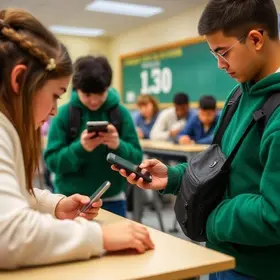
Have Smartphones Ruined Public Education?
I used to think that students having smartphones in school was a bad thing. Not any more. Here are my reasons why.

The short answer is "No!" As a parent, grandparent, and former teacher, I assumed the answer would be "Yes!" Smartphones are everywhere. Young people spend hours staring at those tiny screens. They most certainly can be a distraction. But the bottom line is that smartphones are affordable communication tools for students from various socio-economic levels.

Advantage No. 1

The whole point of K-12 education is to teach young people how to think critically, analyze information, and organize academic work and other related activities. Smartphones are incredibly efficient for managing all kinds of data. Teaching a young person how to organize her work, take notes, and set reminders lays the groundwork for success in whatever endeavors she takes up after graduating high school.

Advantage No. 2

Smartphones level the playing field by making a powerful computing tool available to students who otherwise could not afford a traditional laptop, desktop computer, or tablet. Smartphones are also invaluable when textbooks are not available.

Advantage No. 3

With the advent of smartphones and their tremendous computing power came apps. So I asked ChatGPT for a list of educational apps, and this is what it produced:

  1. Kahoot!: This app allows teachers to create quizzes and games for their students, which can be played in the classroom or remotely.
  2. Duolingo: Duolingo is a language learning app providing interactive lessons in dozens of languages.
  3. Khan Academy: Khan Academy offers a wide range of free online courses and lessons in subjects such as math, science, and history.
  4. Quizlet: Quizlet
. . .read more

Where Did the Members of the 115th House of Representatives Go to School?

Updated
|
Where Did the Members of the 115th House of Representatives Go to School?
Find out where the members of the 115th House of Representatives went to school and how many chose private school over public school for their own children.

The world of education in the United States is in a constant state of flux. Year after year, educational reform and new policies are passed that change the face of American education. As such, it is important to consider the educational background of the people who are representing the American public in approving or denying these policies and reforms.

We completed a survey of the 115th House of Representatives to gather insite of the U.S. House of Reformation about the educational background of its members. We also gathered information about the type of education each Representative chose for his or her children. The results of that survey are summarized below along with some interesting points and thought-provoking questions.

Background on the United States Congress

The United States Congress is made up of the Senate and the House of Representatives. Members of both are chosen through direct election, though it is possible for vacancies on the Senate to be filled via gubernatorial appointment. Congress is made up of a total of 535 voting members.

The Senate is comprised of 100 senators which are elected at large by their constituents for a six-year term. Two representatives are allocated to each state. The House of Representatives is comprised of 435 voting members as well as six non-voting members that represent Puerto Rico, the U.S. Virgin Islands, American Samoa, Guam, the Northern Mariana Islands, and Washington, D.C. Members of the House of Representatives serve two-year terms, each representing a single

. . .read more

Recent Articles

AI Report Cards: Should Schools Evaluate AI Use?
Explore whether schools should assess student AI use, the benefits, risks, and what responsible AI report cards could look like in 2026.
The Parent’s Guide to School Cell Phone Bans in 2026
Learn how school cell phone bans work in 2026, why districts are adopting them, and what parents should expect.
Parental Involvement in Public Schools: 2026 Update
Explore the latest 2026 trends, research, and strategies shaping parental involvement in public schools and student success.

Notice: Javascript file does not exist: /home/devsarath/workspace/psr/public_html/javascript/components/popper.min.js in /home/devsarath/workspace/shared/misc/JSCompiler.inc.php on line 242

Notice: Javascript file does not exist: /home/devsarath/workspace/psr/public_html/javascript/components/tippy.min.js in /home/devsarath/workspace/shared/misc/JSCompiler.inc.php on line 242

Notice: Directory does not exist in /home/devsarath/workspace/shared/misc/JSCompiler.inc.php on line 242

Notice: Unable to save compiled js file in /home/devsarath/workspace/shared/misc/JSCompiler.inc.php on line 242