Public School Policies

From unions to vouchers, school budgets to discipline policies, we cover some of the most controversial issues affecting public schools today. Learn more about education reform and how it impacts your family. Keep current on the latest controversies regarding religion, sex-education, civil rights and more.

View the most popular articles in Public School Policies:

Who Killed Recess? The Movement to Resuscitate Recess

Updated
|
Who Killed Recess? The Movement to Resuscitate Recess
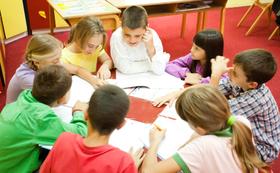
With health, learning, and social benefits, recess is an important part of a child's day. However, many districts have been slashing or eliminating recess altogether - much to the chagrin of parents leading the charge back into the joys of recess.

Recess has traditionally been a part of the school day in public elementary schools, offering students the opportunity to breathe in fresh air, work off energy, and socialize with friends outside the confines of the classroom. However, in the interest of providing additional instruction during the school day, many schools have moved away from recess in favor of more classroom time. In some areas, recess has been on hiatus for years, but parents and educators are joining together in a movement to resuscitate recess after finding numerous benefits this time of free play provides. This article will take a look at some of the schools that have done away with the popular playtime and why many are bringing the ritual back to their playgrounds.

This video discusses eliminating a recess break.

The Benefits of Recess

While recess may not seem to have many benefits to daily studies on the surface, research into the matter seems to prove otherwise. On their website, the Florida Department of Health cites numerous benefits of recess, which impact the students' physical, emotional, cognitive, and social health and wellbeing. Some of the physical benefits of recess include:

  • More time spent in active play
  • Proper growth and development from physical activity
  • Helps children maintain a healthy weight, reducing the risk of some diseases later in life
  • Improves bone mass and density, lowering the risk of fractures throughout life

There are also cognitive and social benefits
. . .read more

Washington DC's Gains Under Michelle Rhee: A Result of Cheating?

Updated
|
Washington DC's Gains Under Michelle Rhee: A Result of Cheating?
Michelle Rhee is in the hot seat once again, as concerns about cheating abound during her time as chancellor of Washington DC schools. Learn about the high incidences of erasures and why the accusations are flying.

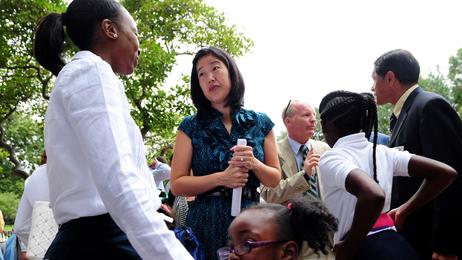
Michelle Rhee is a controversial figure, to be sure. During her brief tenure as chancellor of Washington D.C. schools, Rhee managed to ruffle more than a few feathers. She also developed a loyal fan base that has followed her to her latest project, StudentsFirst, a non-profit committed to education reform. Since her exit from Washington schools, some questions remain about whether Rhee's approach to education reform really does put students first. Case in point: there are recent questions in an in-depth report by USA Today about a high number of changed answers on standardized tests in some Washington schools.

This video reports on Michelle Rhee's tenure as Chancellor of the D.C. public schools.

Details of the Report

An investigation by USA Today exercised D.C.'s Freedom of Information Act to obtain data that documented test scores for one of Washington's schools for the past three years. Crosby S. Noyes Education Campus was considered a "shining star" by Washington's public school officials after the school was able to raise standardized test scores by record-breaking numbers. In 2006, only 10 percent of Noyes students scored "proficient" or "advanced" in math. Just two years later, as many as 58 percent scored that high, and reading scores shot up as well.

Michelle Rhee was particularly interested in Noyes, and she used the school as an example of how she implemented changes that could transform struggling schools

. . .read more

New UCLA Educational Opportunity Report Sheds Grim Light on CA Public Schools and Budget Cuts

Updated
|
New UCLA Educational Opportunity Report Sheds Grim Light on CA Public Schools and Budget Cuts
A new report from UCLA finds that California public schools may be deepening the gulch between the privileged and low-income students. Learn more about the new report and its surprising findings.

Many agree that one of the most effective ways to reduce the disparities between the rich and the poor is to provide high-quality public education to all. However, a recent report on the state of schools in California suggests that some school districts might be going in the wrong direction. Instead of broadening the educational opportunities for less fortunate students, the lines seem to be widening between the "have's" and "have not's." We will take a closer look at this report to determine what it means for public schools across the state of California.

UCLA IDEA

For a number of years, UCLA IDEA has produced annual reports on the learning environments and outcomes of California schools. IDEA, short for UCLA's Institute for Democracy, Education, and Access, was founded in 2000 by Jeannie Oakes and John Rogers. According to the organization's website, the original goal of IDEA was to utilize the research capacity of UCLA to identify and confront some of the most pressing issues facing the world of education today. The faculty of IDEA consists of scholars, staff and graduate students of UCLA, who partner with parents, teachers, and others in the community to conduct research on current educational trends in the hope of inspiring and promoting positive change.

This year's report, titled, "Free Fall," shows that the "Great Recession" of this decade has not improved the situation in California schools yet. The report draws on information from 277 high school principals around the state

. . .read more

Hello Budget Cuts, Goodbye Sports: The Threat to Athletics

Updated
|
Hello Budget Cuts, Goodbye Sports: The Threat to Athletics
Budgets have become so constrained that several school districts have drastically slashed or entirely cut their athletics program. Learn about the threat to athletics and what it could mean for your child. This article has been updated to reflect 2026 data and recent developments.

Budgets remain tight in school districts across America, and in 2024–2026, financial pressure has intensified due to inflation, staffing shortages, and shifting federal funding priorities. For some schools, the cuts may come in the athletics departments, with some districts threatening to significantly decrease the athletic programs available to students or do away with sports altogether. While this is not a choice most schools want to make, districts are increasingly exploring alternative funding models, partnerships, and participation fees to sustain programs. We'll take a look at a number of states across the nation that are facing these questions and how they are handling the challenge of keeping sports and other extracurricular activities in schools, despite their inability to pay for them.

This video reports on cuts to New York City sports budgets.

Cost-Cutting Measures to Begin in Pennsylvania

In recent years, states including Pennsylvania have faced recurring education funding gaps, with districts continuing to navigate reduced real-dollar funding when adjusted for inflation. According to the data, per-pupil spending trends vary widely by state. The cuts were proposed in response to necessary cost-cutting measures that must be taken due to less money coming into the state. A significant portion of funding reductions historically targeted public schools, particularly discretionary and supplemental programs, with a focus on special grants that support a variety of educational programs. The other $625 million would be cut from the budgets of

. . .read more

Why 82% of Public Schools are Failing

Updated
|
Why 82% of Public Schools are Failing
Education Secretary Arne Duncan estimated that 82% of this country's public schools are not passing the test in educating our children. Learn about the remnants of the No Child Left Behind Act and how the Obama administration plans to raise the bar on standards of education in this country.

The Obama administration had plans to overhaul the nation's education system when they took office, but budget battles, health care, and other priorities took center stage. Now, it appears that education will quickly be moving to the forefront as the current year's test scores from around the country show that the large majority of schools in the United States are missing their mark and headed for failure. With the No Child Left Behind Act created by the Bush administration now headed to the chopping block, the quality of education in this country is set to get another look by Congress this spring.

What is the No Child Left Behind Act?

According to a report at the Washington Post, the No Child Left Behind Act was a signature educational initiative that originated with President George W. Bush in 2001. The goal of the legislation, which received bipartisan support at the time of signing, was to require schools to bring 100 percent of their students to proficiency in math and reading by the year 2014. Proficiency would be evaluated through annual exams given to students in third through eighth grade and one additional test during high school.

This 2001 video shows President Bush promoting his "No Child Left Behind" act.

Reforming the No Child Left Behind Act has been a focus of the Obama administration because the current

. . .read more

Recent Articles

AI Report Cards: Should Schools Evaluate AI Use?
Explore whether schools should assess student AI use, the benefits, risks, and what responsible AI report cards could look like in 2026.
The Parent’s Guide to School Cell Phone Bans in 2026
Learn how school cell phone bans work in 2026, why districts are adopting them, and what parents should expect.
Parental Involvement in Public Schools: 2026 Update
Explore the latest 2026 trends, research, and strategies shaping parental involvement in public schools and student success.

Public School Policies

EDUCATION REFORM
Education reform is in the works, and you can stay updated on the latest changes, debates, and policies here. Learn more about No Child Left Behind and how it impacts your child. Explore how federal and state government is working to improve school performance, student achievement and education standards.
TEACHERS AND UNIONS
A comprehensive look at teachers, tenure, and unions. Learn how unions impact school performance. Explore the impact of education reform on teaching qualification standards, traditional unions and controversial tenure rules.
PUBLIC SCHOOL BUDGETS
We offer an overview of public school budgets; where the money comes from, how it’s spent and what schools are doing to get more funding. Learn how schools are cutting budgets and how the cuts will impact your child. Delve into some of the creative ways school districts are trying to raise money and where the extra money is spent.
VOUCHERS
Explore both sides of the school voucher debate. Learn what your options are, how those choices are funded and the impact on your local school district. From the latest government initiatives to results from recent studies, explore vouchers and the options they provide.
SCHOOL DISCIPLINE POLICIES
Examine the various discipline methods being put to use in public schools. From detention to expulsion, spanking to handcuffing, school discipline can often be controversial. Does spanking work? Do police belong in schools? Learn more about what is being done to punish out of control students.
SCHOOL CONTROVERSIES
The most controversial issues impacting public school students today. From bullying to book bans, this is a comprehensive look at some of the most oft-debated issues. This section features articles on school segregation, religion, over-crowding, civil rights, and green technology.

Notice: Javascript file does not exist: /home/devsarath/workspace/psr/public_html/javascript/components/popper.min.js in /home/devsarath/workspace/shared/misc/JSCompiler.inc.php on line 242

Notice: Javascript file does not exist: /home/devsarath/workspace/psr/public_html/javascript/components/tippy.min.js in /home/devsarath/workspace/shared/misc/JSCompiler.inc.php on line 242

Notice: Directory does not exist in /home/devsarath/workspace/shared/misc/JSCompiler.inc.php on line 242

Notice: Unable to save compiled js file in /home/devsarath/workspace/shared/misc/JSCompiler.inc.php on line 242