Public School Policies

From unions to vouchers, school budgets to discipline policies, we cover some of the most controversial issues affecting public schools today. Learn more about education reform and how it impacts your family. Keep current on the latest controversies regarding religion, sex-education, civil rights and more.

View the most popular articles in Public School Policies:

Will Public Schools Reassign Your Child to Another Campus?

Updated
|
Will Public Schools Reassign Your Child to Another Campus?
With faltering economic conditions and an increasing trend in creating socioeconomic diversity amongst campuses, public schools are considering reassigning students to other campuses. Learn more about this phenomenon and whether or not your child will be impacted by the changes.

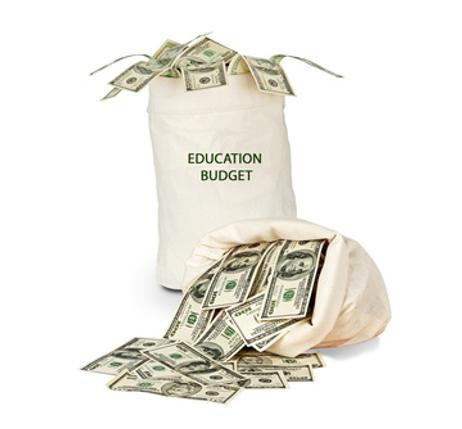
In light of the recent recession, many schools are being forced to cope with serious budget cuts and impending financial setbacks. As a result, some schools with more grave financial needs may be forced to either close down or shift a majority of their student population to alternative surrounding schools.

Adding to budgetary issues, many public schools are beginning to reassign students to ensure that everyone receives equal educational opportunities, regardless of one’s socioeconomic status. Ultimately, all parents are beginning to wonder: Will public schools soon reassign my child?

The New Wave of School Re-Assignments

School Budgets

In areas that have been severely impacted by local job loss and recession struggles, schools may be forced to cope with such setbacks by closing various campuses and / or removing teacher positions.

For example, Detroit’s automobile industry layoffs have severely hindered the local economy, and the region currently holds the nation’s highest unemployment rate. As a result, these former tax-paying residents are no longer receiving their standard income. Ultimately, without taxable steady incomes, schools lose funding, as a large portion of public school funds are provided by income and property taxes from local residents.

Adding to the burdens of local lay-offs, many unemployed workers may relocate to a new area to seek work. Not only does this reduce tax dollars contributed to school funding, but the number of students in each district falls as well. With a decrease in the student population, schools
. . .read more

How is Your Child’s School Using its Stimulus Check?

Updated
|
How is Your Child’s School Using its Stimulus Check?
Learn more about how your local public school will use the new stimulus funds. Will the funding be allocated to teacher retention, special needs, or after school programs?

Federal stimulus funding has influenced public education for more than a decade. Programs first introduced during the Obama administration helped stabilize school budgets after the 2008 recession. More recently, large federal relief programs during the COVID-19 pandemic provided historic funding for K-12 education. In 2026, districts are evaluating how these funds were spent and which initiatives should continue as stimulus programs phase out. According to national reports, many schools are choosing to spend their stimulus money in unique and much-needed ways.

Public Education Stimulus Package

Federal stimulus funding has been distributed to public schools during several major national crises. The American Recovery and Reinvestment Act (ARRA) of 2009 provided billions in funding to stabilize school budgets and support academic reform initiatives such as Race to the Top. Specifically, the new public school stimulus package is designed to provide specialized support and assistance to schools serving special education students, homeless children, and lower-income families with children.

While the 2009 stimulus included hundreds of millions in targeted education investments, more recent relief programs have been significantly larger. During the COVID-19 pandemic, Congress approved nearly $190 billion in education funding through the Elementary and Secondary School Emergency Relief (ESSER) program to help schools address learning loss, expand technology access, and stabilize operations.

As schools debate ways to most effectively use the funds, the United States Education Secretary, Arne Duncan, asserts that school leaders should strive to think in new, different, and creative ways. For example,

. . .read more

Are Vouchers Destroying Public Schools?

Updated
|
Are Vouchers Destroying Public Schools?
Learn about the raging debate surrounding utilizing tax-funded vouchers to give students the freedom to choose their own public or private education -- and whether vouchers are indeed destroying the foundation of America's public schools.

School vouchers have been a controversial debate among community members and educators for more than a decade – and there are no signs of the debate simmering.

Vouchers are essentially a form of “tax scholarship” for public school students, wherein the educational tax (which typically is given directly to public schools) can be used to pay for alternative forms of education. With the voucher approach, taxes allow parents to send their children to a school of their choice; this money can even be used for private schools.

While many parents and educators believe that vouchers give students the freedom to seek out better educational opportunities, other individuals and experts assert that vouchers simply deprive struggling schools of receiving much-needed funding for improvement. With this great debate, one must question: are vouchers destroying or saving our public schools?

This video from NPR explains how vouchers work.

How Do Vouchers Work?

As public schools rely upon tax dollars for funding, each student who attends a public school is “worth” a certain amount of tax dollars. Each public school district or county is provided with a different “tax worth” for their students, which is determined in elections by community members.

For example, “District A” schools may receive $5,000 per student (annually), while “District B” may only be provided with $4,000 per student (annually). If “District A” is provided with more money and funding for each

. . .read more

Are Public Schools Protecting the Environment?

Updated
|
Are Public Schools Protecting the Environment?
Learn about how public schools are making their campuses greener through technology investments, policy changes, and eco-friendly student education.

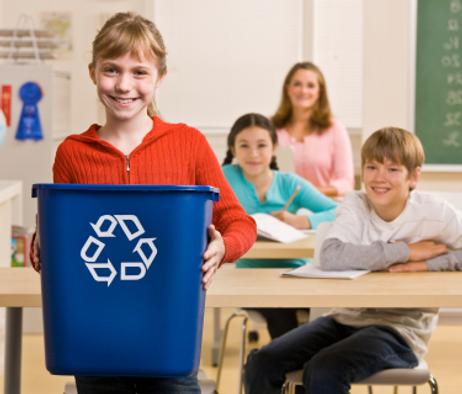
Although public schools strive to teach students about conservation and environmental care, all campuses certainly produce their own waste. With classroom papers, copies, trash, packaged lunches, electricity, and other resource needs, some public school leaders are striving to reduce each campus’ carbon footprint.

To help schools and students embrace a more responsible environmental approach, many school leaders are implementing new “green-focused” programs to improve both the performance of schools and the education of students.

This video reports on green-friendly schools worldwide.

Greener Public School Reform

To help boost individual school responsibility, there are an array of programs and renovations that aim to “green-ovate” public schools. With “green ovations,” public schools implement environmentally friendly technologies or changes to improve the energy savings and output of the school.

For example, as Fox News and Business reports, EcoMedia, an environmental media company, paired itself with the CBS Corporation to award three schools with new environmentally friendly makeovers. With over $600,000 dollars invested into new products and services to help revamp the three chosen schools, EcoMedia and CBS aim to help with “green ovations” such as:

  • Solar and wind projects
  • Energy-efficient lighting
  • Green roofs
  • Internal and external green upgrades

While EcoMedia and CBS sought to reward winning schools with green renovations, many experts assert that public schools across the country are striving to find ways to implement their own eco-friendly changes. Specifically, as USA Today reveals, rising energy

. . .read more

What You Need to Know About Public Schools in a Recession

Updated
|
What You Need to Know About Public Schools in a Recession
Explore how public schools are adapting to funding challenges in 2026, including class size trends, enrollment shifts, and policy changes.

This article has been updated to reflect 2026 data and recent developments.

As economic conditions continue to fluctuate, public schools across the United States are navigating a complex funding landscape. While the sharp recessionary cuts of the past have eased in some regions, financial pressures remain, particularly as districts balance staffing, technology upgrades, and student support services.

Public education funding today reflects a mix of recovery and new challenges. Federal relief funds introduced during the pandemic years have largely expired, and districts must now sustain programs without that temporary support. At the same time, expectations for student outcomes, technology integration, and mental health services have increased significantly.

How are public schools coping with these realities in 2026? The answer lies in a combination of funding adjustments, policy changes, and difficult trade-offs.

How Public Schools Are Funded Today

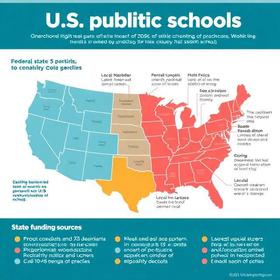
Public schools rely on three primary funding sources:

  • Local property taxes
  • State funding formulas
  • Federal contributions

According to the National Center for Education Statistics, local and state governments still provide nearly 90 percent of public school funding, with federal sources making up a smaller but targeted share.

This structure creates uneven funding outcomes. Communities with higher property values generate more revenue, while lower-income districts often depend heavily on state equalization formulas.

In recent years, several states have revised funding formulas to address equity gaps, particularly following legal challenges and policy reforms between 2023 and 2025. However, disparities persist, especially in fast-growing or economically strained regions.

For a deeper look at how funding models impact schools, see Public School Funding 2025:

. . .read more

Recent Articles

AI Report Cards: Should Schools Evaluate AI Use?
Explore whether schools should assess student AI use, the benefits, risks, and what responsible AI report cards could look like in 2026.
The Parent’s Guide to School Cell Phone Bans in 2026
Learn how school cell phone bans work in 2026, why districts are adopting them, and what parents should expect.
Parental Involvement in Public Schools: 2026 Update
Explore the latest 2026 trends, research, and strategies shaping parental involvement in public schools and student success.

Public School Policies

EDUCATION REFORM
Education reform is in the works, and you can stay updated on the latest changes, debates, and policies here. Learn more about No Child Left Behind and how it impacts your child. Explore how federal and state government is working to improve school performance, student achievement and education standards.
TEACHERS AND UNIONS
A comprehensive look at teachers, tenure, and unions. Learn how unions impact school performance. Explore the impact of education reform on teaching qualification standards, traditional unions and controversial tenure rules.
PUBLIC SCHOOL BUDGETS
We offer an overview of public school budgets; where the money comes from, how it’s spent and what schools are doing to get more funding. Learn how schools are cutting budgets and how the cuts will impact your child. Delve into some of the creative ways school districts are trying to raise money and where the extra money is spent.
VOUCHERS
Explore both sides of the school voucher debate. Learn what your options are, how those choices are funded and the impact on your local school district. From the latest government initiatives to results from recent studies, explore vouchers and the options they provide.
SCHOOL DISCIPLINE POLICIES
Examine the various discipline methods being put to use in public schools. From detention to expulsion, spanking to handcuffing, school discipline can often be controversial. Does spanking work? Do police belong in schools? Learn more about what is being done to punish out of control students.
SCHOOL CONTROVERSIES
The most controversial issues impacting public school students today. From bullying to book bans, this is a comprehensive look at some of the most oft-debated issues. This section features articles on school segregation, religion, over-crowding, civil rights, and green technology.

Notice: Javascript file does not exist: /home/devsarath/workspace/psr/public_html/javascript/components/popper.min.js in /home/devsarath/workspace/shared/misc/JSCompiler.inc.php on line 242

Notice: Javascript file does not exist: /home/devsarath/workspace/psr/public_html/javascript/components/tippy.min.js in /home/devsarath/workspace/shared/misc/JSCompiler.inc.php on line 242

Notice: Directory does not exist in /home/devsarath/workspace/shared/misc/JSCompiler.inc.php on line 242

Notice: Unable to save compiled js file in /home/devsarath/workspace/shared/misc/JSCompiler.inc.php on line 242