Public School Policies

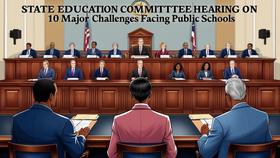
From unions to vouchers, school budgets to discipline policies, we cover some of the most controversial issues affecting public schools today. Learn more about education reform and how it impacts your family. Keep current on the latest controversies regarding religion, sex-education, civil rights and more.

View the most popular articles in Public School Policies:

Are Service Dogs Too Distracting in a School Environment?

Updated
|
Are Service Dogs Too Distracting in a School Environment?
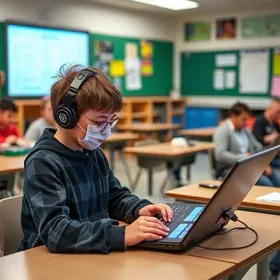
Students with disabilities may require the assistance of a service dog, but how might the presence of a dog in the classroom affect other students? Could it be too distracting?

There is a special bond between children and their dogs but, for some children, a dog is more than just a best friend – he is an assistant for everyday tasks. Children with certain diseases and disabilities sometimes need the help of a service dog just to get through their day. The service dog accompanies them everywhere they go – even to school. While a service dog may be a necessity for the student he serves, it is possible he could become a distraction for other students. But where do you draw the line?

In today’s modern society, distractions are everywhere. Cell phones and tablets are being given to younger and younger children as society as a whole becomes progressively more reliant on technology. But what determines whether something is too distracting? When it comes to service dogs, there are some legitimate concerns regarding allergies and fears that some students may have, but are these concerns more legitimate than the student’s need for the service dog? Keep reading to learn more about this issue.

What Exactly Do Service Dogs Do?

According to the Americans with Disabilities Act (ADA), the definition of a service animal is, “any dog that is individually trained to do work or perform tasks for the benefit of an individual with a disability, including a physical, sensory, psychiatric, intellectual, or other mental disability”. Some of the tasks a service dog can perform might include pulling a wheelchair, picking up dropped items, reminding someone to take
. . .read more

The Pros and Cons of Tracking in Schools

Updated
|
The Pros and Cons of Tracking in Schools
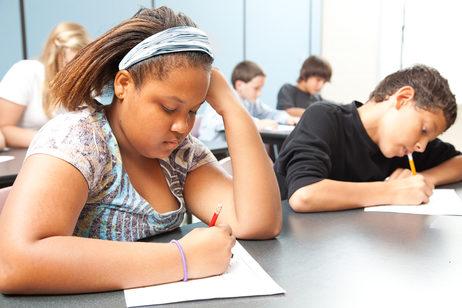
Tracking was once the standard of public education in the United States but today there is a great deal of controversy regarding its relevance. Consider the pros and cons of tracking to decide whether it might be a good option for your child.

The fact of the matter is that some students learn more quickly than others and some students need more individualized attention. In order to accommodate the differing needs of their students, many schools started to adopt a tracking system, separating students by academic ability into different groups for certain subjects or for all subjects. This type of program is sometimes called ability grouping (though these are technically two different things) and it is a hotly debated issue in public schools. Before you decide whether tracking might be a good option for your child, take a moment to learn what it is as well as the pros and cons of this type of system.

What is Tracking or Ability Grouping?

Also referred to as phasing or streaming, tracking is a system in which students are divided into classes based on their overall achievement. Students are ranked as being average, normal, or below average and they are divided into classes with students of the same achievement level. Tracking has been used in American public schools for nearly a century and it has changed and developed a great deal during that time. In the early years, tracking was a response to growing numbers of immigrant children coming into the public school system. The goal was to provide those children with an education that was catered to their limited understanding of the English language and their limited preparation, as compared to native students. What ended up happening, however, was a form of

. . .read more

Schools Demand Students' Social Media Passwords

Updated
|
Schools Demand Students' Social Media Passwords
Recent legislation that allows Illinois public schools to demand students’ social media passwords has renewed the debate about students’ right to privacy at school.

It is a story that is all too often in the news: A child is subjected to torturous cyberbullying by his or her peers via social media. Threatening messages sent on Facebook, humiliating comments about their appearance on Twitter, and other such nonsense drives the student to lash out, possibly hurting themselves, their peers, or both.

Schools no doubt serve a protective function and are charged with ensuring students have access to a free, appropriate education in an environment that is safe, secure, and nurturing. To help achieve that end, some states are taking strong measures to bolster the authority and power of school districts with regard to investigating instances of bullying, even if such negative behaviors do not occur on school property or within the bounds of the school day.

The Illinois Law

In an attempt to curb cyberbullying behaviors, the Illinois General Assembly passed a law, enacted January 1st of this year, that allows public school districts to demand access to students’ personal social media accounts if the student is suspected of violating school rules.

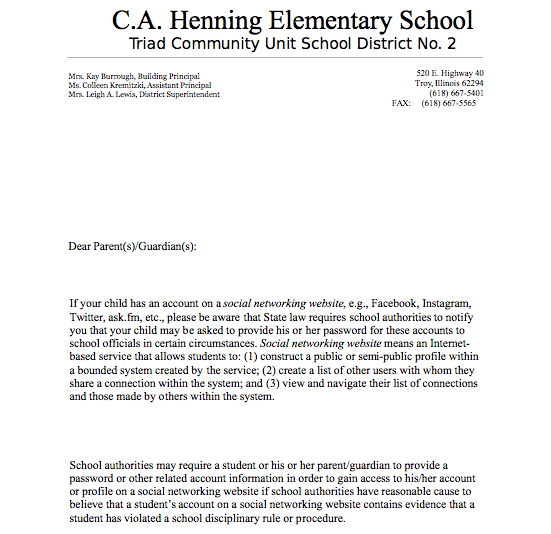
A letter sent home to parents in Triad Community Schools in Illinois, obtained by Motherboard, outlines the new policy:

“School authorities may require a student or his or her parent/guardian to provide a password or other related account information in order to gain access to his/her account profile on a social networking website if school authorities have reasonable cause to believe

. . .read more

Public School Holiday Celebrations: Christmas-centric or Multicultural?

Updated
|
Public School Holiday Celebrations:  Christmas-centric or Multicultural?
This article explores the challenges and opportunities in public school holiday celebrations, addressing the need for a shift from Christmas-centric approaches to more inclusive, multicultural practices. It discusses the importance of recognizing diverse beliefs, avoiding unintended consequences, and offers practical suggestions for educators and parents to foster a more inclusive learning environment.

Public School Holiday Celebrations: Christmas-centric or Multicultural?

With the children home for the holidays, with the spirit of love and peace in their hearts, how did their schools celebrate the season? Or did they celebrate Christmas?

In many locations, holiday parties involve decorating contests with Christmas trees and ornaments. In elementary schools, Santa might make an appearance. Songs of reindeer and gifts ring out, along with talk of who’s been naughty or nice. Children are asked to write essays on “what I want for Christmas,” or after the holidays, they are asked to explain what gifts they received.

However, this Christmas-centric view does not align well with the actual makeup of today’s public schools. Research shows that today’s public schools are more diverse than ever. While the data tends to speak from an ethnic or racial point of view, it still indicates the need to take multiple perspectives into account. Schools have to begin to recognize that not all children celebrate Christmas and have made adjustments that make their celebrations more inclusive. However, there is still much work to be done if public schools are to have a truly multicultural perspective.

In this video, The Doctors discuss a recent news story about a school district that banned all dominant holiday celebrations in the name of inclusion.

Unintended Consequences

There remain many public schools in this country that engage in holiday celebrations that revolve

. . .read more

The Parents’ Guide to Common Core

Updated
|
The Parents’ Guide to Common Core
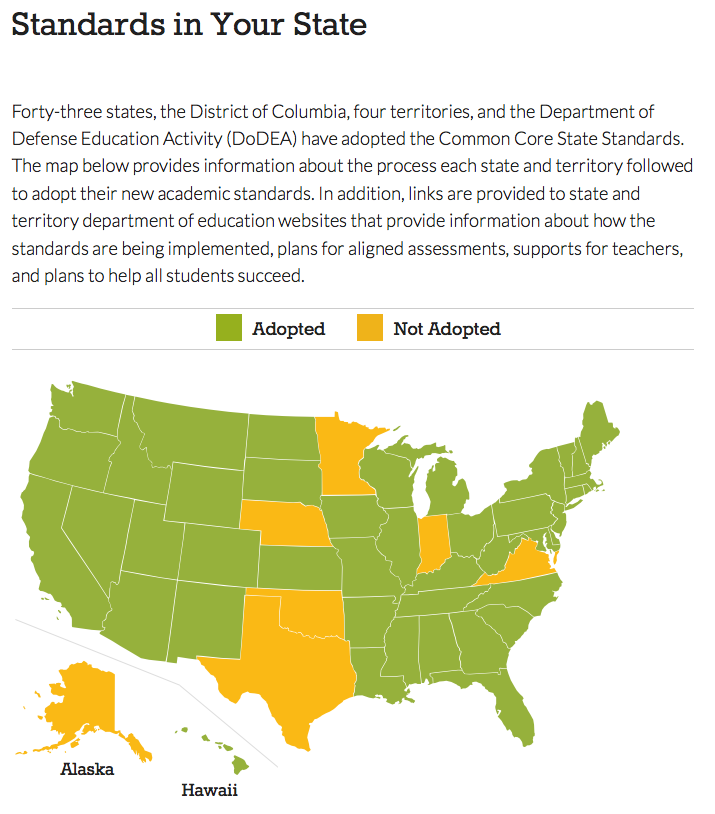
The Common Core State Standards were developed as a means to prepare K-12 students for success in college or the workforce upon graduation from high school. Since their inception, they have been adopted by 43 states. While much support has been given for the standards, many criticisms have emerged as well.

The Common Core State Standards were developed after education officials became concerned over the lack of progress American students were making in the areas of math and language arts. After years of being outperformed by children in other countries, various stakeholders came together to devise a new set of standards that would raise the bar for student learning. The result was the Common Core, which took shape over the course of 2009 and was implemented in 2010. In the years since, 43 states, Washington, D.C., the education wing of the Department of Defense, and several U.S. territories have adopted the standards.

Developed by Experts

The Common Core standards represent a cooperative effort between dozens of officials including governors, teachers, curriculum design experts, and researchers. However, two agencies, the National Governors Association for Best Practices (NGA) and the Council of Chief State School Officers (CCSSO) led the charge for the creation of the standards and continue to lead the ongoing efforts to implement the standards nationwide.

Throughout the design process, the NGA and CCSSO relied on input from content-area experts, teachers, and even parents to devise standards that are both rigorous and relevant to a modern-day education. The authors of the standards also worked with higher education officials, workforce trainers, and employers to ensure the standards facilitated the development of knowledge and skills required for success in college, at the workplace, and in life.

Purpose of

. . .read more

Recent Articles

AI Report Cards: Should Schools Evaluate AI Use?
Explore whether schools should assess student AI use, the benefits, risks, and what responsible AI report cards could look like in 2026.
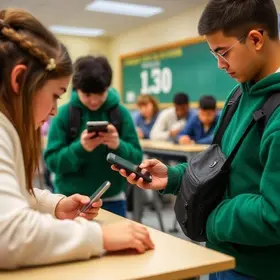
The Parent’s Guide to School Cell Phone Bans in 2026
Learn how school cell phone bans work in 2026, why districts are adopting them, and what parents should expect.
Parental Involvement in Public Schools: 2026 Update
Explore the latest 2026 trends, research, and strategies shaping parental involvement in public schools and student success.

Public School Policies

EDUCATION REFORM
Education reform is in the works, and you can stay updated on the latest changes, debates, and policies here. Learn more about No Child Left Behind and how it impacts your child. Explore how federal and state government is working to improve school performance, student achievement and education standards.
TEACHERS AND UNIONS
A comprehensive look at teachers, tenure, and unions. Learn how unions impact school performance. Explore the impact of education reform on teaching qualification standards, traditional unions and controversial tenure rules.
PUBLIC SCHOOL BUDGETS
We offer an overview of public school budgets; where the money comes from, how it’s spent and what schools are doing to get more funding. Learn how schools are cutting budgets and how the cuts will impact your child. Delve into some of the creative ways school districts are trying to raise money and where the extra money is spent.
VOUCHERS
Explore both sides of the school voucher debate. Learn what your options are, how those choices are funded and the impact on your local school district. From the latest government initiatives to results from recent studies, explore vouchers and the options they provide.
SCHOOL DISCIPLINE POLICIES
Examine the various discipline methods being put to use in public schools. From detention to expulsion, spanking to handcuffing, school discipline can often be controversial. Does spanking work? Do police belong in schools? Learn more about what is being done to punish out of control students.
SCHOOL CONTROVERSIES
The most controversial issues impacting public school students today. From bullying to book bans, this is a comprehensive look at some of the most oft-debated issues. This section features articles on school segregation, religion, over-crowding, civil rights, and green technology.

Notice: Javascript file does not exist: /home/devsarath/workspace/psr/public_html/javascript/components/popper.min.js in /home/devsarath/workspace/shared/misc/JSCompiler.inc.php on line 242

Notice: Javascript file does not exist: /home/devsarath/workspace/psr/public_html/javascript/components/tippy.min.js in /home/devsarath/workspace/shared/misc/JSCompiler.inc.php on line 242

Notice: Directory does not exist in /home/devsarath/workspace/shared/misc/JSCompiler.inc.php on line 242

Notice: Unable to save compiled js file in /home/devsarath/workspace/shared/misc/JSCompiler.inc.php on line 242