Updated
|
Public Classrooms Say Goodbye Textbooks, Hello e-Texts
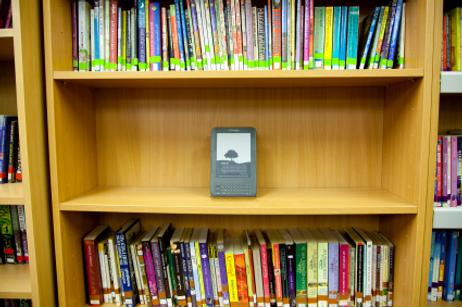
eTexts are rendering the traditional, paperbound textbooks obsolete. Learn about how public classrooms are transitioning to digital textbooks and the benefits of eTexts.

E-books, some say, are the words of the future. The Kindle, the iPad, and other electronic reading devices are signaling the end of the print era.

Colleges and universities across the country have begun experimenting with using e-textbooks, rather than printed textbooks, to deliver course content. Now, the K-12 public school system is getting on the e-text bandwagon too, as several state legislatures make moves to support the use of electronic textbooks in their state’s public schools.

This video from Fox News reports on ebooks versus physical textbooks.

States Move to Adopt Digital Textbooks

Texas

In Texas, for example, the legislature adopted a bill in 2009 that provided funds for school districts and charter schools to purchase the technology necessary for e-textbooks. This bill also gave school districts and charter schools the necessary flexibility to adopt e-textbooks instead of traditional textbooks.

The bill also allowed school districts to be reimbursed by the state for 50% of the savings they incurred from the switch from regular textbooks to e-texts. As Texas Senator Jeff Wentworth reports in a guest column for the website My San Antonio, school districts may use the reimbursement they receive from the state to purchase educational technology, such as computers, if they choose.

Indiana

Twelve schools in the Indianapolis Public School System will soon be foregoing traditional textbooks as well. As the educational technology publication The

. . .read more

Exposed: School Surveillance - Is Your Child's Privacy Under Threat?

Updated
|
Exposed: School Surveillance - Is Your Child's Privacy Under Threat?
Is your child under surveillance? Dive into the school webcam spying debate.

Could your child’s public school be playing “big brother” to its students? For some students, their schools just may be spying on them – even in the comfort and privacy of their own homes.

In February, a Pennsylvania Court faced a case where a public school was accused of spying on students via the webcams attached to school-issued laptops.

According to the initial complaint filed in the U.S. District Court for the Eastern District of Pennsylvania, the Lower Merion School District used remotely activated webcams on school-issued laptops to spy on students’ home activities. As CNN reports, the lawsuit claims that Blake J. Robbins, a student at Harriton Senior High School, became aware of the spying in November 2009, when an assistant principal told Robbins that he had been caught via the webcam engaging in “improper behavior” in his home.

This video reports the story referred to above.

It is yet unknown what the boy was doing in his bedroom or whether he received disciplinary action from the school. Nevertheless, the case is receiving widespread national attention and prompted nationwide concerns from students and parents.

The School District’s Response

Webcams Used Only for Locating Missing Laptops

The school district has issued a letter to parents admitting that spyware was installed on the laptops that the schools issued to students but maintaining that the feature “was only used for the

. . .read more

Does Your Child Attend a “Private” Public School?

Updated
|
Does Your Child Attend a “Private” Public School?
Not all public schools are created equal. In fact, some are even considered "private" public schools. Learn about the study that delves into which states have the most "private" public schools and what ramifications these statistics have on education policy and taxation.

A recently issued report by the Thomas B. Fordham Institute, a non-profit educational think tank, indicates that more than 1.7 million American students attend what the report terms “private-public schools” – that is, public schools where low-income students make up less than 5% of the student body.

The Fordham Institute report criticizes these “private-public schools,” arguing that they go against the ideal of a public education system whose doors are open to everyone. The report will likely spark vehement reactions both from those who share its support of school choice reforms and those who do not.

This report from the Thomas B. Fordham Institute discusses bad schools.

The Report’s Findings

Geographic Disparities

The press release accompanying the Fordham Institute analysis highlights the fact that the percentage of students attending “private-public schools” varies from state to state. Some states boast high percentages of students attending “private-public schools,” such as:

  • Connecticut: 18%
  • New Jersey: 17%
  • South Dakota: 16%
  • Arizona: 14%
  • Massachusetts: 12%

However, in other states, no more than 1% of children attend “private-public schools.” The states with less than 1% of children attending “private-public schools” are:

  • Florida
  • Indiana
  • Iowa
  • Nevada
  • New Mexico
  • North Carolina

Racial Disparities

White and Asian students appear to be disproportionately represented in “private-public school” populations, while African-American and Latino students are under-represented. The press release accompanying the report notes that while African-American students make up 17% of public school students nationwide, they comprise only 3% of

. . .read more

Seclusion and Restraint: How Some Public Schools Allow Abuse in Classrooms

Updated
|
Seclusion and Restraint: How Some Public Schools Allow Abuse in Classrooms
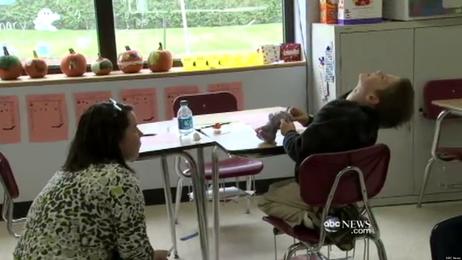
Across the country, the implementation of seclusion and restraint and disciplinary measures could be considered child abuse. Learn about the policies that are being enacted in order to protect public school students.

Despite our modern approach to education, physical discipline is still being used in public school classrooms in America. Parents nationwide are expressing concern over the use of seclusion and restraint in public school classrooms. A report from the U.S. Government Accountability Office, released in May 2009, revealed that between 1990 and 2009, there had been “hundreds of allegations” of abuse involving restraint or seclusion, according to USA Today. In Texas and California alone, a combined 33,095 students were secluded or restrained in the school year leading up to the report’s issuance.

Restraint Practices

The restraint practices described in the May 2009 report could sometimes verge on what could be called child abuse. Restraint practices are commonly used to deal with students who have behavioral or emotional problems.

In one New York school, a 9-year-old with learning disabilities was confined to a “small, dirty room” 75 times over the course of six months as a consequence of his “whistling, slouching, and hand-waving,” reports the USA Today. Meanwhile, in Texas, a 14-year-old boy who would not stay seated in his special-education classroom died when his teacher restrained him by lying on top of him.

This video looks at the issue of restraint and seclusion.

Lack of Regulation

According to concerned parents, there is a lack of federal and state regulations addressing seclusion and restraint practices in public schools. In May 2009, USA

. . .read more

What’s Really Wrong with Detroit Public Schools

Updated
|
What’s Really Wrong with Detroit Public Schools
A 2026 update on Detroit Public Schools, standardized testing, NAEP scores, and the district’s continuing academic challenges.

Detroit Public Schools Community District students once posted some of the lowest math scores in the history of the National Assessment of Educational Progress. In 2026, the district is no longer governed by the same emergency management structure described in the original article, but test scores, graduation rates, and academic recovery remain central concerns for parents, educators, and policymakers.

To further complicate the issue, Detroit Public Schools historically fought an internal battle with Emergency Finance Manager Robert Bobb. Detroit public school teachers, administrators, parents, and school board members were upset about Bobb’s directive, outlining that all students in the district take an additional standardized test that year.

The issue of whether students should have to take that test, on top of the STARS, MEAP, PSAT, SAT, and ACT tests that they already took, was part of a larger battle for control of academic decisions between the Detroit school board and Bobb. Today, Michigan’s testing system has changed. The MEAP has been replaced by the Michigan Department of Education M-STEP, and Michigan students also participate in other state assessments, including PSAT, SAT, and MI-Access testing.

Parents who want a broader context about the district can also read Public School Review’s Detroit Schools: An Overview.

Why Did Detroit Schoolchildren Need a New Standardized Test?

Steve Wasko, DPS Executive Director of Public Relations, said that the standardized test Bobb ordered, the Quarterly Benchmark Assessment, or QBA, would be used to

. . .read more

Recent Articles

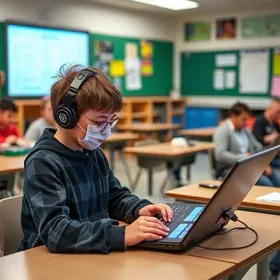
AI Report Cards: Should Schools Evaluate AI Use?
Explore whether schools should assess student AI use, the benefits, risks, and what responsible AI report cards could look like in 2026.
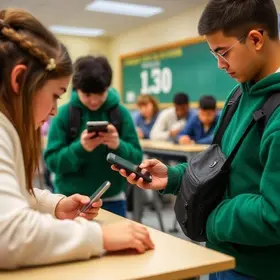
The Parent’s Guide to School Cell Phone Bans in 2026
Learn how school cell phone bans work in 2026, why districts are adopting them, and what parents should expect.
Parental Involvement in Public Schools: 2026 Update
Explore the latest 2026 trends, research, and strategies shaping parental involvement in public schools and student success.

Notice: Javascript file does not exist: /home/devsarath/workspace/psr/public_html/javascript/components/popper.min.js in /home/devsarath/workspace/shared/misc/JSCompiler.inc.php on line 242

Notice: Javascript file does not exist: /home/devsarath/workspace/psr/public_html/javascript/components/tippy.min.js in /home/devsarath/workspace/shared/misc/JSCompiler.inc.php on line 242

Notice: Directory does not exist in /home/devsarath/workspace/shared/misc/JSCompiler.inc.php on line 242

Notice: Unable to save compiled js file in /home/devsarath/workspace/shared/misc/JSCompiler.inc.php on line 242