Updated
|
Does Your Child Have Dyslexia?
Learn about the symptoms of Dyslexia, as well as the action public schools are taking to provide Dyslexic students with appropriate academic support.

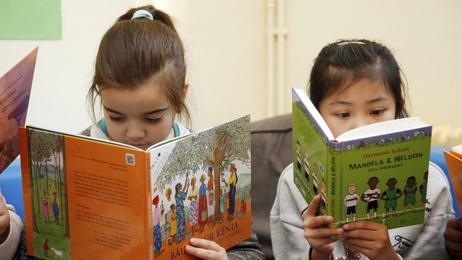
While many parents may believe that Dyslexia relates to an individual’s struggle with reading, the issue of Dyslexia can impact a child’s full development. Dyslexia symptoms include confusion with letters, numbers, reading, math, writing, and other difficulties – all of which can hinder a child’s academic progress.

Children coping with Dyslexia can face an array of adversities if their struggles are ignored. As studies demonstrate, students with Dyslexia who do not receive proper support may experience a decrease in self-esteem and a decline in positive behavior.

Thankfully, educators are finding new and innovative ways to help Dyslexic students learn at an optimal pace and level, and a rising number of schools are implementing targeted programs for support.

Dyslexia: The Signs and Struggles

Children coping with Dyslexia may reveal a wide variety of symptoms. For example, as Northeast Mississippi Daily Journal explains, children who struggle with Dyslexia often fail to fully comprehend both written material and numbers – leading to difficulties with other assignments. When these children struggle with academic tasks, they may begin to demonstrate signs of frustration, anger, or even depression.

According to the Mayo Clinic, other symptoms of Dyslexia may include the following:

  • Your child may start speaking later than other kids his age.
  • Your child adds new words very slowly to her vocabulary.
  • Rhyming may be difficult for your child.
  • Your child may have an inability to identify and recognize printed letters and words.
  • Your child’s reading ability is below the standard level expected for
. . .read more

The Controversy Behind Banning High School Dances

Warning: mkdir(): Permission denied in /home/devsarath/workspace/psr/public_html/include/srn_lib/psr/misc/QuickPhotos.inc.php on line 24 Warning: mkdir(): Permission denied in /home/devsarath/workspace/psr/public_html/include/srn_lib/psr/misc/QuickPhotos.inc.php on line 24 Warning: mkdir(): Permission denied in /home/devsarath/workspace/psr/public_html/include/srn_lib/psr/misc/QuickPhotos.inc.php on line 24 Warning: mkdir(): Permission denied in /home/devsarath/workspace/psr/public_html/include/srn_lib/psr/misc/QuickPhotos.inc.php on line 24
Updated
|
The Controversy Behind Banning High School Dances
Learn about why school leaders are considering banning high school dances and what types of behavior and music are being contractually regulated.

While high school dances were originally established as an appropriate social outlet, dances today have evolved to push the limits of new boundaries. Current school leaders assert that the music played at dances is increasingly suggestive, while students’ dance moves have become more overtly sexual.

With the rise in questionable behavior and elicit dance moves at school events, many school leaders are banning dancing-based events, or in some cases, even prohibiting some students to attend. In an attempt to enforce modest conduct in co-ed interactions, schools are trying to navigate the fine line between students’ celebrations and misbehavior.

What’s the Big Dancing Debate?

While high school students may view their dancing and interactions as innocent and fairly commonplace, the observations through adult and school leaders’ eyes take in a much different understanding.

As SeaCoast Online News reveals in their examination of one local high school, the administration team of Exeter High School banned 19 of their students from a school-sponsored dance due to inappropriate dancing behavior. The dancing that was viewed by school leaders as offensive is commonly referred to as “grinding.” As SeaCoast explains, “This type of dancing, in which two dancers rub their bodies against each other in a sexually suggestive manner, has been a problem at the school for about a year.” Yet this problem is not solely an issue at just a handful of schools. According to school leaders, many administrators are beginning to ban specific songs during school dances in

. . .read more

What You Need to Know About Public Schools in a Recession

Warning: mkdir(): Permission denied in /home/devsarath/workspace/psr/public_html/include/srn_lib/psr/misc/QuickPhotos.inc.php on line 24 Warning: mkdir(): Permission denied in /home/devsarath/workspace/psr/public_html/include/srn_lib/psr/misc/QuickPhotos.inc.php on line 24 Warning: mkdir(): Permission denied in /home/devsarath/workspace/psr/public_html/include/srn_lib/psr/misc/QuickPhotos.inc.php on line 24 Warning: mkdir(): Permission denied in /home/devsarath/workspace/psr/public_html/include/srn_lib/psr/misc/QuickPhotos.inc.php on line 24
Updated
|
What You Need to Know About Public Schools in a Recession
Learn about how public schools are impacted by an economic recession, job losses, and funding cuts.

As the economy continues to struggle, some segments of society are still feeling the financial pain. Public schools across the country are still dealing with budget cuts that have forced them to make difficult decisions in recent years. When pressure from performance-based assessments is added to the mix, finding funding to teach kids to the standards becomes an even bigger challenge. Then, throw in the very real 21st century need to bring more technology into classrooms – a need that doesn’t come cheap. How are America’s public schools coping with these changes?

Public Schools and Recessionary Funding

Public schools are funded through an array of measures, including local property taxes, state funds, and federal funds. However, as Intercultural Development Research Association explains, the majority of school funding is derived from local property taxes and state funds. The state funds for schools come from sources such as gas taxes, franchise taxes, and other additional taxes.

Source: National Center for Education Statistics

When a recession occurs, schools are hit by a loss from all three of these funding sources. For example, in areas with a high property tax, schools are generally provided with more funding; conversely, low property taxes usually result in schools with less funding. As many Americans report job loss and subsequent home loss, however, the amount of money taken in from property taxes is gradually decreasing. If individuals are not buying

. . .read more

The Dramatic Link between Sleep and Student Performance

Updated
|
The Dramatic Link between Sleep and Student Performance
Learn about the important and interesting relationship between adequate sleep and how a student performs academically.

Despite protests from parents and teachers, many students adopt and embrace habits of insomnia during their essential school years. Especially in the middle and high school years, many young teens receive far less than the recommended average amount of sleep.

The National Sleep Foundation (NSF) suggests that all people—both teens and adults—should receive at least seven to eight hours of sleep each night. Despite this recommendation, however, studies show that most students receive less than 6.5 hours of sleep each night. According to experts, the amount of sleep a student receives during his or her school years ultimately influences the outcome of each student’s academic performance.

The Significance of Sleep

As reported by BC Heights, a 2007 study of sleeplessness revealed that a lack of sleep leads to an array of health problems. Specifically, a lack of sleep actually drops the number of white blood cells in the body. With a loss of white blood cells, the body’s immune system is also taxed and less powerful. In a 2007 study, as experts examined the influence of sleep in rats, scientists discovered that after significant and consistent sleep loss, the rats’ immune systems eventually completely failed.

While sleep helps restore our immune systems and bodies, the role of sleep in one’s academic abilities is a bit more unique. As the National Institute of Neurological Disorders and Stroke (NINDS) supports, sleep is not only

. . .read more

What You Need to Know about Emergency Response Procedures in Public Schools

Updated
|
What You Need to Know about Emergency Response Procedures in Public Schools
Learn about how public schools are protecting students against emergencies, and what parents need to know about keeping their children safe in public schools.

In the wake of nearly 10 years of increased school violence, all public schools are legally required to possess specific lockdown and emergency response procedures. Specifically, middle schools and high schools, which experience greater safety breaches due to their age groups, should frequently practice their emergency response protocols to ensure that all students and staff are ready to respond in the rare case of a serious emergency or threat. An awareness of the public school’s emergency protocols can help protect all community members—especially the students.

This video outlines how to set up a protocol for handling a crisis situation.

Types of Emergency Response

Public schools have different “threat levels” that result in specific emergency responses. For example, Montgomery Public Schools in Rockville, Maryland employ two specific threat level procedures. The first type of threat is labeled as “code blue.” A “code blue” threat signifies that there is an emergency or serious crisis near the school. In the case of a “code blue,” all Montgomery administrators announce appropriate information to the whole school, resulting in immediate teacher response.

Teachers in a “code blue” situation are to ensure that no students in the building are unsupervised. Classroom instruction continues, however, students are not permitted to leave the building unsupervised. While a “code blue” can potentially turn into a serious situation, this type of threat is generally not a

. . .read more

Recent Articles

The ROI of Public High School in 2026: Which Programs Actually Improve College and Career Outcomes?
Which public high school programs deliver real college and career results in 2026? Compare AP, IB, dual enrollment, CTE, and early college outcomes.
Spring Parent-Teacher Conferences: Key Questions
Spring Parent-Teacher Conferences: Questions Every Parent Should Ask to support academic growth, social development, and 2026 classroom goals.
Prepare for Spring Tests Without Anxiety
Learn how to prepare for spring standardized tests without increasing anxiety using proven strategies for families and schools.
Notice: Javascript file does not exist: /home/devsarath/workspace/psr/public_html/javascript/components/popper.min.js in /home/devsarath/workspace/psr/public_html/include/srn_lib/shared/misc/JSCompiler.inc.php on line 241 Notice: Javascript file does not exist: /home/devsarath/workspace/psr/public_html/javascript/components/tippy.min.js in /home/devsarath/workspace/psr/public_html/include/srn_lib/shared/misc/JSCompiler.inc.php on line 241 Notice: Directory does not exist in /home/devsarath/workspace/psr/public_html/include/srn_lib/shared/misc/JSCompiler.inc.php on line 241 Notice: Unable to save compiled js file in /home/devsarath/workspace/psr/public_html/include/srn_lib/shared/misc/JSCompiler.inc.php on line 241