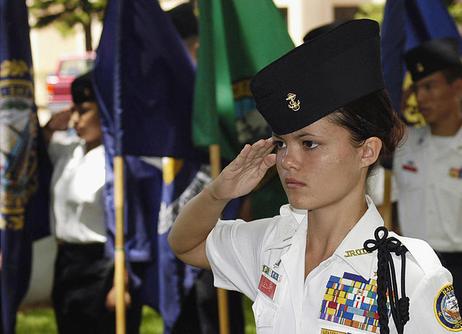
Junior Reserve Officers Training Corps or JROTC
I was disappointed to read the story in the New York Times about abuse in an Army JROTC program. Why? Because I've always thought very highly of the program available in over 1700 public and private high schools. I will further disclaim that my eldest daughter was in the ROTC program at MIT while she was at Harvard. So, I know first-hand that it is well-run for the most part. The JROTC does an immense amount of good for young people at the high school level.

What is JROTC?
Congress established the JROTC or Junior Reserve Officers Training Corps in 1916. Each branch of the services has its own distinctive JROTC program. However, they all have the altruistic-sounding mission "To Motivate Young People to be Better Citizens."
The U.S. Army Junior Reserve Officers’ Training Corps (JROTC) is one of the largest character development and citizenship programs for youth in the world. Source: JROTC
- Some people think that JROTC is a recruiting program for the military.
- But it is not. Indeed, most JROTC participants do not join the military after graduating from high school.
- Nor are they required to do so.
- On the other hand, the college-level ROTC programs do require their participants to sign up for a tour of duty after graduating from college.
- Simply put, the JROTC