Updated
|
New Study Confirms That Private Schools Are No Better Than Public Schools
The results of a new study show that private school education may be no better than public school education. Keep reading to learn more about this study and to learn how to make the right choice between private and public school education for your child.

The results of a new study show that private school education may be no better than public school education. Keep reading to learn more about this study and to learn how to make the right choice between private and public school education for your child.

The world of education is ever-changing but opinions about private versus public school will always be at odds. It is a common assumption that private school education is of a higher quality than public school education, but the results of a new study suggest that this may not be the case.

After reviewing data from over 1,000 students, researchers from the University of Virginia found no evidence to suggest that students from low-income families and children enrolled in urban schools benefited more from private than from public school education. These results are particularly relevant as legislators fight to move toward a more privatized public education system. They also make it clear that the assumption that public schools are inferior to private schools is wrong.

The fact of the matter is that some schools are simply better than others, but the results of this new study suggest that the factors once thought to play the largest role in determining the quality of public versus private education may not be so important. In order to better understand the results of this study, let’s first take a closer look at some of the supposed benefits of private versus public school.

This video compares and contrasts public
. . .read more

Why Every High School Student Should Apply for Financial Aid

Updated
|
Why Every High School Student Should Apply for Financial Aid
Each year, millions of students neglect to fill out the FAFSA and, in doing so, miss out on the chance to receive federal student aid. Keep reading to learn why every high school student should apply for financial aid, whether or not they qualify and regardless of their intention to use it.

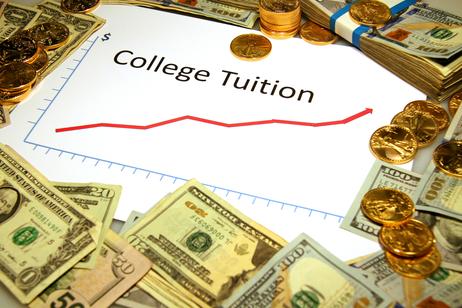
The cost of college tuition rises each and every year. Though many students struggle to fund their college education, there are others who are lucky enough that they don’t need to borrow money for school. Even if a high school student doesn’t plan to borrow money to pay their tuition, however, it is still wise to fill out the Free Application for Federal Student Aid (FAFSA).

According to a new report sent out by the National Center for Education Statistics, there are many reasons why high school students fail to fill out the FAFSA, and some of them are due to misconceptions. Keep reading to learn why every high school student should apply for financial aid, whether or not they qualify, regardless of their intention to use it.

What is the Free Application for Federal Student Aid (FAFSA)?

According to recent data from the College Board, the average annual cost to attend an in-state public college is about $25,000. For private colleges, that price doubles to over $50,000. While there are certainly students whose families are wealthy enough to pay for tuition without assistance, most incoming college students require financial aid to fund their higher education.

The Free Application for Federal Student Aid (FAFSA) is the form colleges and universities use to determine a student’s eligibility for federal, state, and school-sponsored financial aid. This includes educational loans, grants, and work-study programs. Even if students only plan to take advantage of state or college-sponsored

. . .read more

What Are Public Schools Doing to Fight Obesity and Is It Working?

Updated
|
What Are Public Schools Doing to Fight Obesity and Is It Working?
Childhood obesity rates continue to climb. While many public schools have implemented policies and programs to combat the problem, there is always more to be done. Keep reading to learn what schools are doing to prevent obesity and how you can help.

The times are always changing and what was considered normal a few decades ago may no longer be the case. While change is often a good thing, sometimes it isn’t – that is the case with the rising prevalence of obesity among children. Childhood obesity rates are ever-climbing, and it has become something of an epidemic in the United States.

While obesity may seem like nothing more than an aesthetic issue, body weight has a significant impact on health and wellness – especially for children. Children who are overweight or obese are much more likely to become obese adults and that puts them at right for a whole host of dangerous health problems that could negatively impact their lifespan and their quality of life. As a parent, it is your job to provide for your children and to keep them happy and healthy. If your child is overweight or obese, don’t play it off as a minor issue – step up and do something about it!

In this article, we’ll discuss the problem of childhood obesity and what public schools are doing to prevent it. We’ll also discuss some at-home tips you can implement to help your child achieve and maintain healthy body weight.

This video examines the issue of childhood obesity.

Identifying the Problem: Obesity in Children and Adolescents

According to the National Conference of State Legislatures, over 78 million adults and

. . .read more

Tips for Parents of Public School Children with Food Allergies

Updated
|
Tips for Parents of Public School Children with Food Allergies
Food allergies are no laughing matter and it doesn't take long for them to become dangerous. Keep reading to learn how to keep your child safe at school if he has a food allergy.
As a parent, it is your job to worry about your child but worrying won’t protect him or her. When you send your child to school, you are giving up control and placing his care in the hands of his teachers and administrators. If your child suffers from a food allergy, going to school could put him at risk for accidental exposure to his allergen.

While you can’t enclose your child in a plastic bubble to protect him, there are simple steps you can take to keep him safe at school. Keep reading to learn more about food allergies in children and to receive tips for keeping your child safe when he is at school.

This video explains parents' concerns about sending their allergy-prone children to school.

How Common Are Food Allergies in Children?

According to the Food Allergy Research & Education Corporation, there are more than 170 foods that have been reported to cause allergic reactions. The eight primary food allergens are milk, egg, peanut, tree nuts, wheat, soy, fish, and shellfish. Current estimates suggest that roughly 15 million Americans suffer from food allergies, including nearly 6 million children under the age of 18.

A food allergy is more than just a sensitivity to a certain type of food – it is a medical condition triggered by exposure to an allergen that induces a harmful immune response in the body. Allergies can range in severity, but some of the

. . .read more

Why Are Things Becoming More Difficult For Public School Teachers?

Updated
|
Why Are Things Becoming More Difficult For Public School Teachers?
Explore the biggest challenges facing public school teachers in 2026, from staffing shortages and funding concerns to technology demands and student support needs.

Public school teachers have a wonderful opportunity to shape the minds of the next generation. There is a great deal of satisfaction that comes from making an impact on a child’s life, but being a teacher isn’t always easy, especially in public school.

Teachers have always faced challenges, but in recent years the profession has become increasingly complex. Staffing shortages, student mental health concerns, school funding pressures, technology demands, and changing accountability systems have all added new layers of responsibility.

Keep reading to learn about some of the current challenges facing public school teachers and what they could mean for the future.

What Are the Biggest Challenges Teachers Face?

With changes in public policy, legislation, technology, and student needs, the U.S. education system is constantly changing. Before discussing some of the newer challenges facing public school teachers, it is important to recognize the issues that have existed for decades.

Some of the biggest challenges include:

  • Poorly behaved students
  • Limited resources and finances
  • Difficult parents
  • Federal requirements and standardized tests
  • Time constraints
  • Teacher shortages

Managing a classroom full of students is difficult under the best circumstances. Behavioral challenges can consume valuable instructional time and often require teachers to divide their attention between individual students and the rest of the class.

Limited resources remain another major concern. Many teachers continue to purchase classroom supplies with their own money, particularly in underfunded districts. Parents interested in learning more about how school budgets impact classrooms can explore Overview of the Funding of Public Schools (2026

. . .read more

Recent Articles

AI Report Cards: Should Schools Evaluate AI Use?
Explore whether schools should assess student AI use, the benefits, risks, and what responsible AI report cards could look like in 2026.
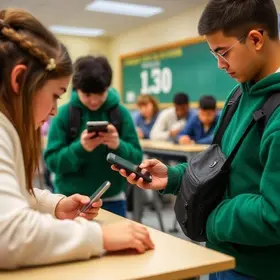
The Parent’s Guide to School Cell Phone Bans in 2026
Learn how school cell phone bans work in 2026, why districts are adopting them, and what parents should expect.
Parental Involvement in Public Schools: 2026 Update
Explore the latest 2026 trends, research, and strategies shaping parental involvement in public schools and student success.

Notice: Javascript file does not exist: /home/devsarath/workspace/psr/public_html/javascript/components/popper.min.js in /home/devsarath/workspace/shared/misc/JSCompiler.inc.php on line 242

Notice: Javascript file does not exist: /home/devsarath/workspace/psr/public_html/javascript/components/tippy.min.js in /home/devsarath/workspace/shared/misc/JSCompiler.inc.php on line 242

Notice: Directory does not exist in /home/devsarath/workspace/shared/misc/JSCompiler.inc.php on line 242

Notice: Unable to save compiled js file in /home/devsarath/workspace/shared/misc/JSCompiler.inc.php on line 242