Updated
|
Managing Stress and Moving Forward from the Pandemic
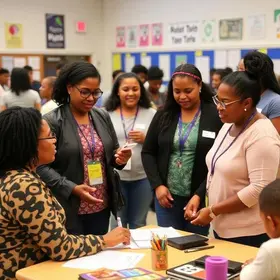
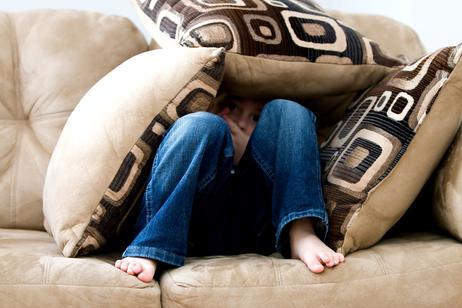
As more schools return to in-person learning, teachers and parents find themselves dealing with the trauma and stress created by the pandemic.

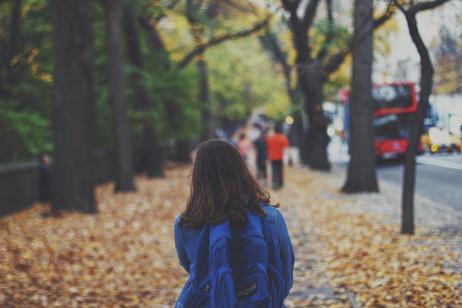
After a long and difficult year, there is finally a light at the end of the tunnel. With over 60% of the U.S. population having received at least one dose of the COVID-19 vaccine, things are looking up. COVID restrictions are being lifted, businesses are reopening, and children are returning to school. Though we have much to be thankful for, the scars left behind by a dark and challenging year won’t soon fade.

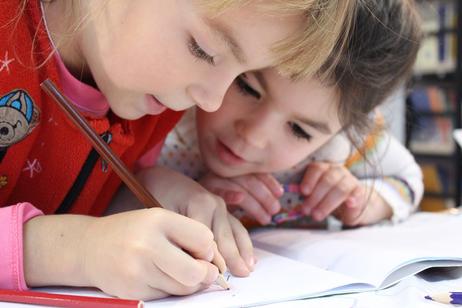
The COVID-19 pandemic has changed the state of the American public education system in deep and sometimes disturbing ways. Existing disparities between affluent children and low-income students have grown and it may take years of hard work and massive change to overcome them. What many educators are focusing on now as the world starts to return to normal isn’t catching students up on lost education in core subjects like math and science – it’s helping them cope with the stress of a year-long pandemic.

Millions of children around the globe have suffered from a year of isolation from friends and sporadic education. In this article, we’ll explore the subject of pandemic-related stress and provide helpful tips for parents and educators to support their children in the upcoming school year.

Traumatic Stress Caused by the COVID-19 Pandemic

Adam D. Brown, PsyD, a clinical assistant professor in the Department of Child and Adolescent Psychiatry at NYU Longone discusses the notion of traumatic stress in children and how the COVID-19 pandemic has affected millions of children
. . .read more

How Has the Pandemic Changed Public School?

Updated
|
How Has the Pandemic Changed Public School?
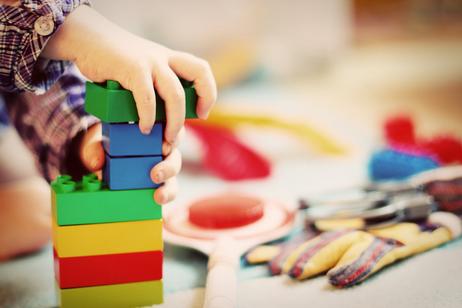
After more than a year of remote learning, schools are finally returning to in-person instruction but how has the pandemic changed the face of public education and what will it look like moving forward?

Just a few months after the dawn of a new decade, millions of parents found themselves scrambling to adjust to remote learning in the midst of a rapidly spreading global pandemic. It didn’t take long for parents to realize just how much they’d been leaning on the public school system until their kids were at home full-time. Parents became teachers overnight, struggling to maintain some sense of normalcy in regard to their child’s education, all while trying to manage changes in their own day-to-day lives.

A full year later, parents and educators are still struggling, and the country is facing some difficult questions about the state of America’s public school system. In some cities, affluent families have abandoned the public school system in favor of private schools but what effect with this mass exodus have on the future of public schooling? In this article, we’ll explore the ways the pandemic has changed public school systems and what parents can expect in the future.

The Current State of Public Education

After months of remote learning, many schools have started to return to in-person education. Though many schools are following a blended approach, teaching students both in-person and virtually, parents are finally starting to see a return to “normal” after a year of chaos. What school really looks like for students varies, however, depending on a variety of factors.

In some communities, schools are only open to teachers and administrators who continue to teach remotely. Other districts have opened their

. . .read more

A Parent’s Guide for the Upcoming School Year

Updated
|
A Parent’s Guide for the Upcoming School Year
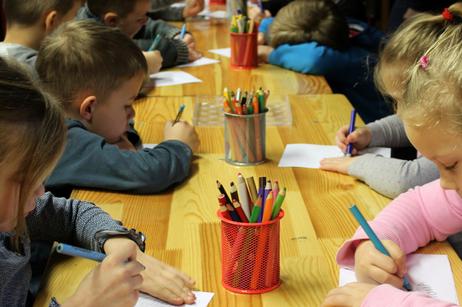
Stay informed about today’s evolving school environment as education continues to adapt beyond the pandemic. This guide explores homeschooling options, modern classroom trends, and practical strategies to help your child succeed academically and emotionally throughout the school year.

The COVID-19 pandemic significantly reshaped K-12 education, accelerating the adoption of remote learning and prompting lasting changes in how schools operate. While schools have since returned to consistent in-person instruction, many districts now incorporate digital tools and more flexible learning options. Today, parents are focused on understanding how these changes affect the school experience and how best to support their children.

In this article, we explore what families can expect from today’s school environment, including evolving classroom models, the pros and cons of homeschooling, and practical strategies for supporting your child throughout the school year.

Will Schools Be Open in the Fall?

Today, most schools operate with full in-person instruction, and widespread closures are no longer expected. While staffing and resource challenges may still affect some districts, the overall structure of schooling has stabilized.

While the pandemic significantly impacted education, schools have since adapted to more stable operations. Decisions about curriculum, scheduling, and student support continue to be made at the state and district levels.

Most districts now follow traditional schedules, though some offer optional virtual or hybrid learning. The focus has shifted toward academic recovery, student support, and integrating technology into everyday instruction.

Today’s school experience is more stable than in recent years, but it continues to evolve with new learning models and expectations. Depending on your family’s needs, you may still consider alternatives like homeschooling for greater flexibility and personalization.

Should You Consider Homeschooling Your Child?

Schools across the country

. . .read more

What Public School Students Should Expect After COVID-19

Updated
|
What Public School Students Should Expect After COVID-19
In this article, we’ll take a closer look at the financial impact of COVID-19 on public schools and what to expect in the future. We’ll talk about the effects of budget cuts and other challenges affecting the public school system for the remainder of this school year and into the next.

The coronavirus pandemic entered the United States with force, shutting down businesses and closing down schools in a matter of weeks. After months of partial or total lockdown, parts of the country are starting to reopen which leaves parents wondering what the future holds for their child’s education.

In this article, we’ll take a closer look at the financial impact of COVID-19 on public schools and what to expect in the future. We’ll talk about the effects of budget cuts and other challenges affecting the public school system for the remainder of this school year and into the next.

Budget Cuts and Changes in State Revenueactions related to COVID-19.

The public school system is generally funded by the state through income, property, and sales taxes. Some public schools receive federal funding as well, or funding from outside sources.

In many cases, the school districts that need the most funding are not the ones that get it. In Pennsylvania, for example, high-poverty districts receive 33% less funding than wealthier districts. On the whole, only about 1 out of 5 states spend more money on their neediest schools, though that’s an improvement from 2008. In the wake of COVID-19, many public schools fear for their futures.

In Michigan, the Kalamazoo Public School’s budget is expected to decrease by 10% to 25% in the coming school year. A 25% cut in funding amounts to roughly $27 million. According to KPS Interim Superintendent Gary Start, it’s the worst state cut

. . .read more

Tips to Maintain Your Child’s Education During School Closures

Updated
|
Tips to Maintain Your Child’s Education During School Closures
Schools all over the country have closed their doors to slow the spread of COVID-19, forcing educators and parents to switch to online learning strategies. Read on to learn where to start with homeschooling and for helpful resources for learning at home.

In early March, the spread of COVID-19 became an issue lawmakers and educators could no longer ignore. The difficult decision was made in many states to close the doors of public and private schools, moving children to online learning from home. In the hopes that social distancing will slow the spread of the virus, families find themselves dealing with the challenges of working and schooling from home.

In this article, we’ll explore the challenges associated with online learning and the impact of widespread school closures. We’ll also talk about how to establish a homeschooling routine and provide some useful resources for online learning and educational ideas for children and families.

Challenges Associated with Online Learning

As schools all over the country closed their doors, a wave of panic spread through the community. Though many schools announced an initial 2-week closure, others offered no end date.

Not only have these closures resulted in an interruption of education, but they also have a negative impact on other aspects of a child’s life. The stability that comes from a daily school schedule is important, as is the time children spend learning from interactions with others. At school, students benefit from the supervision of qualified professionals and a structured schedule. For many students, school also means consistent access to meals.

Though remote learning is the best option in the current situation, it is not without its challenges. Here are some of the challenges associated with online learning:

  • Not all students have
. . .read more

Recent Articles

AI Report Cards: Should Schools Evaluate AI Use?
Explore whether schools should assess student AI use, the benefits, risks, and what responsible AI report cards could look like in 2026.
The Parent’s Guide to School Cell Phone Bans in 2026
Learn how school cell phone bans work in 2026, why districts are adopting them, and what parents should expect.
Parental Involvement in Public Schools: 2026 Update
Explore the latest 2026 trends, research, and strategies shaping parental involvement in public schools and student success.

Notice: Javascript file does not exist: /home/devsarath/workspace/psr/public_html/javascript/components/popper.min.js in /home/devsarath/workspace/shared/misc/JSCompiler.inc.php on line 242

Notice: Javascript file does not exist: /home/devsarath/workspace/psr/public_html/javascript/components/tippy.min.js in /home/devsarath/workspace/shared/misc/JSCompiler.inc.php on line 242

Notice: Directory does not exist in /home/devsarath/workspace/shared/misc/JSCompiler.inc.php on line 242

Notice: Unable to save compiled js file in /home/devsarath/workspace/shared/misc/JSCompiler.inc.php on line 242