Student Populations

The latest trends, laws and resources for a variety of student populations. Every child has different needs, and this section offers helpful information for LGBT, special education, gifted, low-income, and minority students.

View the most popular articles in Student Populations:

‘My Brother’s Keeper’ Seeks to Give African-American Boys a Boost

Updated
|
‘My Brother’s Keeper’ Seeks to Give African-American Boys a Boost
President Obama’s My Brother’s Keeper initiative aims to improve academic opportunities for students of color, especially African-American boys.

It is no secret that youth of color, particularly black boys, face a mountain of obstacles to success. Black boys are more likely than their white peers to be suspended or expelled from school, more likely to drop out, less likely to graduate from high school, more likely to be unemployed, in prison, and die at an early age. These are problems that school districts, cities, and states have sought to fix for years and years, but with only pockets of success. It is a bleak outlook, but one that the Obama administration seeks to change with the most comprehensive reform and aid effort yet.

About the Initiative

The overarching purpose of My Brother’s Keeper is to address gaps in educational and related services that persist for young men of color. The initiative is a cooperation between local, state, and federal agencies, private business, and non-profits to bring essential services to the nation’s neediest youth. In total, the initiative includes five primary goals:

  • Prepare Children to Learn – Provide support programs that foster intellectual, physical, social, and emotional growth so children are prepared to begin school.
  • Boost Literacy – Support early learning initiatives that get children reading at grade level by age 8.
  • Help Kids Graduate from High School Prepared for College – Promote educational programs that prepare students for success in postsecondary environments and facilitate training for in-demand jobs.
  • Facilitate Workforce Readiness – Assist youth

. . .read more

Changing Demographics Will Alter the Diversity of Public Schools

Updated
|
Changing Demographics Will Alter the Diversity of Public Schools
Uncover the projected changes in enrollment among diverse ethnic groups and the challenges state education systems face in meeting growing financial demands amidst increasing enrollment

Over the last 60 years, American public schools have become more and more diverse, with various ethnic and racial groups comprising a significant percentage of total enrollment. However, according to new data released by the National Center for Education Statistics (NCES), the diversity of public schools in this nation will change drastically over the next decade and appear much differently than today.

The Numbers

The number of white students enrolled in public schools has been falling for years. According to the NCES, between 2000 and 2010, white enrollment decreased from 61 percent to 52 percent of the total public school population. At the same time, the number of Hispanic students increased from 16 percent to 23 percent of total enrollment. This was a trend seen throughout the country over that timespan, with schools in the South and the West seeing the largest Hispanic enrollment increases of any region.

Graph from Huffington Post

The 2014 data released by the NCES shows that this trend has continued since 2010 and will continue for the foreseeable future. Through the 2022-2023 school year, the number of white students graduating is projected to decline by another 16 percent. A 14 percent decrease in the number of black students and a 29 percent decrease in the number of American Indian and Alaskan Native students that graduate from public high schools is expected as well. Conversely, other minority groups are expected to show

. . .read more

Rigorous High School Gives Underprivileged Students Hope for Future

Updated
|
Rigorous High School Gives Underprivileged Students Hope for Future
This article likely discusses a high school program that provides rigorous academic preparation for underprivileged students, aiming to increase their chances of college admission and future success. It probably highlights the school's methods, challenges, and the impact on students' aspirations and achievements.

Rigorous High School Gives Underprivileged Students Hope for Future

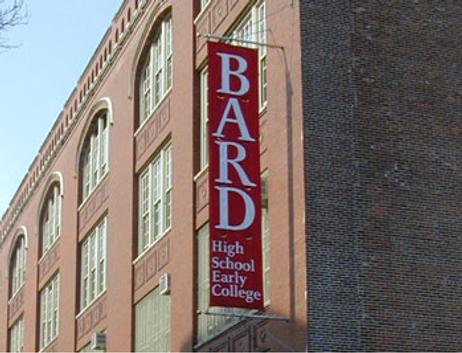
College is the future dream for many high school students, but that dream is more likely to become a reality for some students than others. Now, high school students in Newark have an option that can help them beat the odds and make that college dream a reality. Bard College has brought its proven track record of success to a Newark high school, offering students the chance to experience the rigors of college academics firsthand within the secure confines of a high school environment.

Bard High School Early College Newark

Bard High School Early College Newark (BHSEC Newark) is the latest in a series of college-based high schools created through Bard College. According to the BHSEC website, this school opened in 2011 as a partnership between the college and Newark Public Schools. BHSEC Newark offers a rigorous, college-level curriculum and traditional high school academics that prepare students for life after high school.

What makes the Newark school unique is its commitment to enrolling students from a diverse range of backgrounds, giving students the chance to excel academically who might not have the opportunity otherwise. Students come from all Newark neighborhoods, including disadvantaged areas like Newark’s West Ward, where drugs and shootings are almost a way of life for the young residents of the community. The New York Times reports that BHSEC Newark is positioned across the street from a tire shop

. . .read more

New U.S. Census Report Shows Rise in Poverty: Kids’ Education to Suffer

Updated
|
New U.S. Census Report Shows Rise in Poverty: Kids’ Education to Suffer
The U.S. Census report shows what most have been suspecting – more Americans are living in poverty. However, we will explore the impact of those numbers on the education system, especially in states where poverty is at the highest levels

It wasn’t news to many of the educators across the country, but the poverty numbers recently released are still alarming. With an economic slowdown well into its third year and unemployment figures still reaching double digits in some areas, poverty rates are up as well. According to recent data released from the U.S. Census Bureau, the rate of poverty across the United States has gone up 1.6 percent, although some individual states are seeing even larger increases. This translates to more than one million children nationwide who have now been added to the poverty rolls.

Poverty Widespread Across the Country

The U.S. Census Bureau report shows that statistically significant increases in poverty were seen in about 20 percent of the country. As many as 653 counties experienced poverty increases among children between 2007 and 2010, and only eight counties nationwide reported a poverty decrease. The data provided represents single-year figures of 2007 and 2010 to study the change in poverty levels since the recession began. The numbers provided by the U.S. Census Bureau help to determine the distribution of federal and state funding to local communities.

Nationally, nearly 20 percent of children qualify as poor, according to a report in the Alaska Dispatch. In addition, one-third of the total counties in the country have thresholds well above that level, while one-quarter boasts numbers below the national average. Some of the states that showed the highest increases over four years were New Jersey, Nevada, Florida,

. . .read more

At a Desk, but Without a Home: Homeless Students in Public Schools

Updated
|
At a Desk, but Without a Home: Homeless Students in Public Schools
Beyond tests and homework, some public school students face greater challenges, including the uncertainty of where they will sleep each night. Learn about the increase in homeless students and what public schools are doing to meet the challenge.

Homeless children face a myriad of issues, not the least of which is the ability to get a quality education. Unfortunately, the incidence of homeless families has been on the rise since the economic downturn began. Across the country, schools are working hard to ensure homeless students get a level playing field, with the hopes these children can get the education they need to move out of a life of poverty.

The National Law Center on Homelessness & Poverty states: "Homeless children and youth often have problems enrolling and participating in school. As a result, Congress passed the McKinney-Vento Homeless Assistance Act in 1987. This law gives homeless children and youth the right to:

  • Remain in the same school even if they move;
  • Enroll in a new school without typically required records such as proof of
  • residency, immunizations, school records, or other papers;
  • Get transportation to school;
  • Get all the school services they need; and
  • Challenge decisions made by schools and districts.

This video looks at the issue of homeless high school students.

Identifying Homeless Children

According to the National Association of School Psychologists, "homeless children include those who lack a fixed, regular and adequate nighttime residence." This might include children who live in shared housing, motels, cars or shelters.

Sometimes homeless students are identified directly, making it easy for school staff to provide the necessary assistance. However,

. . .read more

Recent Articles

AI Report Cards: Should Schools Evaluate AI Use?
Explore whether schools should assess student AI use, the benefits, risks, and what responsible AI report cards could look like in 2026.
The Parent’s Guide to School Cell Phone Bans in 2026
Learn how school cell phone bans work in 2026, why districts are adopting them, and what parents should expect.
Parental Involvement in Public Schools: 2026 Update
Explore the latest 2026 trends, research, and strategies shaping parental involvement in public schools and student success.

Notice: Javascript file does not exist: /home/devsarath/workspace/psr/public_html/javascript/components/popper.min.js in /home/devsarath/workspace/shared/misc/JSCompiler.inc.php on line 242

Notice: Javascript file does not exist: /home/devsarath/workspace/psr/public_html/javascript/components/tippy.min.js in /home/devsarath/workspace/shared/misc/JSCompiler.inc.php on line 242

Notice: Directory does not exist in /home/devsarath/workspace/shared/misc/JSCompiler.inc.php on line 242

Notice: Unable to save compiled js file in /home/devsarath/workspace/shared/misc/JSCompiler.inc.php on line 242