Public School Policies

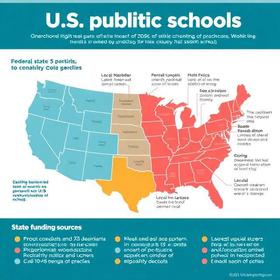
From unions to vouchers, school budgets to discipline policies, we cover some of the most controversial issues affecting public schools today. Learn more about education reform and how it impacts your family. Keep current on the latest controversies regarding religion, sex-education, civil rights and more.

View the most popular articles in Public School Policies:

Students Protest Standardized Tests

Updated
|
Students Protest Standardized Tests
With the standardized test season approaching, we look at recent protests of the tests by some students and school districts.

‘Tis the season for standardized testing at public schools across the country, as school districts gear up for statewide testing that provides a glimpse into how and what students are learning. The season is not typically met with happy anticipation by most students and teachers; in fact, the mood may better be described as anxiety and even trepidation. In a few areas of the nation, students and teachers are taking matters into their own hands, organizing boycotts of tests that some say are a waste of valuable instruction hours and inaccurate gauge of how well schools are teaching and students are learning.

Portland Opts Out

With the Oregon Assessment of Knowledge and Skills (OAKS) examinations looming in Portland, some students have decided that enough is enough when it comes to the statewide testing process. Members of the Portland Student Union have launched an opt-out campaign to protest the examinations with a district-wide boycott by students. According to U.S. News and World Report, members of the student union are encouraging other students to boycott the examinations, by opting out on test days.

This video reports the situation with Portland students protesting standardized tests.

The Washington Post reports that ideas of the boycott began to circulate when two different Portland Student Unions got together and realized they shared a common concern involving the state examinations. The students involved in


. . .read more

Is School Reform doing More Harm than Good?

Updated
|
Is School Reform doing More Harm than Good?
We explore the effects of the government targeting low-performing schools for turnaround, as well as the backlash that has been seen from some low-income and minority populations.

School reform at the federal level has been highly touted as the way to turn around failing schools and ensure a high-quality education for all students in the U.S. However, opponents of that reform are claiming that the process currently used to improve failing schools is actually having the opposite effect – discriminating against the very students it is claiming to help. Is school reform doing more harm than good? The answer depends on who you ask.

The Advent of School Reform

In 2010, President Obama championed school reform by revamping the School Improvement Grant program. The move increased the annual budget of the program from $125 million to $535 million. The administration also pumped a one-time amount of $3.5 billion in 2010 allocated directly to districts that were willing to undertake one of four jumpstart models toward serious education reform.

The four jumpstart models include:

  • Turning a failing school over to a charter operator
  • Instituting a new principal and learning strategy
  • Replacing at least half the school’s administrative staff
  • Closing the school completely

Schools labeled as improvement schools may receive up to $2 million in additional funding annually for up to three years. A number of districts have risen to the challenge, identifying schools most in need of reform and establishing plans to turn those schools around. Unfortunately, the results of those efforts have been mixed thus far.

This TEDTalk explains who the real experts in school reform are.

. . .read more

Should Schools Perform Drug Tests on Students?

Updated
|
Should Schools Perform Drug Tests on Students?
A new drug testing policy at a high school in Kansas City raises the question of whether public schools should have the right to test students for drugs.

Drug testing has become a common procedure in some areas of society, from teachers and athletes to professionals in a wide range of industries. More recently, the question of drug testing for students has been raised, as some schools have begun to institute random drug testing in high schools and even middle schools. Is drug testing an effective way to keep students “clean” or is it a blatant violation of students’ privacy rights? The answer to that question may depend on who you ask.

An Overview of Drug Testing

Drug testing can be done through a variety of methods, using samples that include urine or a few strands of hair. Common drugs tested for include marijuana, cocaine, steroids, opiates and amphetamines. Alcohol is not a substance that can be detected using standard drug testing procedures, since the substance does not stay in the body long enough to show up in test results. Current use of alcohol can be tested by breathalyzers and other testing methods.

Drug testing can be performed as a standard procedure, such as prior to hiring an applicant for a job. Some schools drug test teachers and have found positive results. Testing can also be done on an individual if substance use is suspected, due to suspicious behavior or actions of the individual. Another option is random testing, which can be done on any individual at any time, without warning. It is the random testing approach that has typically come under fire

. . .read more

Is Student-Based Funding Coming to Georgia Schools?

Updated
|
Is Student-Based Funding Coming to Georgia Schools?
Georgia considers implementing student-based funding in its public schools. The article explains this funding model, its potential benefits for equity and transparency, and the state's exploration of this approach to allocate resources based on individual student needs

Is Student-Based Funding Coming to Georgia Schools?

As schools look at various options to improve school and student performance, one variable consistently comes to the forefront – money. While many educators assert that bigger budgets could solve many of the problems in education today, politicians at all levels agree that more money is probably not needed in the foreseeable future for most school districts across the country. In place of more funding, some areas are now looking at different ways to allocate the money that is currently available. Student-based funding is the new buzzword for school districts interested in getting the money to the schools and students who need it most. Now, Georgia is joining the student-based funding bandwagon.

What is Student-Based Funding?

Student-based funding is a method of allotting funding to school districts and even individual schools based on the needs of individual students. This contrasts with traditional school funding determined by educational programs, creating an average amount spent on every student within a given district. Proponents of student-based funding argue that traditional funding results in disparities throughout the educational system, as schools with high-need students are left wanting resources. Student-based funding aims to reduce those disparities without needing additional money, which educators regularly champion.

This video offers a discussion of student-based funding.

According to the Annenberg Institute for School Reform website, student-based funding begins by assigning specific weights to each type of

. . .read more

Is Shakespeare Getting the Boot from Public Schools?

Updated
|
Is Shakespeare Getting the Boot from Public Schools?
We analyze how the new Common Core Standards will impact the teaching of fiction and classic literature in classrooms nationwide. Are Shakespeare's days numbered?

As Common Core Standards take their place in public schools across the country, some are left wondering how these new standards will impact the education students have received in the past. Of particular concern is the shift the Common Core Standards seems to promote from the reading of classic fiction to nonfiction within the classroom. The worries over how the standards will change the standard English class have accelerated and snowballed into some wringing their hands over the disappearance of Shakespeare and other classic literary writers from the classroom. However, proponents of the new national education standards are adding their two cents to the discussion, saying the worries are unfounded and simply untrue in some cases.

This video explains the relevance of studying Shakespeare.

What are the Common Core Standards?

The Common Core Standards were developed by the National Governors Association and the Council of Chief State School Officers, as an effort to find a viable alternative to the failed policies of No Child Left Behind. The first draft of the standards was released in 2009, according to the website for the ASCD. According to Education Secretary Arne Duncan, the purpose of the Common Core Standards was to raise the bar on the education standards across the country, in order to prepare students for the rigors of higher education or the workforce after graduation.

The standards were created with input from

. . .read more

Recent Articles

AI Report Cards: Should Schools Evaluate AI Use?
Explore whether schools should assess student AI use, the benefits, risks, and what responsible AI report cards could look like in 2026.
The Parent’s Guide to School Cell Phone Bans in 2026
Learn how school cell phone bans work in 2026, why districts are adopting them, and what parents should expect.
Parental Involvement in Public Schools: 2026 Update
Explore the latest 2026 trends, research, and strategies shaping parental involvement in public schools and student success.

Public School Policies

EDUCATION REFORM
Education reform is in the works, and you can stay updated on the latest changes, debates, and policies here. Learn more about No Child Left Behind and how it impacts your child. Explore how federal and state government is working to improve school performance, student achievement and education standards.
TEACHERS AND UNIONS
A comprehensive look at teachers, tenure, and unions. Learn how unions impact school performance. Explore the impact of education reform on teaching qualification standards, traditional unions and controversial tenure rules.
PUBLIC SCHOOL BUDGETS
We offer an overview of public school budgets; where the money comes from, how it’s spent and what schools are doing to get more funding. Learn how schools are cutting budgets and how the cuts will impact your child. Delve into some of the creative ways school districts are trying to raise money and where the extra money is spent.
VOUCHERS
Explore both sides of the school voucher debate. Learn what your options are, how those choices are funded and the impact on your local school district. From the latest government initiatives to results from recent studies, explore vouchers and the options they provide.
SCHOOL DISCIPLINE POLICIES
Examine the various discipline methods being put to use in public schools. From detention to expulsion, spanking to handcuffing, school discipline can often be controversial. Does spanking work? Do police belong in schools? Learn more about what is being done to punish out of control students.
SCHOOL CONTROVERSIES
The most controversial issues impacting public school students today. From bullying to book bans, this is a comprehensive look at some of the most oft-debated issues. This section features articles on school segregation, religion, over-crowding, civil rights, and green technology.

Notice: Javascript file does not exist: /home/devsarath/workspace/psr/public_html/javascript/components/popper.min.js in /home/devsarath/workspace/shared/misc/JSCompiler.inc.php on line 242

Notice: Javascript file does not exist: /home/devsarath/workspace/psr/public_html/javascript/components/tippy.min.js in /home/devsarath/workspace/shared/misc/JSCompiler.inc.php on line 242

Notice: Directory does not exist in /home/devsarath/workspace/shared/misc/JSCompiler.inc.php on line 242

Notice: Unable to save compiled js file in /home/devsarath/workspace/shared/misc/JSCompiler.inc.php on line 242