Updated
|
Cops and Children: Why Police Officers are Stationed at Elementary Schools
Learn about the growing trend of stationing police officers at elementary schools and the benefits of establishing a legal environment on campus at a young age.

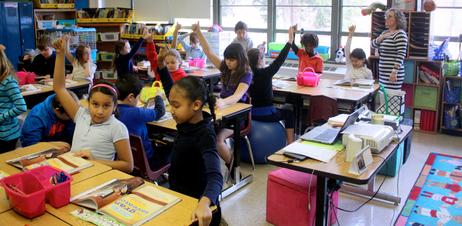
Police officers are commonly seen in high schools and many middle schools, but is the trend now spreading to our public elementary schools? Indeed, some school and police leaders are working to increase the number of officer positions in public schools—regardless of the age range of the school’s students.

Increasing Police Presence in Public Schools

While the title “school resource officer” may sound unfamiliar to those who graduated from high school more than 10 years ago, positions for police officers in schools are quite commonplace today. As All Academic explains, School Resource Officers (SROs) have been appearing in schools across the country at steadily rising rates in recent years.

Ideally, the SROs are available to help provide leadership examples for all students on campus; however, their influence in the schools can certainly have an impact that extends beyond these intentions. SROs are usually hired and paid by the local police force (not by the local schools), and subsequently, many believe that “The presence of these officers shapes the school social climate and students’ legal socialization.”

Interestingly, however, some high schools have reported an increase in student misbehaviors after officers have been assigned to the campus. Subsequently, many elementary school leaders are experimenting with SROs in the hopes that “legal socialization” at an early age can help prevent behavior problems in the middle and high school years. These proponents believe that teaching elementary students the benefits of law enforcement professionals will translate into

. . .read more

How New Outreach Programs are Bringing Dropouts Back to Public School Classrooms

Updated
|
How New Outreach Programs are Bringing Dropouts Back to Public School Classrooms
Learn about how public schools are implementing new programs that encourage dropouts to return to the classroom.

Did you know that student dropout rates are still continuing to rise in some of the United States' most populated areas? According to Fox News, America's Promise Alliance reveals that in many urban areas, approximately half of public school students do not earn their high school diplomas. This report further found that 17 of the nation's 50 largest cities have graduation rates below 50 percent. Among the lowest cities are Detroit, Indianapolis, and Cleveland. In examining this crisis on a larger spectrum, only 70 percent of the United States' high school students graduate on schedule each year, and 1.2 million students opt to drop out of school each year. Although the current dropout epidemic is bleak, some school leaders have fortunately found programs to help transform their negative graduation rates. These statistics not only highlight a problem within the education system, but they also reflect broader societal challenges that impact families, communities, and the workforce. When students leave school prematurely, the consequences often extend into adulthood, affecting job prospects, earning potential, and overall quality of life.

This video reports on America's dropout epidemic.

The growing dropout rate is not a sudden issue, but rather the result of long-standing challenges within many school systems. Factors such as overcrowded classrooms, limited resources, and unequal access to quality education can all contribute to student disengagement. In addition, many students face personal struggles outside of

. . .read more

Are Public Schools Still Fighting for Desegregation?

Updated
|
Are Public Schools Still Fighting for Desegregation?
Learn about how public schools today are fighting against a modern form of segregation: racial isolation.

While the unjust days of official segregation ended 40 years ago, public schools today are struggling against another type of segregation: racial isolation. Public schools in both urban and rural areas have been experiencing racial isolation, which occurs when one district is densely populated by a predominant ethnic group.

To combat these geographically-induced segregation trends, public school leaders have created integration programs to develop more diverse student populations. While the concept of mandatory racial integration may sound strange to an unfamiliar ear, schools across the country have implemented “reassignment” programs to increase diversity. In many cases, public schools have enforced specific race-based quotas – and these practices have ignited controversy on both sides of the debate.

From the Library of Congress: "The massive effort to desegregate public schools across the United States was a major goal of the Civil Rights Movement. Since the 1930s, lawyers from the National Association for the Advancement of Colored People (NAACP) had strategized to bring local lawsuits to court, arguing that separate was not equal and that every child, regardless of race, deserved a first-class education. These lawsuits were combined into the landmark Brown v. Board of Education Supreme Court case that outlawed segregation in schools in 1954. But the vast majority of segregated schools were not integrated until many years later. Many interviewees of the Civil Rights History Project recount a long, painful struggle that scarred many students, teachers, and parents."

Chicago Public Schools: Mandatory Racial Integration

Gaining a major

. . .read more

Can Sugar-Free Schools Improve Student Development And Grades?

Updated
|
Can Sugar-Free Schools Improve Student Development And Grades?
Learn about how sugar-free public schools enjoy improved student behavior, higher test scores, and healthier students.

While Americans are generally aware that a diet high in sugar can lead to diabetes and obesity, did you know that it can also negatively impact your child’s development? Some studies have found that children with high-sugar diets are more likely to engage in conflicts, have behavioral issues at school, and perform relatively poorly on standardized tests.

If these theories are true, then a diet free of sugar may be ideal for children, especially as students move through their formative years in public schools. Subsequently, some public school leaders have banned overly-sweetened foods for their students on campus. Remarkably, many of these “sugar-free” schools have reported significant changes and positive benefits!

In this video, Sarah Krieger reviews easy healthy school lunch ideas to include snack ideas for schools that have Nut and Sugar restrictions in place.

The Trend of Sugar-Free Schools

While many public schools have recently begun experimenting with sugar-free campuses, one particular elementary school in Georgia has enforced a no-sugar policy for nearly a decade. As CNN reports, Browns Mill Elementary School in Lithonia implemented a no-sugar policy for its K-5 students in the late 1990s. The elementary school prohibits bake sales, sodas, sweet snacks, and other unhealthy sugar-filled treats on campus.

In place of these options, students attending Browns Mill Elementary opt for healthier foods and beverages, such as low-fat milk, vegetables, and sandwiches served on

. . .read more

How Positive Behavior Programs are Improving Public School Campuses

Updated
|
How Positive Behavior Programs are Improving Public School Campuses
Learn about how new positive behavior programs are creating healthier, more positive public school campuses, as well as encouraging students to perform better academically.

Public schools are no longer focusing on just reading, writing, and arithmetic. Hoping to improve the social environment on campus, many school leaders are experimenting with innovative positive behavior programs.

Every day, more than 25 million middle and high school students walk through the hallways and classrooms of public schools across the country. According to Iris Educational Media (IEM), break times, lunch times, and moments between classes create the campus climate – and the students’ behavior ultimately impacts whether the environment is safe and respectful or intimidating and negative.

Public school behavior programs encourage students to build healthy relationships, develop positive behavior, and foster a shared responsibility amongst the community. All of these factors contribute to a more productive campus environment, as well as better academic achievement for individual students.

This video explains positive support.

Demanding a Change: Why Schools Need Positive Behavior Strategies

As IEM further reveals, problems with negative student behavior occur at all grade levels and can cause serious negative impacts on each student’s development and confidence. In fact, in specifically examining the pre-teen and high school years, the National Center for Education Statistics has reported that nearly 5 percent of all 12 to 18-year-olds have avoided school-related functions due to feelings of fear and/or apprehension.

While negative behaviors undoubtedly impact a

. . .read more

Recent Articles

AI Report Cards: Should Schools Evaluate AI Use?
Explore whether schools should assess student AI use, the benefits, risks, and what responsible AI report cards could look like in 2026.
The Parent’s Guide to School Cell Phone Bans in 2026
Learn how school cell phone bans work in 2026, why districts are adopting them, and what parents should expect.
Parental Involvement in Public Schools: 2026 Update
Explore the latest 2026 trends, research, and strategies shaping parental involvement in public schools and student success.

Notice: Javascript file does not exist: /home/devsarath/workspace/psr/public_html/javascript/components/popper.min.js in /home/devsarath/workspace/shared/misc/JSCompiler.inc.php on line 242

Notice: Javascript file does not exist: /home/devsarath/workspace/psr/public_html/javascript/components/tippy.min.js in /home/devsarath/workspace/shared/misc/JSCompiler.inc.php on line 242

Notice: Directory does not exist in /home/devsarath/workspace/shared/misc/JSCompiler.inc.php on line 242

Notice: Unable to save compiled js file in /home/devsarath/workspace/shared/misc/JSCompiler.inc.php on line 242