School Discipline Policies

Examine the various discipline methods being put to use in public schools. From detention to expulsion, spanking to handcuffing, school discipline can often be controversial. Does spanking work? Do police belong in schools? Learn more about what is being done to punish out of control students.

View the most popular articles in School Discipline Policies:

Is Your Public School’s Zero-Tolerance Policy Punishing Innocent Students?

Updated
|
Is Your Public School’s Zero-Tolerance Policy Punishing Innocent Students?
While zero tolerance policies were designed to keep public school students safe, are they unfairly punishing innocent students? Learn more about the debate and whether or not zero tolerance policies are effective for public schools.

In light of terrifying outbreaks of school violence, nearly all public schools have embraced a “zero-tolerance policy” to deter students from malicious behavior. As the American Bar Association (ABA) describes, ‘“Zero tolerance’ is the phrase that describes America's response to student misbehavior. Zero tolerance means that a school will automatically and severely punish a student for a variety of infractions.” Common student infractions include carrying a weapon to school, engaging in threatening forms of physical or verbal behavior, and bullying other students.

However, does the zero-tolerance policy work in public schools? The ABA argues that the zero-tolerance approach has devastatingly turned into a “one size fits all solution” for problems that need more personal interpretation and subjective assessment. For example, misunderstandings and common minor infractions are penalized under the large umbrella of zero tolerance – leading to overreactions and potentially unjust punishments.

Subsequently, many parents and community members are questioning if other types of behavior policies would be more appropriate in keeping public school campuses safe.

This TEDx Talk discusses the impact of zero-tolerance on teenagers.

What are Zero Tolerance Policies?

Zero-tolerance policies are rules that specifically target the most serious risks facing the safety of students in public schools. For example, students who bring any weapon to school can be punished under zero-tolerance restrictions.

While these types of policies were intended to help create a more widespread environment of safety and
. . .read more

Dealing with Behavioral Issues in Middle and High School

Updated
|
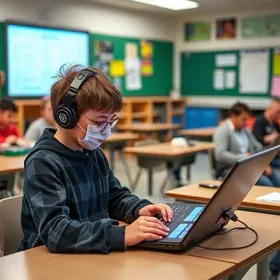
Dealing with Behavioral Issues in Middle and High School
From understanding the root causes of challenging behaviors to implementing effective intervention techniques, readers will gain valuable insights into fostering a positive learning environment. With a focus on proactive approaches and collaboration between home and school, this resource equips readers with the tools needed to address behavioral concerns effectively. Whether dealing with defiance, academic apathy, or social conflicts, this article provides guidance to support students in reaching their full potential academically, socially, and emotionally.

As teens transition through middle and high school, many parents witness their children exhibiting problematic behaviors as students try to assert more freedom and independence. Behaviors such as lying, stealing, not performing well in school, skipping class, or exhibiting general disruptive actions are common among teens.

Despite these issues, however, the vast majority of students struggling with troubling behaviors can improve and advance within one year if they receive early intervention. Early intervention strategies may be the key to solving issues and problems exhibited by teens. Public schools have developed action plans to improve teen behavior to achieve this early intervention. Paired with this, parents can implement specific strategies to help their teens work through some common issues and struggles during the middle and high school years.

Teens and Troubling Behavior

The Common Behavioral Issues

While many teens in middle and high school fall prey to the temptations of peer pressure, fitting in, and the lure of popularity, these pressures can often pull teens towards disruptive and negative behaviors that are evident both in and outside of school.

According to Parenting Teens, “Struggling t"ens (and even those not struggling) tend to project their smoke screens for various reasons. You may see them behaving with studied indifference to virtually everything. They may prefer not to be seen with the family. They may be withdrawn, irritable, difficult, and downright unpleasant.”

Often, "these attitudes are simply a developmental “phase” that "teens "exhibit as they move through puberty; however, schools and

. . .read more

Recent Articles

AI Report Cards: Should Schools Evaluate AI Use?
Explore whether schools should assess student AI use, the benefits, risks, and what responsible AI report cards could look like in 2026.
The Parent’s Guide to School Cell Phone Bans in 2026
Learn how school cell phone bans work in 2026, why districts are adopting them, and what parents should expect.
Parental Involvement in Public Schools: 2026 Update
Explore the latest 2026 trends, research, and strategies shaping parental involvement in public schools and student success.

Notice: Javascript file does not exist: /home/devsarath/workspace/psr/public_html/javascript/components/popper.min.js in /home/devsarath/workspace/shared/misc/JSCompiler.inc.php on line 242

Notice: Javascript file does not exist: /home/devsarath/workspace/psr/public_html/javascript/components/tippy.min.js in /home/devsarath/workspace/shared/misc/JSCompiler.inc.php on line 242

Notice: Directory does not exist in /home/devsarath/workspace/shared/misc/JSCompiler.inc.php on line 242

Notice: Unable to save compiled js file in /home/devsarath/workspace/shared/misc/JSCompiler.inc.php on line 242