Understanding the history of public schools offers valuable insight into how today’s education system evolved and where it is headed. From informal colonial classrooms to a nationwide system serving over 49 million students, public education in the United States reflects the country’s social, political, and economic transformations.
This updated look at the history of public schools traces key milestones, influential reforms, and modern developments shaping education in 2026.
Early Foundations: Education in Colonial America
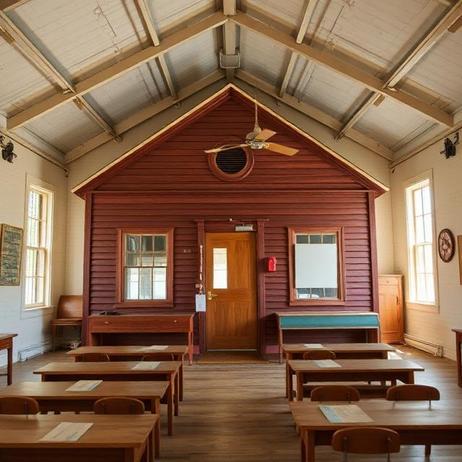
The roots of public education in America date back to the 17th century. Early schools were often locally organized and funded, primarily to promote literacy for religious purposes.
In 1647, Massachusetts passed the “Old Deluder Satan Act,” requiring towns to establish schools so children could learn to read the Bible. While not “public schools” in the modern sense, these institutions laid the groundwork for community-supported education.
Key characteristics of early schooling included:
Limited access, often restricted to white males
Strong religious influence
Local funding and control
Basic curriculum focused on reading, writing, and arithmetic
Education was not yet considered a universal right. That idea would emerge much later.
The Common School Movement: A National Vision Emerges
The early 19th century marked a turning point with the rise of the Common School Movement, led by reformers like Horace Mann. These advocates argued that education should be:
Free and publicly funded
Universal and accessible to all children
Nonsectarian
Taught by trained teachers
Massachusetts became a model for other states, establishing tax-supported public schools and standardized curricula.
Mann’s vision emphasized education as essential to democracy, economic mobility, and social stability. His influence helped transform scattered local schools into a more cohesive system.
For a deeper look at how school systems differ today, see Public School vs Private School: Key Differences.
Expansion and Inequality in the 19th Century
As public schooling expanded across the United States in the 1800s, access improved, but significant inequalities remained.
Persistent Barriers
Racial segregation: Black students were either excluded or placed in separate, underfunded schools
Gender disparities: Although girls increasingly attended school, opportunities remained unequal
Regional differences: The South lagged behind the North in developing public education systems
The post-Civil War era saw efforts to expand education through Reconstruction policies, but progress was uneven and often reversed during the Jim Crow era.
Compulsory Education Laws and System Growth
By the early 20th century, states began passing compulsory education laws, requiring children to attend school. This shift marked a major step toward universal education.
According to the National Center for Education Statistics, by 1918, every state had enacted compulsory schooling laws.
Key Developments
Standardized grade levels (K–12 structure)
Expansion of high schools
Professionalization of teaching
Increased public funding
Public schools became a central institution in American life, preparing students for industrial and civic participation.
Segregation and the Fight for Equality
One of the most defining chapters in the history of public schools is the struggle for civil rights and educational equity.
Brown v. Board of Education (1954)
In a landmark decision, the U.S. Supreme Court ruled that racial segregation in public schools was unconstitutional. The case, documented by Oyez, overturned the “separate but equal” doctrine established by Plessy v. Ferguson.
Impact and Challenges
Legal desegregation of schools
Federal enforcement through policies and court orders
Resistance in many states, particularly in the South
While Brown v. Board marked a turning point, disparities in funding and access persist today, often tied to housing patterns and local tax structures.
Late 20th Century Reforms: Accountability and Standards
From the 1980s onward, concerns about educational quality led to waves of reform focused on accountability and performance.
A Nation at Risk (1983)
This influential report warned of declining academic standards and spurred nationwide reform efforts. You can explore the original findings through the U.S. Department of Education.
Key Policy Shifts
Standardized testing as a measure of performance
State and federal accountability systems
Increased focus on curriculum standards
The No Child Left Behind Act (2001) further emphasized testing and accountability, tying federal funding to student performance.
To understand how these policies affect schools today, see Pros and Cons of Standardized Testing.
The Rise of School Choice and Charter Schools
In recent decades, the concept of school choice has reshaped the public education landscape.
Charter Schools
Charter schools are publicly funded but operate independently of traditional school districts. They aim to provide innovative approaches to education.
According to the National Alliance for Public Charter Schools, over 7 million students attend charter schools nationwide as of 2026.
School Choice Options
Charter schools
Magnet schools
Open enrollment policies
Voucher programs in some states
Supporters argue that choice increases competition and innovation, while critics raise concerns about equity and resource allocation.
For more on this topic, read What Are Charter Schools?.
Technology and Modern Public Education
Technology has dramatically transformed public schools, especially since the COVID-19 pandemic accelerated digital learning.
Key Trends in 2026
Widespread use of one-to-one devices (laptops or tablets)
Integration of artificial intelligence in instruction
Growth of hybrid and blended learning models
Increased focus on digital literacy
Federal initiatives, including programs supported by the Federal Communications Commission, have expanded broadband access to underserved communities, helping bridge the digital divide.
However, challenges remain, including:
Unequal access to high-quality technology
Concerns about screen time and student well-being
Teacher training for digital tools
Public Schools Today: A Snapshot
Public schools remain the backbone of American education. Here is a quick overview of the system in 2026:
|
Category |
Data |
|---|---|
|
Total Students |
~49 million |
|
Number of Schools |
~98,000 |
|
Teachers |
~3.2 million |
|
Funding Source |
Primarily state and local taxes |
Source: National Center for Education Statistics
Ongoing Challenges and Future Directions
Despite significant progress, public schools face ongoing challenges:
Equity and Funding
School funding often depends on local property taxes, leading to disparities between districts.
Teacher Shortages
Many regions continue to experience shortages, particularly in STEM and special education.
Mental Health Support
Schools are increasingly addressing student mental health needs, with expanded counseling services and wellness programs.
Curriculum Debates
Discussions around curriculum content, including history and social issues, remain a focal point in education policy.
Why the History of Public Schools Matters
The history of public schools is more than a timeline of policies and institutions. It reflects evolving beliefs about equality, opportunity, and the role of education in society.
Understanding this history helps parents and educators:
Make informed decisions about schooling options
Advocate for equitable resources
Recognize the broader context behind current policies
Frequently Asked Questions
When did public schools become mandatory in the U.S.?
By 1918, all states had laws requiring children to attend school.
What was the purpose of early public schools?
Early schools focused on literacy and moral education, particularly for religious reasons.
Are public schools still evolving?
Yes. Advances in technology, changing demographics, and policy reforms continue to shape public education.
Conclusion
The history of public schools reveals a system constantly adapting to meet the needs of a changing nation. From colonial classrooms to technology-driven learning environments, public education has expanded access and opportunity for millions.
As debates about funding, equity, and innovation continue in 2026, understanding this history remains essential. It provides the context needed to evaluate current reforms and envision the future of public education.
The story of public schools is still being written, and its next chapter will depend on how communities, educators, and policymakers respond to the challenges ahead.