About Public Schools

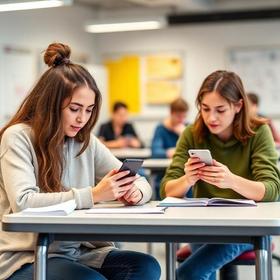
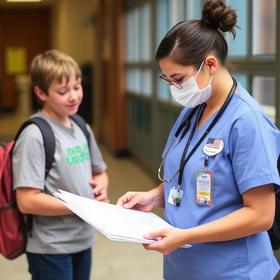
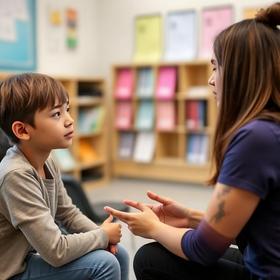
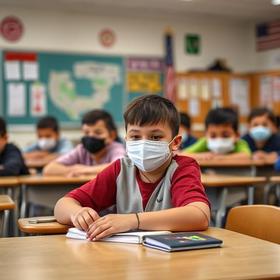
Here we cover the history of public schools, explain the various types and discuss their pros/cons. Learn more about technology on campus, health and nutrition issues, and the latest information related to a variety of student populations.

View the most popular articles in About Public Schools:

Charter School Case Studies: Failures Despite Generous Funding and Stanford Backing

Updated
|
Charter School Case Studies: Failures Despite Generous Funding and Stanford Backing
While there are many success stories of charter schools, there are also failures. Learn about two examples of charter schools that have not turned the tide in suffering school districts.

Charter schools have traditionally been known for producing high test scores and academically prepared students despite facing challenges in districts that standard public schools have been unable to overcome. However, the establishment of a charter school does not guarantee improved performance all of the time. Even when plenty of money is invested, and renowned academic experts are called in, the schools may fall short occasionally.

This video explains why charter schools can succeed.

This article reports on two struggling charter schools despite an infrastructure of support.

Trouble Brewing in New Jersey Charter School

Newark's Lady Liberty Academy was a troubled school that many in public education in New Jersey hoped to revive. Situated in a low-income area of the state, those involved with the charter school adopted a new commitment a year ago to show just what the correct type of education could do for at-risk kids.

Newark Mayor Cory Booker wooed in public school superstar Glen Pinder, a high-profile principal from New York's Harlem Children's Zone. Pinder was tasked with turning over a new leaf at Lady Liberty, raising test scores and the morale of staff and students simultaneously.

Unfortunately, even the best-laid plan ran amuck at times, and Lady Liberty was not immune to its share of conflict, according to recent reports at newjerseynewsroom.com. With Pinder came an entirely new administrative team, straight from his home field of New York.

. . .read more

Vending Vicious Cycles: The Overhaul of Public Schools' Vending Machines

Updated
|
Vending Vicious Cycles: The Overhaul of Public Schools' Vending Machines
Could sodas, cookies, and candy finally be banished from school vending machines? Learn about the public schools and movement that are finally swapping carrots for candy.

Vending machines have become a mainstay in many public schools today, but nutrition experts fear that the calorie-laden treats lurking inside could be contributing to our nation's obesity epidemic. Some schools have taken action against such temptations by eliminating vending machines, while others are replacing the fare with nutritional options that boast less fat and fewer calories.

Are vending machines in schools a pleasant convenience or a nutritional threat? We will explore this issue to discover the full impact they have on the overall health of our children.

Junk Food Studies

A recent study in the Los Angeles Times showed that school vending machine purchases added about 253 calories to the diets of the 22% of students who ate them daily. Researchers from the University of Michigan, Michigan State University, and Food & Nutrition Database Research Inc. of Okemos, Michigan, conducted the study. The data was collected from 2,309 students nationwide in grades 1-12, and the findings were published in the September issue of the Journal of School Health.

The study also found that the most popular vending machine selections included soda pop, candy, chips, crackers, cookies, cakes, and ice cream. Healthier selections, including low-fat milk, fruit juice, and fruit, were also purchased.

In addition to the added calories, children who regularly snacked from vending machines added ten more grams of sugar to their diet daily. The same kids consumed less fiber, iron, and B vitamins overall.

The Problem with Obesity

It is

. . .read more

Bed Bugs in Schools? The Creepy Truth

Updated
|
Bed Bugs in Schools? The Creepy Truth
Think bed bugs only exist in motel rooms? Think again! Bed bugs may in fact be infesting public schools around the country.

Bed bugs are associated with dingy motel rooms, but more of these creepy crawlers are showing up in the most surprising places - including public schools!

School authorities in many areas are scrambling to dispel misconceptions and provide constructive information to help educators and parents keep the outbreaks under control. However, the news has many parents concerned about the safety of their children in school, as well as the possible infestations of the critter that could occur in their own homes.

What is a Bed Bug?

According to the Mayo Clinic, bed bugs are flat, oval creatures that are reddish brown in color. They are about the size of an apple seed, but are traditionally difficult to locate because they spend their days hiding in headboards, box springs and the cracks and crevices of mattresses. They come out to feed in the middle of the night, which is why people who have bed bugs in their homes typically wake up in the morning with evidence of bites on their face, neck, arms and hands. Bed bugs can be quite difficult to exterminate completely, particularly if the infestation has significantly grown before it was discovered.

Bed bug bites often appear as small red bumps with a smaller red dot in the middle. They are usually arranged in a line or cluster, and they can be quite itchy. In most cases, bed bug bites do not cause any major medical concerns, unless a person

. . .read more

Asbestos in Public Schools: Is Your Child at Risk?

Updated
|
Asbestos in Public Schools: Is Your Child at Risk?
Your child's public school could be the scene of asbestos. Learn about the risk factors and what schools have recently been impacted by the presence of asbestos.

Most parents send their children to school each day under the assumption that the campus is a safe environment for all of their students. If a risk is detected, parents generally believe that school officials will do whatever necessary to eliminate the risk before allowing children to return to the scene.

However, some public schools across the country have found dangers lurking within school walls, but have not quickly or efficiently addressed these toxins. This concern particularly applies to dangers lurking within walls quite literally, as well as floor and ceiling tiles. The danger in question here is asbestos exposure.

In this video, The Mesothelioma Center explains how many of America’s students, teachers and school staff are at danger of asbestos exposure because the deadly carcinogen lurks behind walls, above ceilings and under floors in older schools across the United States.

What is Asbestos?

According to the U.S. Environmental Protection Agency, or EPA, asbestos is a naturally occurring mineral fiber that was once commonly used in the construction of buildings. Asbestos was previously a desirable material because of its ability to insulate buildings efficiently and its relative resistance to fire.

Asbestos was widely used throughout much of the last century until health officials found a link between asbestos and some types of diseases in the 1970s. At that time, much asbestos was removed from buildings, although walls, ceilings, and floors were

. . .read more

Is Your Child's Public School Fertile Grounds for Cancer from PCBs?

Updated
|
Is Your Child's Public School Fertile Grounds for Cancer from PCBs?
The greatest danger on your child’s campus is not bullies, but rather cancer-causing PCBs. Learn about the presence of PCBs in schools and whether your child’s school is at risk.

When parents send their children to school, most worry about whether their children will like their teachers or succeed in their classes. Few are concerned about the potential of cancer-causing elements like PCBs lurking in or around their children's school grounds.

Alas, recent assessments of New York schools have raised some troubling findings that indeed have parents concerned about their children's exposure to these potentially harmful elements during school hours.

Study Uncovers Disturbing Findings

According to a report at the New York Times, a pilot study into the presence and potential risks of PCBs was conducted in New York City school buildings. In the first three schools examined, elevated levels of the compounds were discovered. Remediation work on the schools and surrounding areas has already begun, and the city's Department of Education has stated that all three schools are on schedule to open to students on September 8.

The Formation of the PCB Task Force

However, the assurance does little to calm the concerns of parents who send their children to schools in the city. One parent of a student at French Hill Elementary School in Yorktown Heights, Dr. Daniel Lefkowitz, discovered hazardous levels of PCBs around a window and in the soil around the school in 2004. His findings resulted in a major cleanup of French Hill Elementary that amounted to a total bill of more than $300,000.



The discovery also launched the beginnings of a PCB Task Force that calls

. . .read more

Recent Articles

About Public Schools

OVERVIEW OF PUBLIC SCHOOLS
A comprehensive look at the U.S. public school system, including history, governing bodies, funding, and services. Compare private, public and charter schools. Learn more about Magnet school programs and get tips on choosing the right school for your child.
TYPES OF PUBLIC SCHOOLS
Explore the different types of public schools, from charter to language immersion, and learn about the unique pros and cons of each type. Is a co-ed or single sex classroom best for your child? Charter school or magnet? Read expert advice and get valuable tips on the various public education programs available and how to choose what works best for your family.
TECHNOLOGY ON CAMPUS
From eBooks to web cams, technology on campus continues to grow. Learn how the latest technology impacts your child’s education. Get tips on the best ways to integrate technology into education and stay abreast of the latest developments and challenges facing schools.
HEALTH AND NUTRITION AT SCHOOL
From vending machines to Jamie Oliver, bed bugs to tuberculosis, we provide an in-depth look at health and wellness in public schools. Help your kids stay healthy on campus and learn about current health epidemics, vaccination requirements, physical fitness programs and the latest food initiatives.
BACK TO SCHOOL
Learn more about preparing your child and wallet for a new school year. Inside you’ll find valuable advice to help your family prepare for the transition from swimsuits to school. While there is no tuition, public school education does not come without costs. Learn more about budgeting for a new school year and get great money saving tips.
STUDENT POPULATIONS
The latest trends, laws and resources for a variety of student populations. Every child has different needs, and this section offers helpful information for LGBT, special education, gifted, low-income, and minority students.
Notice: Javascript file does not exist: /home/devsarath/workspace/psr/public_html/javascript/components/popper.min.js in /home/devsarath/workspace/shared/misc/JSCompiler.inc.php on line 242 Notice: Javascript file does not exist: /home/devsarath/workspace/psr/public_html/javascript/components/tippy.min.js in /home/devsarath/workspace/shared/misc/JSCompiler.inc.php on line 242 Notice: Directory does not exist in /home/devsarath/workspace/shared/misc/JSCompiler.inc.php on line 242 Notice: Unable to save compiled js file in /home/devsarath/workspace/shared/misc/JSCompiler.inc.php on line 242