Updated
|
Bussing: North Carolina's New Student Assignment Plan
We analyze a new plan for student assignment in two North Carolina school districts and the public reaction to the idea of bussing students – as well as alternatives that have been proposed by education experts.

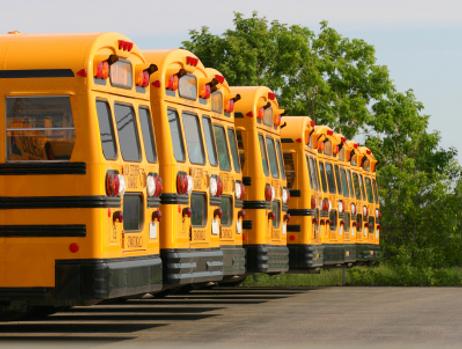
Although Brown v. Board of Education eliminated school segregation 58 years ago, the idea of bussing students to integrate them more effectively is still going strong in some school districts. Today, the issue is not race as much as it is socioeconomic status—integrating wealthy and low-income students into a diverse student body that performs better academically. Does it work? The answer depends on who asks the question.

In this TED Talk, Kandice Sumner sees the disparity every day in her Boston classroom. In this inspiring talk, she asks us to face the facts and change them.

School Assignments by Socioeconomic Status Not a New Idea

USA Today reported more than two years ago that more than 60 school systems used socioeconomic status as a factor in school assignments. These schools made this decision primarily to improve performance in schools with a high concentration of poverty.

“To the extent that we can eliminate the highest concentrations of poverty, or spread more thinly those concentrations of poverty, I think we make the environment a little less challenging for students and staff to be successful,” Michael Rice, superintendent for Kalamazoo Public Schools in Michigan, told USA Today at the time.

Wake County in North Carolina was one of the first school districts in the country to consider bussing based on income level. In 2000, this school district shifted its bussing policy from one

. . .read more

Florida Schools: New Grading System

Updated
|
Florida Schools: New Grading System
We examine the new grading system that will launch in Florida schools this fall, which was necessary to comply with NCLB standards and current state statute. Will more schools fall behind as a result?

In anticipation of Florida’s new grading system, and in light of the potential fallout that is to follow, the state is providing special guidelines for Florida public schools this year. While the one-year rule will keep school ratings relatively consistent over the next year, some worry that once the new system goes into place, Florida schools are going to struggle to meet minimum standards in many areas of the state.

This TEDTalk discusses the downsides of a traditional grading system.

The Need for a New System

Like other states across the country, Florida will not be able to meet 100-percent proficiency requirements by 2014, as mandated under the No Child Left Behind Act. The state has applied for an NCLB waiver but must meet certain criteria set by the federal government in order to have that waiver approved. According to the Miami Herald, the Florida Board of Education recently voted for changes that will be necessary in order to receive waiver approval.

The five new amendments will comply with new No Child Left Behind waiver rules, as well as the current Florida statute. All of the amendments deal directly with the state-issued grading system used for schools, which is used to hold schools accountable under state and federal law. The changes come simultaneously with higher passing scores on standardized tests. While educators agree the bar should be raised, there is some

. . .read more

What are the Best High Schools in America? Top 15 Ranked Schools

Updated
|
What are the Best High Schools in America? Top 15 Ranked Schools
U.S. News recently released its latest list of the best high schools in America. We’ll take a look at some of the schools on the list and whether the rankings are warranted.

A new report from U.S. News and World Report reveals the top-rated high schools in America, but it is not without its share of accolades and controversy. This list was compiled after the publication carefully analyzed 22,000 high schools in 49 states and the District of Columbia. Schools were awarded gold, silver, or bronze medals, based on a range of criteria. While some schools are celebrating their inclusion on the list, others are left scratching their heads, wondering how and why they were selected among so many good high schools across the country.

Three Steps to the Top-Ranked Schools

The creation of the U.S. News list was achieved through a three-step process, which was implemented by the American Institutes for Research (AIR). First, the publication looked at student performance, by weighing math and reading scores on high school proficiency tests against the percentage of economically disadvantaged students at the school. Schools that scored higher statistically than the state average were evaluated through the next step in the process.

Next, U.S. News and AIR looked at whether the least advantaged students were performing at a higher rate than the state average. This list included Hispanic, African-American, and low-income students. Schools that were performing better than average in this area proceeded to the next step of the evaluation process.

Finally, schools were judged on their college readiness, through Advanced Placement or International Baccalaureate test data. Both of these programs offer college-level courses

. . .read more

Unions Head to Court to Stop School Closures

Updated
|
Unions Head to Court to Stop School Closures
In an evolving story out of New York, teacher unions have sued the school district to prevent them from following through with proposed school closures.

In an attempt to stop school closures across New York City, teacher unions are taking their case to the courtroom. Union members have called the closure of 24 schools a “sham,” used by the mayor and his team to oust teachers by stripping them of their contractual rights. City officials have said the closures are necessary for raising the education bar throughout the city and have denounced union members as obstacles in providing the best quality of education to New York City students.

The Plan to Close Schools

The school closure plan was put into place last month when the Panel for Educational Policy voted to close 24 under-performing schools over the summer. According to a report at NY1, new schools would immediately open to replace the closed schools this fall, with schools meeting in the same buildings under new names and leadership. Teachers and principals who have been working in those locations up to this point will have to reapply for their jobs in the new schools next year. City officials predict only about half of current staff will be rehired, with the rest made up of new applicants.

Because the buildings will technically house new schools, contractual obligations with the current staff of the old schools will not apply. This allows the city to move forward with plans to get rid of ineffective teachers, replacing them with stronger applicants. The union has no intention of allowing this plan to go through unhindered, stating that the

. . .read more

10 Tips for Avoiding the Academic Summer Slide

Updated
|
10 Tips for Avoiding the Academic Summer Slide
This article provides strategies to prevent academic regression during summer break. It emphasizes the importance of maintaining reading and math skills, suggests engaging educational activities, and offers practical tips for parents to incorporate learning into daily summer routines, ensuring students stay academically sharp for the new school year.
Summer Reading Retention

As summer vacation approaches, kids are gearing up for the season with little regard for the academics they will leave behind when the backpacks are hung up for the year. On the other hand, parents and teachers often worry about the loss of important skills throughout the summer months, which must be retaught once school rings in again. For parents intent on avoiding the academic summer slide, there are a number of ways to keep kids’ brains in the game, even as they are looking forward to their break from the classroom.

This video offers tips to avoid the summer slump.

Keep Them Reading

Studies have shown that kids can lose up to 25 percent of their reading skills over the summer months, which can have a significant impact on their ability to get back into the school swing in the fall. A report at mLive shows that income disparity widens the reading gap over the summer even more. Children in low-income households consistently lose more than two months of reading ability each summer. In contrast, children in middle to upper-income homes may remain steady or gain skills during vacation.

Scholastic Books cites research that shows reading just six books over the summer can keep students on track when they return to the classroom. One way to ensure your kids keep reading all summer long is to schedule regular

. . .read more

Recent Articles

The ROI of Public High School in 2026: Which Programs Actually Improve College and Career Outcomes?
Which public high school programs deliver real college and career results in 2026? Compare AP, IB, dual enrollment, CTE, and early college outcomes.
Spring Parent-Teacher Conferences: Key Questions
Spring Parent-Teacher Conferences: Questions Every Parent Should Ask to support academic growth, social development, and 2026 classroom goals.
Prepare for Spring Tests Without Anxiety
Learn how to prepare for spring standardized tests without increasing anxiety using proven strategies for families and schools.
Notice: Javascript file does not exist: /home/devsarath/workspace/psr/public_html/javascript/components/popper.min.js in /home/devsarath/workspace/psr/public_html/include/srn_lib/shared/misc/JSCompiler.inc.php on line 241 Notice: Javascript file does not exist: /home/devsarath/workspace/psr/public_html/javascript/components/tippy.min.js in /home/devsarath/workspace/psr/public_html/include/srn_lib/shared/misc/JSCompiler.inc.php on line 241 Notice: Directory does not exist in /home/devsarath/workspace/psr/public_html/include/srn_lib/shared/misc/JSCompiler.inc.php on line 241 Notice: Unable to save compiled js file in /home/devsarath/workspace/psr/public_html/include/srn_lib/shared/misc/JSCompiler.inc.php on line 241