Health and Nutrition at School

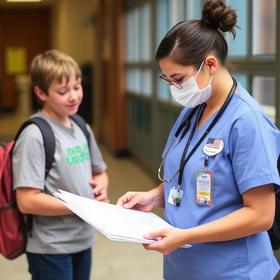
From vending machines to Jamie Oliver, bed bugs to tuberculosis, we provide an in-depth look at health and wellness in public schools. Help your kids stay healthy on campus and learn about current health epidemics, vaccination requirements, physical fitness programs and the latest food initiatives.

View the most popular articles in Health and Nutrition at School:

Is Your Child’s School Prepared for a Pandemic Health Threat?

Updated
|
Is Your Child’s School Prepared for a Pandemic Health Threat?
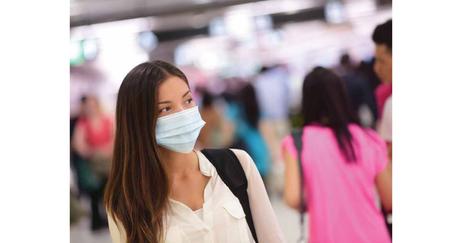
Learn about how your school will address pandemic health issues, such as the H1N1 virus, and how you can be proactive in learning about school closing guidelines.

Amidst the recent H1N1 virus scare, public schools are being celebrated for their proactive efforts to minimize student illness and the spread of disease. As the U.S. Department of Health and Human Services explains, “Schools play a critical role in protecting the health of their students, staff, and the community from highly contagious, infectious diseases such as seasonal or pandemic influenza.”

To contain the pandemic threat, a number of public schools chose to close their doors upon reports of symptoms of the H1N1 virus. Many experts assert that public school leaders have helped contribute to the diminished threat of this potentially serious illness.

Public Schools and Health Regulations

Based upon extensive studies and investigations conducted by the Center for Disease Control and Prevention, the U.S. Department of Health and Human Services asserts that public schools’ proactive efforts to administer schoolwide closures amidst health threats have been proven to mitigate the incidence of pandemic influenza viruses. With this precautionary step, public school leaders have the ability to help protect their students, families, and extended community members from the dangers of serious contagious diseases.

While public schools have historically closed for weather-related factors and illness-related incidents, public schools are not actually legally required to close their doors amidst times of non-emergency illnesses. As each school district, county, and state hold varying authorities over closing their schools, leaders are urging parents to find out about their local schools’ pandemic response plans. Parents and community members should be aware of

. . .read more

Physical Education Reform in Public Schools

Updated
|
Physical Education Reform in Public Schools
Learn how public schools are evolving to combat rising levels of obesity in public school students.

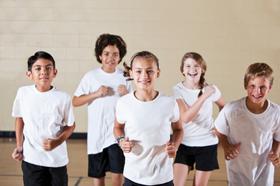
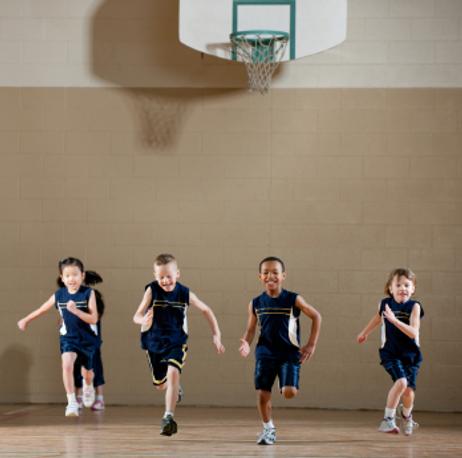
As obesity levels and health issues are rising among young children and teens across the country, public schools are implementing new health and physical education programs to help prevent illnesses while striving to promote wellness. Some studies report that the new health programs not only help children to improve physically, but a school’s wellness plan can also help students improve emotionally, behaviorally, and academically as well.

The Current Health Issues Facing Public School Students

Since 1997, America's Children in Brief: Key National Indicators of Well-Being has issued reports regarding American children’s health and wellness. According to America’s Children, one of the biggest issues of concern among all public schools and parents is the rising percentage of overweight children: “In 1976–1980, only 6 percent of children ages 6–17 were overweight. […] Most recently, in 2005–2006, 17 percent of children ages 6–17 were overweight.”

Paired with this, Asthma is another disease, in addition to weight, that is a serious concern for American children. According to studies, “Asthma is a leading chronic disease among children, and rates of childhood asthma have remained at historically high levels since the 1990s.” Recently, in 2006, 9 percent of children suffered from asthma.”

As schools are becoming increasingly aware of these issues, public wellness plans are designed to decrease obesity rates while also helping students cope with specific health issues, such as asthma, diabetes, and many others.

This TedTalk explains how quality, daily physical education in schools not only reduces obesity amongst our children, but

. . .read more

How Diet and Nutrition Impact a Child's Learning Ability

Updated
|
How Diet and Nutrition Impact a Child's Learning Ability
Read why good diet and nutrition is important for high student performance.

While the intake of food is vital for proper performance, many of the widely available and popular foods in schools today are actually hindering children’s abilities to learn. Loaded with sugars, caffeine, chemicals, and sodium, many popular menu items are leaving kids tired, unfocused, jittery, and sick—which not only impact students’ grades and performance, but also influences their behavior and moods.

Lack of Energy and Focus

According to the Society for Neuroscience, recent studies reveal that diets with high levels of saturated fats actually impair learning and memory. Unfortunately, foods with saturated fats are often the most affordable and widely available in schools. French fries, sugary desserts, cheeseburgers, chicken nuggets, and other cafeteria staples are filling kids with food that actually lower their brain power before sending them back to class.

One of the theories that explain the link between saturated fats and brain power is the effects of glucose and sugars in the higher-fat foods. Essentially, glucose comes from carbohydrates, and while glucose is vital for energy, foods that are too high in glucose actually cause a body’s energy levels to drop. As glucose is ingested, the body releases insulin in order to process the newly acquired foods. Normally, after a healthy meal, glucose levels should rise slightly, and a body should feel energized after taking in nutrition.

This video gives a brief explanation of the benefits of a nutritious breakfast.

. . .read more

Recent Articles

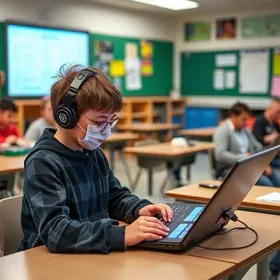
AI Report Cards: Should Schools Evaluate AI Use?
Explore whether schools should assess student AI use, the benefits, risks, and what responsible AI report cards could look like in 2026.
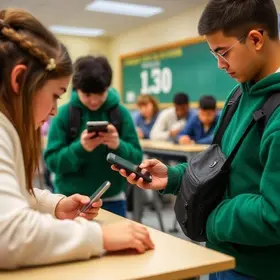
The Parent’s Guide to School Cell Phone Bans in 2026
Learn how school cell phone bans work in 2026, why districts are adopting them, and what parents should expect.
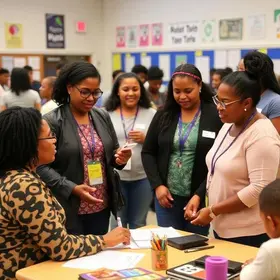
Parental Involvement in Public Schools: 2026 Update
Explore the latest 2026 trends, research, and strategies shaping parental involvement in public schools and student success.

Notice: Javascript file does not exist: /home/devsarath/workspace/psr/public_html/javascript/components/popper.min.js in /home/devsarath/workspace/shared/misc/JSCompiler.inc.php on line 242

Notice: Javascript file does not exist: /home/devsarath/workspace/psr/public_html/javascript/components/tippy.min.js in /home/devsarath/workspace/shared/misc/JSCompiler.inc.php on line 242

Notice: Directory does not exist in /home/devsarath/workspace/shared/misc/JSCompiler.inc.php on line 242

Notice: Unable to save compiled js file in /home/devsarath/workspace/shared/misc/JSCompiler.inc.php on line 242