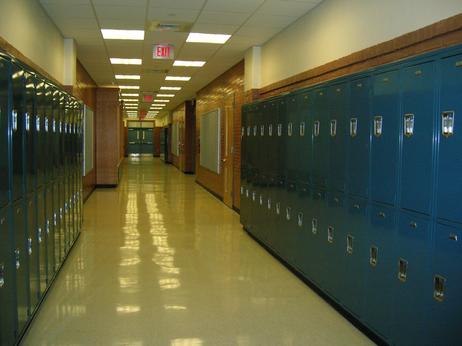
Health and Nutrition at School

From vending machines to Jamie Oliver, bed bugs to tuberculosis, we provide an in-depth look at health and wellness in public schools. Help your kids stay healthy on campus and learn about current health epidemics, vaccination requirements, physical fitness programs and the latest food initiatives.

View the most popular articles in Health and Nutrition at School:

Behind the Scenes of Public School Cafeterias

Updated
|
Behind the Scenes of Public School Cafeterias
Explore how public school cafeterias operate, from nutrition standards to budgeting and daily logistics in 2026.

Public school cafeterias do far more than serve lunch. They are part nutrition program, part logistics operation, part public health effort, and part school support system. For many families, the cafeteria is one of the most visible ways a school shapes a child’s daily experience. What students are served, how quickly meals move through the line, and whether food is appealing enough to eat all matter more than many people realize.

In 2026, public school cafeterias are also operating in a more demanding environment. Districts are adapting to updated federal nutrition rules, persistent labor pressures, and continued concern about food costs and student participation. At the same time, families are paying closer attention to how schools support health, attendance, and readiness to learn. Understanding what happens behind the scenes offers a clearer view of how cafeteria operations connect to the larger mission of public education.

Public school cafeterias are part of the academic day

It is easy to think of the cafeteria as a separate service that sits alongside instruction. In reality, school meal programs support learning conditions in practical ways. The Centers for Disease Control and Prevention notes that school meals are associated with better overall diet quality, and that eating breakfast at school is linked to better attendance, fewer missed school days, and better test scores. That makes cafeteria operations more than a convenience; they are part of the infrastructure that helps students arrive in class ready to focus.

This matters for families evaluating

. . .read more

Public School Immunization Requirements 2026–2027

Updated
|
Public School Immunization Requirements 2026–2027
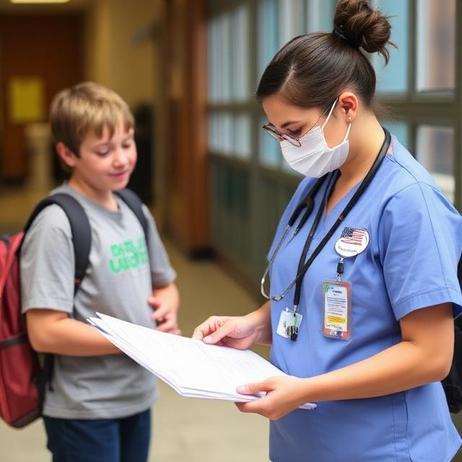
Learn public school immunization and health requirements for 2026–2027, including vaccines, exemptions, and state policy updates.

Public school immunization and health requirements for the 2026–2027 year remain a cornerstone of student safety and community health. As schools continue to balance in-person learning with evolving public health guidance, families must stay informed about required vaccines, updated policies, and documentation standards.

While immunization laws are set at the state level, there is broad national consistency in core vaccine requirements. At the same time, recent policy adjustments and public health developments have led to important updates for the 2026–2027 school year.

This guide provides a clear, up-to-date overview of what parents, students, and educators need to know.

Why Immunization Requirements Matter in Public Schools

School immunization requirements are designed to protect both individual students and the broader school community. By maintaining high vaccination rates, schools reduce the risk of outbreaks of preventable diseases such as measles, pertussis, and meningitis.

According to the Centers for Disease Control and Prevention, vaccines prevent millions of illnesses each year in the United States alone. In a school setting, where students interact closely, these protections are especially critical.

Key benefits include:

  • Reduced spread of infectious diseases
  • Protection for medically vulnerable students
  • Fewer disruptions to in-person learning
  • Lower absenteeism rates

For the 2026–2027 academic year, states continue to emphasize compliance as a prerequisite for school attendance.

Core Public School Immunization Requirements for 2026–2027

Although requirements vary slightly by state, most public schools follow a standard set of immunizations aligned with CDC recommendations.

Required Vaccines

Students enrolling in public schools are

. . .read more

Preventing Suicide in Schools: 2026 Guide for Educators

Updated
|
Preventing Suicide in Schools: 2026 Guide for Educators
Learn updated 2026 strategies for preventing suicide in schools, including warning signs, intervention plans, and school-wide mental health support.

Preventing suicide in schools remains one of the most urgent responsibilities facing educators, administrators, and families in 2026. Youth mental health challenges have continued to rise in recent years, with increasing rates of anxiety, depression, and emotional distress among students. Schools are uniquely positioned to identify early warning signs, provide intervention, and create environments where students feel safe seeking help.

This updated guide builds on prior best practices while incorporating current research, policy shifts, and practical strategies schools can implement today.

Understanding the Scope of the Crisis

Youth suicide remains a leading cause of death among adolescents in the United States. According to the Centers for Disease Control and Prevention, suicide is consistently among the top causes of death for individuals aged 10–19.

Several contributing factors have intensified in recent years:

  • Increased social media exposure and cyberbullying
  • Academic pressure and post-pandemic learning gaps
  • Reduced access to in-person mental health resources
  • Family and economic instability

Schools cannot solve these issues alone, but they play a central role in early detection and support.

Recognizing Warning Signs in Students

Early identification is critical to preventing suicide in schools. Educators and staff should be trained to recognize both verbal and behavioral warning signs.

Common Warning Signs

  • Talking about feeling hopeless or having no purpose
  • Expressing thoughts about death or self-harm
  • Sudden withdrawal from friends or activities
  • Noticeable changes in mood, behavior, or academic performance
  • Giving away possessions or saying goodbye

It is important to understand that warning signs

. . .read more

Esports Programs in Public Schools: Benefits & Funding

Updated
|
Esports Programs in Public Schools: Benefits & Funding
Explore how esports programs in public schools support academic achievement, boost student engagement, and operate through sustainable funding models and partnerships.

Esports programs in public schools are rapidly gaining traction as districts look for innovative ways to engage students and expand extracurricular offerings. Once considered purely recreational, competitive gaming is now being integrated into academic environments with measurable educational benefits and structured funding approaches.

As educators evaluate how esports fits into the broader school ecosystem, it is important to understand both the academic value and the financial models that sustain these programs, particularly as schools prepare students for future pathways highlighted in life beyond high school: the innovative frontier.

The Rise of Esports in Public Education

Over the past decade, esports has evolved into a global industry, and schools are increasingly recognizing its potential as an educational tool. Much like traditional athletics or music programs, esports provides students with opportunities to collaborate, compete, and develop critical skills.

Districts often position esports alongside other enrichment opportunities, reinforcing its role in student development beyond the classroom. Families can better evaluate participation options through guidance, such as extracurricular signups: how to choose clubs, sports, and activities.

Academic Benefits of Esports Programs

Skill Development and Career Readiness

Esports programs promote a range of transferable skills, including:

  • Strategic thinking and problem-solving
  • Communication and teamwork
  • Digital literacy and technical proficiency
  • Time management and goal setting

These competencies align closely with workforce demands, particularly in technology-driven fields. Resources from U.S. Department of Education STEM resources emphasize the importance of engaging students in STEM-related pathways, where esports can serve as an entry point.

Increased

. . .read more

FAFSA Changes and High School College Counseling

Updated
|
FAFSA Changes and High School College Counseling
Explore how recent FAFSA changes are reshaping high school college counseling, financial aid planning, and what families should expect in the 2026 application cycle.

The FAFSA changes introduced over the past two application cycles are reshaping how students apply for financial aid, and high schools are rapidly adjusting their college counseling strategies in response. For families navigating the updated process in 2026, understanding these shifts is essential to making informed college decisions.

From a simplified application to revised financial calculations, the new FAFSA has altered both the timeline and the complexity of financial aid planning. High schools, particularly public schools serving diverse populations, are adapting their counseling models to ensure students do not miss critical opportunities.

What Changed in the FAFSA

The FAFSA Simplification Act brought the most significant overhaul to federal student aid in decades. Key updates include:

1. Simplified Application Process

The new FAFSA reduces the number of questions and allows direct data sharing with the IRS. This aims to make the form more accessible, particularly for first-generation college applicants.

2. Introduction of the Student Aid Index (SAI)

The Student Aid Index has replaced the Expected Family Contribution (EFC). This new metric expands aid eligibility and can even produce negative values, signaling higher financial need.

3. Expanded Pell Grant Eligibility

More students now qualify for Pell Grants due to revised income thresholds and calculations.

4. Delayed and Compressed Timelines

Recent rollout issues have pushed FAFSA availability later into the cycle, compressing decision timelines for students and schools alike.

For official details, families can review guidance from the U.S. Department of Education

How High Schools Are Adjusting College Counseling

. . .read more

Recent Articles

Helping Children Overcome First-Week School Anxiety
Learn practical strategies to help children overcome first-week school anxiety, with expert-backed tips for parents and educators.
Public School Immunization Requirements 2026–2027
Learn public school immunization and health requirements for 2026–2027, including vaccines, exemptions, and state policy updates.
Public Schools in a Minute: 2026 Snapshot Guide
A clear 2026 snapshot of public schools in the U.S., including enrollment, funding, trends, and what families should know.
Notice: Javascript file does not exist: /home/devsarath/workspace/psr/public_html/javascript/components/popper.min.js in /home/devsarath/workspace/shared/misc/JSCompiler.inc.php on line 242 Notice: Javascript file does not exist: /home/devsarath/workspace/psr/public_html/javascript/components/tippy.min.js in /home/devsarath/workspace/shared/misc/JSCompiler.inc.php on line 242 Notice: Directory does not exist in /home/devsarath/workspace/shared/misc/JSCompiler.inc.php on line 242 Notice: Unable to save compiled js file in /home/devsarath/workspace/shared/misc/JSCompiler.inc.php on line 242