Updated
|
The Role of Sports in Public Schools in 2026
Explore the role of sports in public schools in 2026, including academic benefits, student wellness, funding challenges, and evolving athletics programs.

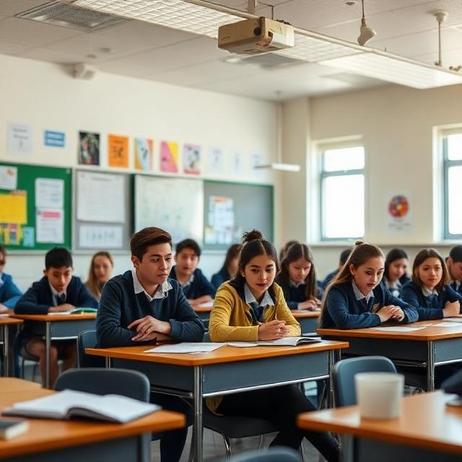
The role of sports in public schools continues to evolve as educators place greater emphasis on student well-being, engagement, and whole-child development. In 2026, athletics programs are no longer viewed simply as extracurricular activities. They are increasingly recognized as an essential component of a balanced education.

Public school sports programs support physical health, teach leadership and teamwork, and help students stay connected to their school communities. As districts address challenges such as student mental health, declining physical activity levels, and academic engagement, athletics programs are playing a larger role in supporting student success.

At the same time, schools must balance expanding athletic opportunities with financial constraints, equity considerations, and changing student interests. Understanding the role of sports in public schools today requires examining both their benefits and the challenges districts face in maintaining strong programs.

Why Sports Remain Essential in Public Schools

Athletics have long been part of American public education, but research continues to reinforce their value. Participation in school sports is linked to improved physical health, stronger social skills, and higher levels of student engagement.

According to the Centers for Disease Control and Prevention, regular physical activity improves concentration, memory, and classroom behavior in children and adolescents. School sports provide a structured environment where students can meet recommended activity levels while developing important life skills.

In 2026, educators increasingly recognize that sports programs contribute to three key areas of student development:

1. Physical health

Sports help

. . .read more

Four-Day School Week in 2026: Academic Outcomes and Costs

Updated
|
Four-Day School Week in 2026: Academic Outcomes and Costs
Learn how the four-day school week works in 2026, including research on academic outcomes, district cost savings, teacher retention, and the impact on families and communities.

Across the United States, the four-day school week has moved from a niche scheduling experiment to a widely discussed policy option. Originally adopted by small rural districts seeking budget relief, the model has expanded steadily. By the mid-2020s, more than 2,000 schools across multiple states had adopted a four-day schedule, with most districts eliminating either Monday or Friday while extending the remaining school days.

For districts facing teacher shortages, transportation costs, and declining enrollment, the schedule offers practical advantages. However, questions remain about academic outcomes, financial savings, and how the change affects families and communities.

This article examines how the four-day school week is functioning in 2026 and what current research reveals about its benefits and trade-offs.

What Is a Four-Day School Week?

Under a four-day school week, students attend classes four days per week with longer instructional days. Schools typically add 45–60 minutes to each school day to meet state instructional time requirements.

Most districts schedule school from Monday through Thursday, leaving Friday as a non-instructional day for students. Teachers may still use the fifth day for planning, professional development, or tutoring sessions.

For families evaluating how schedules shape the school experience, understanding daily routines can be helpful. Public School Review offers a detailed breakdown in its article A Typical Day in Public School: 2025 Guide, which explains how instructional time, class periods, and extracurricular activities are usually structured in American schools: Academic Outcomes: Mixed Evidence.

Research on the academic effects of a four-day school week

. . .read more

What to Do if Your Child Is Stressed About State Testing

Updated
|
What to Do if Your Child Is Stressed About State Testing
Learn what to do if your child is stressed about state testing with practical strategies, 2026 insights, and expert-backed tips for parents.

Each spring, families across the country face a familiar challenge: state testing season. Whether it is reading assessments in elementary school or end-of-course exams in high school, standardized tests remain a central part of public education accountability systems in 2026.

If you are wondering what to do if your child is stressed about state testing, you are not alone. Many students experience anxiety related to performance pressure, timed exams, or concerns about how scores might affect their academic future. The good news is that parents can play a powerful role in reducing stress and helping children approach testing with confidence.

This guide explains why testing stress happens, how to recognize it, and practical, research-informed strategies to support your child.

Why State Testing Still Matters in 2026

State assessments are required under the federal Every Student Succeeds Act, which ensures that public schools measure student progress in core subjects.

Most states publish detailed testing calendars and accountability information through their departments of education. The National Center for Education Statistics provides a national overview of how testing fits into public school systems at:
nces.ed.gov

While some states have reduced testing time or adjusted formats in recent years, assessments remain part of school evaluation systems, graduation requirements in certain states, and instructional planning.

For students, however, the bigger issue is often perception. They may believe:

  • The test will determine their entire academic future

. . .read more

Is Your Child Ready for the Next Grade? Spring Signs

Updated
|
Is Your Child Ready for the Next Grade? Spring Signs
Is Your Child Ready for the Next Grade? Signs to Watch This Spring, plus expert tips and 2026 academic benchmarks for parents.

Is Your Child Ready for the Next Grade? Signs to Watch This Spring

Spring is more than testing season. It is the time of year when report cards, benchmark assessments, and teacher conferences converge to answer a pivotal question for families: Is Your Child Ready for the Next Grade? Signs to Watch This Spring can help parents evaluate both academic and developmental readiness before summer arrives.

Promotion decisions are rarely based on a single test score. In 2026, many public schools use a combination of classroom performance, district benchmarks, attendance records, and social-emotional indicators to determine whether a student is prepared for the next academic level. Understanding what schools look for and what parents can observe at home allows families to act early rather than react in August.

Below, we outline the most important academic, social, and behavioral signs to watch, along with practical steps parents can take this spring.

Academic Readiness: Beyond the Report Card

Grades provide helpful information, but they do not always tell the full story. Schools often rely on state standards and district assessments aligned with grade-level expectations.

The National Center for Education Statistics reports that academic performance trends remain uneven post-pandemic, with continued gaps in math and reading proficiency in many districts. Parents can explore national benchmarks through the NCES website at the U.S. Department of Education: nces.ed.gov

When evaluating academic readiness this spring, consider the following:

1. Consistent Mastery of Grade-Level

. . .read more

School Safety & Shootings: 2026 Update

Updated
|
School Safety & Shootings: 2026 Update
A 2026 update on school safety and shootings, with data trends, prevention strategies, and guidance for parents and educators.

School Safety & Shootings: 2026 Update

School safety and shootings remain one of the most urgent concerns facing public education in 2026. For families evaluating districts, for educators shaping campus policy, and for administrators managing risk, understanding the latest data and prevention strategies is essential.

Over the past decade, the national conversation has shifted from reactive measures to comprehensive safety systems. While high-profile tragedies continue to capture headlines, long-term improvements in prevention, reporting systems, and school climate initiatives are reshaping how districts approach safety. This 2026 update examines current trends in school safety and shootings, what has changed, and what parents should know when evaluating a public school.

The Current Landscape of School Safety in 2026

National tracking organizations continue to report incidents involving firearms on school campuses each year. Data from theNational Center for Education Statistics shows that while school violence remains statistically rare compared to other youth environments, the psychological impact on communities is profound.

The most recent federal school crime indicators highlight several key trends:

  • Firearm-related incidents still represent a small fraction of overall school safety issues.

  • The majority of school disciplinary incidents involve non-lethal altercations.

  • Increased reporting mechanisms have contributed to higher documentation rates.

  • Anonymous tip lines and digital monitoring systems have disrupted multiple planned attacks.

In 2026, the emphasis has shifted toward prevention,

. . .read more

Recent Articles

Preventing Suicide in Schools: 2026 Guide for Educators
Learn updated 2026 strategies for preventing suicide in schools, including warning signs, intervention plans, and school-wide mental health support.
The Impact of Social Media on Students (2026 Update)
Explore the impact of social media on students in 2026, including academic, mental health, and safety insights for parents and educators.
Notice: Javascript file does not exist: /home/devsarath/workspace/psr/public_html/javascript/components/popper.min.js in /home/devsarath/workspace/shared/misc/JSCompiler.inc.php on line 242 Notice: Javascript file does not exist: /home/devsarath/workspace/psr/public_html/javascript/components/tippy.min.js in /home/devsarath/workspace/shared/misc/JSCompiler.inc.php on line 242 Notice: Directory does not exist in /home/devsarath/workspace/shared/misc/JSCompiler.inc.php on line 242 Notice: Unable to save compiled js file in /home/devsarath/workspace/shared/misc/JSCompiler.inc.php on line 242