Updated
|
How Students Build Community in Large Schools
Learn how students create meaningful connections in large public schools through clubs, sports, student leadership, trusted teachers, and school traditions that foster belonging.

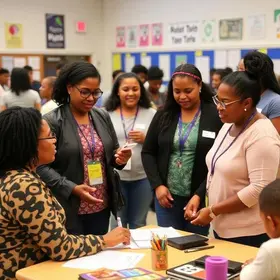
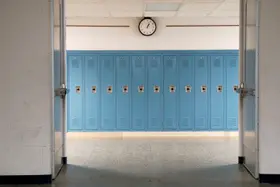
Large schools can feel intimidating at first. Long hallways, crowded cafeterias, packed schedules, and hundreds or even thousands of students can make it difficult for students to feel noticed. For many families, one of the biggest concerns about a large public school is whether their child will feel connected and supported in such a large environment.

Yet large schools also offer opportunities that smaller schools sometimes cannot provide. With more students comes greater diversity, expanded academic programs, larger extracurricular offerings, and a wider variety of social groups. Students who learn how to engage with their school community often discover friendships, mentors, leadership opportunities, and support systems that help them thrive both academically and personally.

Community in a large school rarely happens automatically. Instead, students build it intentionally through activities, relationships, traditions, and shared experiences. Schools that prioritize belonging and student connection can transform a large campus into a network of smaller, welcoming communities.

Why Community Matters in Large Schools

The school community is about more than school pride or attending football games. According to the Centers for Disease Control and Prevention, school connectedness refers to students believing that adults and peers at school care about their learning and about them as individuals.

Research consistently shows that students who feel connected to school are more likely to succeed academically, participate in activities, attend school regularly, and maintain positive mental health. They are also less likely to experience chronic absenteeism, social isolation, or behavioral problems.

In large

. . .read more

What the First Week of Public School Is Really Like

Updated
|
What the First Week of Public School Is Really Like
Discover what students and parents can realistically expect during the first week of public school, from schedules and social adjustment to routines and academics.

The first week of public school is often a mix of excitement, nervousness, confusion, and adjustment for both students and parents. While social media and television frequently portray the beginning of the school year as perfectly organized and exciting, the reality is usually more complicated. Students spend the first several days learning routines, meeting teachers, navigating social dynamics, and adjusting to new expectations.

Whether a child is entering kindergarten, middle school, high school, or transferring into a new district, the opening week sets the tone for the rest of the academic year. Understanding what typically happens during those first few days can help families prepare more effectively and reduce unnecessary stress.

According to the National Center for Education Statistics, public school enrollment patterns continue to evolve in 2026 as districts expand technology integration, student support systems, and school choice initiatives.

For many students, the first week is less about academics and more about learning how the school operates.

Why the First Week Feels Overwhelming

Even confident students often feel anxious during the opening days of school. New classrooms, unfamiliar teachers, changing schedules, crowded hallways, and social uncertainty can create sensory overload, especially for younger children and incoming middle or high school students.

Students commonly worry about:

  • Finding classrooms
  • Remembering schedules
  • Meeting teachers
  • Making friends
  • Understanding school rules
  • Managing lockers and technology
  • Navigating lunch periods

Parents frequently underestimate how mentally exhausting the first few days can be. Many students come home unusually tired during the opening week because they are processing large

. . .read more

The Experience of Transferring Between Public Schools

Updated
|
The Experience of Transferring Between Public Schools
Learn what families should expect when transferring between public schools, from paperwork and academics to social adjustment and school choice.

Changing schools can be one of the most significant transitions a student experiences during childhood or adolescence. Whether prompted by a family move, academic concerns, school zoning changes, or the search for specialized programs, transferring between public schools involves more than simply updating paperwork. It often affects academics, friendships, routines, extracurricular involvement, and emotional well-being.

In recent years, student mobility between public schools has increased as districts expand school choice programs, open enrollment policies, magnet pathways, and transfer options. According to the National Center for Education Statistics, millions of students change schools each year due to relocation, district policies, or family preference.

For parents, understanding the full experience of transferring between public schools can make the process smoother and less stressful for everyone involved.

Why Families Transfer Between Public Schools

Families transfer students between public schools for many reasons. Some transfers are voluntary, while others are unavoidable.

Common reasons include:

  • Relocation to a new neighborhood or state
  • Access to stronger academic programs
  • Enrollment in magnet or STEM schools
  • Safety or bullying concerns
  • Special education or support service needs
  • Changes in family circumstances
  • School zoning adjustments
  • Desire for smaller learning environments

The growth of school choice initiatives has also made transfers more common. As explained in School Choice in 2026: What Parents Must Know, many states now offer expanded interdistrict and intradistrict transfer opportunities.

The Administrative Side of Transferring

One of the first challenges families encounter is navigating the administrative process. While transferring between public schools is generally easier than transferring

. . .read more

How Students Navigate Large Public School Campuses

Updated
|
How Students Navigate Large Public School Campuses
Learn how students adapt to large public school campuses, from managing schedules to finding support systems and building confidence.

For many students, transitioning to a large public school campus can feel overwhelming at first. Some high schools enroll more than 3,000 students, span multiple buildings, and operate on tightly scheduled class rotations. Hallways can resemble busy transit hubs, lunch periods may involve hundreds of students at once, and navigating from one end of campus to another becomes part of the daily routine.

Yet despite these challenges, students often adapt remarkably well. Large public schools can offer broader academic programs, more extracurricular activities, expanded athletics, and greater social diversity than smaller schools. Success in these environments depends largely on how students learn to manage time, build routines, and develop support systems.

As public schools continue growing in enrollment across many districts, families increasingly want to understand how students adjust to these larger educational settings. According to data compiled by Public School Review, some districts now average well over 2,000 students per campus. These environments require students to develop organizational and social skills that often mirror those needed later in college and the workforce.

Why Large Public School Campuses Continue to Grow

Several factors contribute to the expansion of large public school campuses in 2026:

  • Population growth in suburban areas
  • District consolidation efforts
  • Expanded magnet and specialty programs
  • Increased demand for Advanced Placement and career pathways
  • Budget efficiencies tied to larger campuses

Many districts believe larger schools allow them to centralize resources and provide more opportunities under one roof. Students may gain access to:

  • Advanced STEM labs
  • Performing arts centers
  • Career and technical
. . .read more

How Public Schools Handle Substitute Teacher Shortages

Updated
|
How Public Schools Handle Substitute Teacher Shortages
Learn how public schools manage substitute teacher shortages, how staffing gaps affect students, and what districts are doing in 2026 to respond.

Substitute teacher shortages have become one of the most persistent operational challenges facing public schools in 2026. While teacher absences have always been part of school management, districts across the country are now struggling to find enough qualified substitutes to cover classrooms consistently.

The issue affects far more than scheduling logistics. Substitute shortages can disrupt instruction, increase teacher burnout, strain school budgets, and reduce learning continuity for students. For parents, the problem may raise concerns about classroom stability and educational quality.

As families evaluate school systems through resources like Public School Rankings and Compare Public Schools, understanding how schools handle substitute teacher shortages provides important insight into district leadership, staffing practices, and school resilience.

Why Substitute Teacher Shortages Are Increasing

Several factors have contributed to the ongoing substitute teacher shortage nationwide.

Teacher Burnout and Staffing Pressures

Schools continue to experience staffing strain following years of pandemic-related disruptions, increased behavioral challenges, and rising workload demands. Full-time teacher absences remain elevated in many districts, increasing demand for substitutes.

According to the National Center for Education Statistics, many public schools continue reporting staffing difficulties in both instructional and support positions.

Lower Pay Compared to Other Jobs

Substitute teaching often offers inconsistent work schedules and relatively low daily pay compared with jobs in other industries requiring similar education levels.

In some areas, substitute teachers can earn more predictable wages through retail, hospitality, or remote customer service positions.

Certification Requirements

Some states require substitute teachers to

. . .read more

Recent Articles

AI Report Cards: Should Schools Evaluate AI Use?
Explore whether schools should assess student AI use, the benefits, risks, and what responsible AI report cards could look like in 2026.
The Parent’s Guide to School Cell Phone Bans in 2026
Learn how school cell phone bans work in 2026, why districts are adopting them, and what parents should expect.
Parental Involvement in Public Schools: 2026 Update
Explore the latest 2026 trends, research, and strategies shaping parental involvement in public schools and student success.

Notice: Javascript file does not exist: /home/devsarath/workspace/psr/public_html/javascript/components/popper.min.js in /home/devsarath/workspace/shared/misc/JSCompiler.inc.php on line 242

Notice: Javascript file does not exist: /home/devsarath/workspace/psr/public_html/javascript/components/tippy.min.js in /home/devsarath/workspace/shared/misc/JSCompiler.inc.php on line 242

Notice: Directory does not exist in /home/devsarath/workspace/shared/misc/JSCompiler.inc.php on line 242

Notice: Unable to save compiled js file in /home/devsarath/workspace/shared/misc/JSCompiler.inc.php on line 242