Updated
|
The Role of Hallways, Common Areas, and Shared Spaces in Public Schools
Discover how hallways, cafeterias, libraries, and shared spaces shape student learning, safety, and school culture in public schools.

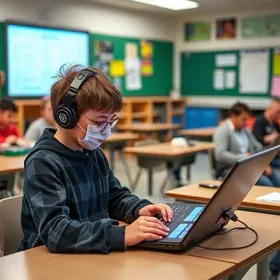
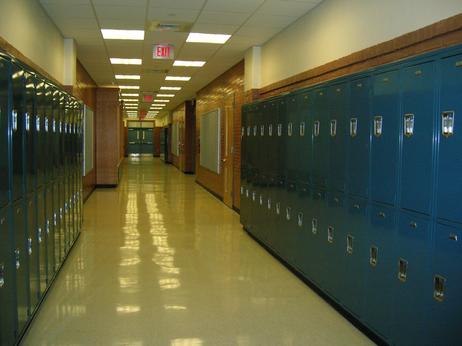
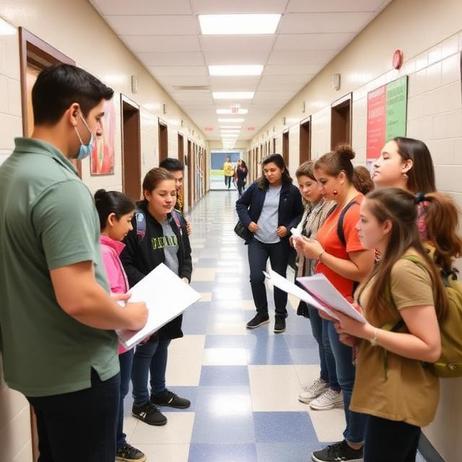
When families evaluate public schools, they often focus on academics, teacher quality, class size, and extracurricular opportunities. Yet one important factor frequently goes unnoticed: the design and function of a school’s shared spaces. Hallways, cafeterias, libraries, courtyards, and student commons all influence how students learn, interact, and feel during the school day.

In modern education, these areas are no longer viewed as simple transitional spaces. Educators and architects increasingly recognize that shared spaces help shape school culture, student engagement, collaboration, and even safety outcomes. In many districts, redesigned common areas are becoming central to broader efforts aimed at improving student well-being and creating more inclusive learning environments.

As schools continue adapting to changing educational needs in 2026, the role of hallways, common areas, and shared spaces has become more important than ever.

Why Shared Spaces Matter in Public Schools

A student’s experience at school extends beyond the classroom. Much of the school day involves movement between classes, lunch periods, informal conversations, group activities, and independent study. The quality of these experiences often depends on the design and atmosphere of common areas.

Well-designed shared spaces can support:

  • Student collaboration
  • Informal learning opportunities
  • Social development
  • School safety
  • Mental wellness
  • Stronger school community connections

Research from the National Center for Education Statistics continues to show that school climate significantly affects attendance, behavior, and academic performance. Shared spaces play a major role in shaping that climate.

Additional guidance on school climate and student engagement can also be found through the U.S.
. . .read more

Understanding School Safety Policies in 2026

Updated
|
Understanding School Safety Policies in 2026
Learn how school safety policies are evolving in 2026, including mental health support, AI monitoring, emergency planning, and parent rights.

School safety policies in 2026 look very different from the security plans many districts relied on just a few years ago. Today’s public schools are balancing physical security, mental health support, digital monitoring, emergency preparedness, and student privacy concerns, all while trying to maintain welcoming learning environments.

For parents, educators, and students, understanding school safety policies is increasingly important. Safety plans now extend beyond locked doors and emergency drills. Districts are investing in anonymous reporting systems, behavioral threat assessment teams, cybersecurity protections, and expanded mental health services.

At the same time, schools face growing scrutiny over how much surveillance is appropriate, how student data is handled, and whether safety measures are actually improving outcomes.

This guide explains how school safety policies are changing in 2026, what families should expect from their local schools, and which trends are shaping the future of campus safety.

What Are School Safety Policies?

School safety policies are the procedures, systems, and rules designed to protect students, teachers, staff, and visitors from harm. These policies typically cover:

  • Emergency response procedures

  • Campus access controls

  • Bullying prevention

  • Mental health intervention

  • Threat assessment protocols

  • Digital and cybersecurity protections

  • Communication systems for families

  • Crisis recovery plans

Most districts now approach school safety using a layered model. Instead of relying on a single security solution, schools combine prevention, intervention, and emergency response strategies.

According to the National Center for Education Statistics, nearly all U.S. public schools now control building access during school hours and require visitor check-ins with

. . .read more

How to Support Your Child’s Mental Health at School

Updated
|
How to Support Your Child’s Mental Health at School
Practical guidance for parents and educators on supporting child mental health during the school year, with expert strategies and 2026 insights.

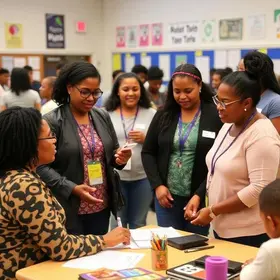
Supporting a child’s emotional well-being has become an essential part of academic success. In today’s school environment, students are managing academic pressure, social dynamics, digital exposure, and increasingly complex expectations. As a result, understanding how to support your child’s mental health during the school year is no longer optional for parents and educators. It is a core part of helping students thrive both inside and outside the classroom.

In 2026, schools across the United States continue to expand mental health services, including school-based counseling, telehealth partnerships, and social-emotional learning programs. However, the most effective support still begins at home, where children spend most of their time and develop their strongest emotional foundations.

This article explores practical, research-informed strategies parents and educators can use to recognize stress, build resilience, and connect children with the support they need.

Why Mental Health Support Matters in the School Year

Child and adolescent mental health directly affects learning outcomes, attendance, behavior, and long-term development. According to the Centers for Disease Control and Prevention, mental health conditions are among the most common health challenges affecting school-aged children, and early support significantly improves outcomes.

The school year introduces predictable stressors, including:

  • Academic testing and performance pressure
  • Social adjustment and peer relationships
  • Extracurricular demands and scheduling overload
  • Transitions between grade levels or schools
  • Increased screen time and digital comparison

In 2026, educators are also reporting greater awareness of “always-on stress,” where students feel pressure not just during school hours but throughout the day due to

. . .read more

What a National Blue Ribbon of Distinction Means in 2026

Updated
|
What a National Blue Ribbon of Distinction Means in 2026
Understand what a National Blue Ribbon of Distinction means, how schools earn it, and why it matters for academic quality in 2026.

The term National Blue Ribbon of Distinction carries significant weight in American K-12 education. For parents evaluating school quality in 2026, it often appears as a shorthand indicator of academic excellence, strong leadership, and high student performance. However, the recognition is more nuanced than a simple “top school” label.

The National Blue Ribbon of Distinction is tied to the broader U.S. Department of Education Blue Ribbon Schools Program, which honors schools based on either overall academic excellence or progress in closing achievement gaps. Understanding what the designation actually measures is essential for interpreting its value in today’s education landscape.

Learn more about school performance indicators in our guide to understanding public school rankings and how they are evaluated across states.

What the National Blue Ribbon of Distinction Actually Represents

The National Blue Ribbon Schools Program, administered by the U.S. Department of Education, recognizes schools in two primary performance categories:

  • Exemplary High Performing Schools: Among the highest performing schools in their state based on standardized assessments.
  • Exemplary Achievement Gap Closing Schools: Schools that have made significant progress in closing gaps among student subgroups.

The designation often referred to informally as a National Blue Ribbon of Distinction is not a separate award but a recognition of schools that meet these rigorous criteria.

How Schools Earn National Blue Ribbon Recognition

Earning Blue Ribbon status is a multi-step process that emphasizes measurable academic outcomes and sustained improvement.

Key eligibility factors include:

  • High student performance on state assessments or nationally normed
. . .read more

Changing Schools and Moving to a New Area: Parent Guide 2026

Updated
|
Changing Schools and Moving to a New Area: Parent Guide 2026
A 2026 guide to changing schools and moving to a new area, covering enrollment steps, records transfer, timing, and transition tips for families.

Relocating to a new community is one of the most significant transitions a student can experience. Whether the move is across town or across the country, changing schools and moving to a new area often raises questions about enrollment timing, academic continuity, and how to support children emotionally through the transition.

In 2026, school districts will continue to refine digital enrollment systems and student record transfers, making the process more streamlined than in previous years. However, families still need a clear understanding of requirements, timelines, and best practices to ensure a smooth adjustment.

This guide outlines what parents and students should expect, how to prepare, and how to reduce disruption during a school change.

Understanding the Impact of Changing Schools and Moving to a New Area

Changing schools and moving to a new area can affect students academically, socially, and emotionally. Research from the U.S. Department of Education shows that student mobility is often linked to gaps in learning continuity when transitions are not well managed.

You can review federal education data and resources through the U.S. Department of Education and the National Center for Education Statistics, which track mobility trends and enrollment patterns nationwide.

Common challenges students may face include:

  • Adjusting to new academic standards or curricula

  • Navigating unfamiliar school cultures and expectations

  • Rebuilding friendships and peer connections

  • Adapting to different transportation or scheduling systems

However, when managed proactively, students often adapt within a few months and can thrive in their new

. . .read more

Recent Articles

AI Report Cards: Should Schools Evaluate AI Use?
Explore whether schools should assess student AI use, the benefits, risks, and what responsible AI report cards could look like in 2026.
The Parent’s Guide to School Cell Phone Bans in 2026
Learn how school cell phone bans work in 2026, why districts are adopting them, and what parents should expect.
Parental Involvement in Public Schools: 2026 Update
Explore the latest 2026 trends, research, and strategies shaping parental involvement in public schools and student success.

Notice: Javascript file does not exist: /home/devsarath/workspace/psr/public_html/javascript/components/popper.min.js in /home/devsarath/workspace/shared/misc/JSCompiler.inc.php on line 242

Notice: Javascript file does not exist: /home/devsarath/workspace/psr/public_html/javascript/components/tippy.min.js in /home/devsarath/workspace/shared/misc/JSCompiler.inc.php on line 242

Notice: Directory does not exist in /home/devsarath/workspace/shared/misc/JSCompiler.inc.php on line 242

Notice: Unable to save compiled js file in /home/devsarath/workspace/shared/misc/JSCompiler.inc.php on line 242