Updated
|
Behind the Scenes of Public School Cafeterias
Explore how public school cafeterias operate, from nutrition standards to budgeting and daily logistics in 2026.

Public school cafeterias do far more than serve lunch. They are part nutrition program, part logistics operation, part public health effort, and part school support system. For many families, the cafeteria is one of the most visible ways a school shapes a child’s daily experience. What students are served, how quickly meals move through the line, and whether food is appealing enough to eat all matter more than many people realize.

In 2026, public school cafeterias are also operating in a more demanding environment. Districts are adapting to updated federal nutrition rules, persistent labor pressures, and continued concern about food costs and student participation. At the same time, families are paying closer attention to how schools support health, attendance, and readiness to learn. Understanding what happens behind the scenes offers a clearer view of how cafeteria operations connect to the larger mission of public education.

Public school cafeterias are part of the academic day

It is easy to think of the cafeteria as a separate service that sits alongside instruction. In reality, school meal programs support learning conditions in practical ways. The Centers for Disease Control and Prevention notes that school meals are associated with better overall diet quality, and that eating breakfast at school is linked to better attendance, fewer missed school days, and better test scores. That makes cafeteria operations more than a convenience; they are part of the infrastructure that helps students arrive in class ready to focus.

This matters for families evaluating

. . .read more

Helping Children Overcome First-Week School Anxiety

Updated
|
Helping Children Overcome First-Week School Anxiety
Learn practical strategies to help children overcome first-week school anxiety, with expert-backed tips for parents and educators.

The first week of school can be an emotional hurdle for many families. Whether a child is entering kindergarten or transitioning to a new public school, first-week school anxiety is common and, in most cases, temporary. Still, without the right support, it can disrupt routines, affect academic engagement, and create lingering negative associations with school.

For parents and educators, the goal is not to eliminate anxiety entirely, but to help children manage it effectively. With thoughtful preparation, consistent communication, and evidence-based strategies, children can build confidence and start the school year on a positive note.

Understanding First-Week School Anxiety

First-week school anxiety typically stems from uncertainty. New environments, unfamiliar peers, different expectations, and separation from caregivers can all trigger stress responses in children.

According to the American Academy of Pediatrics, mild anxiety during school transitions is developmentally appropriate, especially in younger children. However, how adults respond plays a critical role in shaping whether that anxiety fades quickly or becomes more persistent.

Common Signs to Watch For

Children express anxiety in different ways, depending on age and temperament. Parents and teachers should look for:

  • Clinginess at drop-off

  • Complaints of headaches or stomachaches

  • Difficulty sleeping before school days

  • Irritability or withdrawal

  • Refusal to attend school

Recognizing these signs early allows adults to intervene with reassurance and structure.

Why the First Week Matters So Much

The first few days of school set the tone for the entire academic year. Positive early experiences can foster:

  • A sense of

. . .read more

Public School Immunization Requirements 2026–2027

Updated
|
Public School Immunization Requirements 2026–2027
Learn public school immunization and health requirements for 2026–2027, including vaccines, exemptions, and state policy updates.

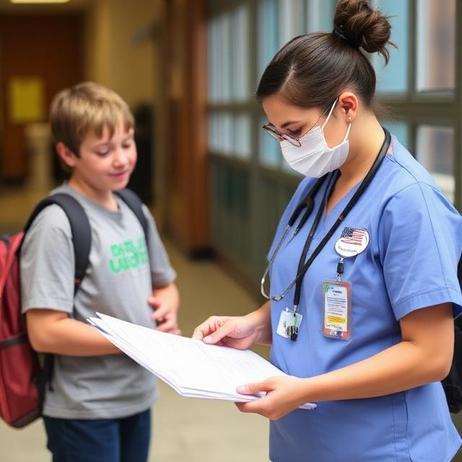
Public school immunization and health requirements for the 2026–2027 year remain a cornerstone of student safety and community health. As schools continue to balance in-person learning with evolving public health guidance, families must stay informed about required vaccines, updated policies, and documentation standards.

While immunization laws are set at the state level, there is broad national consistency in core vaccine requirements. At the same time, recent policy adjustments and public health developments have led to important updates for the 2026–2027 school year.

This guide provides a clear, up-to-date overview of what parents, students, and educators need to know.

Why Immunization Requirements Matter in Public Schools

School immunization requirements are designed to protect both individual students and the broader school community. By maintaining high vaccination rates, schools reduce the risk of outbreaks of preventable diseases such as measles, pertussis, and meningitis.

According to the Centers for Disease Control and Prevention, vaccines prevent millions of illnesses each year in the United States alone. In a school setting, where students interact closely, these protections are especially critical.

Key benefits include:

  • Reduced spread of infectious diseases
  • Protection for medically vulnerable students
  • Fewer disruptions to in-person learning
  • Lower absenteeism rates

For the 2026–2027 academic year, states continue to emphasize compliance as a prerequisite for school attendance.

Core Public School Immunization Requirements for 2026–2027

Although requirements vary slightly by state, most public schools follow a standard set of immunizations aligned with CDC recommendations.

Required Vaccines

Students enrolling in public schools are

. . .read more

Public Schools in a Minute: 2026 Snapshot Guide

Updated
|
Public Schools in a Minute: 2026 Snapshot Guide
A clear 2026 snapshot of public schools in the U.S., including enrollment, funding, trends, and what families should know.

Public schools in a minute, that is the goal of this guide. For parents and students navigating today’s education landscape, having a clear, concise understanding of public education is more important than ever. While the system is vast and complex, a few key data points and trends can quickly bring the big picture into focus.

In 2026, public schools will continue to serve as the backbone of American education, educating the overwhelming majority of K–12 students. Yet they are also evolving in response to demographic shifts, funding challenges, technology integration, and growing school choice options.

This updated snapshot offers a fast, fact-based overview of public schools today, along with deeper context to help families make informed decisions.

What Are Public Schools?

Public schools are taxpayer-funded institutions operated by local school districts and governed by state and federal guidelines. They are free to attend and open to all students within a designated geographic area.

Key characteristics include:

  • Funded primarily through state and local taxes

  • Required to follow state curriculum standards

  • Staffed by certified teachers

  • Accountable through standardized testing and public reporting

For a closer look at how public education compares to other options, see Public School vs Private School: Key Differences.

Public Schools by the Numbers (2026 Update)

Here is a quick “in a minute” statistical snapshot of public schools in the United States:

Category

2026 Estimate

Total public schools

~98,000

Total students enrolled

~49 million

Average class size

20–25 students

High school graduation rate

~87%

Students eligible for free/reduced lunch

~52%

According to the National

. . .read more

A History of Public Schools in America (2026 Update)

Updated
|
A History of Public Schools in America (2026 Update)
Explore the history of public schools in the U.S., from early beginnings to modern reforms, with key milestones and 2026 insights.

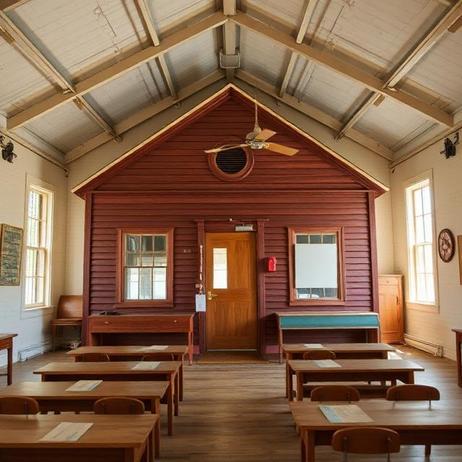
Understanding the history of public schools offers valuable insight into how today’s education system evolved and where it is headed. From informal colonial classrooms to a nationwide system serving over 49 million students, public education in the United States reflects the country’s social, political, and economic transformations.

This updated look at the history of public schools traces key milestones, influential reforms, and modern developments shaping education in 2026.

Early Foundations: Education in Colonial America

The roots of public education in America date back to the 17th century. Early schools were often locally organized and funded, primarily to promote literacy for religious purposes.

In 1647, Massachusetts passed the “Old Deluder Satan Act,” requiring towns to establish schools so children could learn to read the Bible. While not “public schools” in the modern sense, these institutions laid the groundwork for community-supported education.

Key characteristics of early schooling included:

  • Limited access, often restricted to white males

  • Strong religious influence

  • Local funding and control

  • Basic curriculum focused on reading, writing, and arithmetic

Education was not yet considered a universal right. That idea would emerge much later.

The Common School Movement: A National Vision Emerges

The early 19th century marked a turning point with the rise of the Common School Movement, led by reformers like Horace Mann. These advocates argued that education should be:

  • Free and publicly funded

  • Universal and accessible to all children

  • Nonsectarian

  • Taught by trained teachers

Massachusetts became a model for other states, establishing tax-supported public schools and

. . .read more

Recent Articles

AI Report Cards: Should Schools Evaluate AI Use?
Explore whether schools should assess student AI use, the benefits, risks, and what responsible AI report cards could look like in 2026.
The Parent’s Guide to School Cell Phone Bans in 2026
Learn how school cell phone bans work in 2026, why districts are adopting them, and what parents should expect.
Parental Involvement in Public Schools: 2026 Update
Explore the latest 2026 trends, research, and strategies shaping parental involvement in public schools and student success.

Notice: Javascript file does not exist: /home/devsarath/workspace/psr/public_html/javascript/components/popper.min.js in /home/devsarath/workspace/shared/misc/JSCompiler.inc.php on line 242

Notice: Javascript file does not exist: /home/devsarath/workspace/psr/public_html/javascript/components/tippy.min.js in /home/devsarath/workspace/shared/misc/JSCompiler.inc.php on line 242

Notice: Directory does not exist in /home/devsarath/workspace/shared/misc/JSCompiler.inc.php on line 242

Notice: Unable to save compiled js file in /home/devsarath/workspace/shared/misc/JSCompiler.inc.php on line 242